


The flooding currently affecting parts of Port Harcourt has raised a new question among residents: could the city be experiencing the early effects of the strong El Niño climate pattern now developing across the Pacific?
What is El Niño?
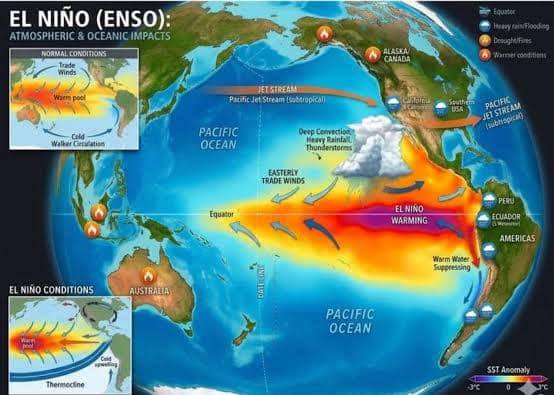
El Niño is a natural climate pattern that occurs when the surface waters of the central and eastern Pacific Ocean become unusually warm. This warming can influence weather patterns far beyond the Pacific, affecting rainfall, temperatures and storms in different parts of the world. Its effects vary from region to region, meaning El Niño does not automatically mean more rain everywhere.
The question is gaining attention online, with some social media users already sharing information about El Niño and advising Rivers residents to prepare by stocking their homes with essential supplies ahead of what they describe as a potentially difficult period.
There is some basis for paying attention to the climate development, but the situation requires context.
The World Meteorological Organization said El Niño conditions developed in 2026 and were expected to strengthen rapidly, increasing the likelihood of heatwaves, droughts, heavy rainfall and other extreme weather events in different parts of the world. Nigeria’s meteorological agency, NiMet, also reported in August that observations confirmed the onset of a strong El Niño event and that it was expected to influence global climate patterns during the August–October period.
At the same time, there is no evidence that El Niño alone is responsible for the flooding in Rivers State.
Port Harcourt has experienced persistent and intense rainfall in recent days, with flooding reported across areas including New GRA, Eliozu, Eneka, Elimgbu, Odili Road, SARS Road, Rupokwu, e.t.c. Some residents have reported floodwater entering their homes, while vehicles, roads and properties have been affected.
NiMet’s own September flash-flood risk outlook included Rivers among states where intense rainfall could produce rapid surface runoff and flooding, particularly where drainage is limited, soils are saturated or communities are located in low-lying areas.
That makes the current conversation less about whether El Niño is suddenly “causing” Port Harcourt to flood and more about whether changing climate conditions could add pressure to a city already struggling with drainage, blocked waterways, development and other long-standing flooding problems.
The Rivers State Government has already acknowledged the wider flooding challenge, distributing relief materials to affected residents in Port Harcourt and Obio/Akpor and calling for drains and waterways to remain clear.
For residents, therefore, basic preparation is reasonable, but social-media predictions should not be treated as official forecasts. Keeping essential food, drinking water, medicines, important documents and emergency supplies safely stored can be sensible for households in flood-prone areas, while residents should continue to follow updates from NiMet and relevant emergency authorities.
The bigger question for Port Harcourt may be whether the city is prepared for a changing climate when even ordinary periods of intense rainfall are already capable of overwhelming parts of the city.
If El Niño is bringing additional climate pressure, Port Harcourt’s existing flood vulnerabilities make that a question worth taking seriously.
