


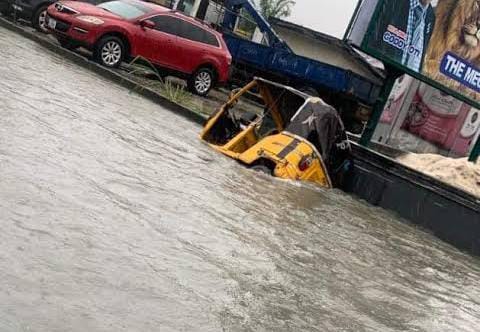
Several parts of Port Harcourt experienced flooding on Saturday, September 26, following heavy rainfall that disrupted vehicular movement and caused traffic congestion across some major routes.
The flooding affected areas including the Imokuta–Stadium Road axis, Eneka, Rumuowha, Rukpokwu, Igwuruta and Iriebe, with parts of Obio-Akpor also recording waterlogging. The situation made movement difficult for motorists and commuters, particularly along roads where floodwater accumulated for extended periods.
At the Stadium Road axis, flooding contributed to slower movement and traffic congestion as motorists navigated affected sections of the road. The disruption also placed additional pressure on adjoining routes as some road users attempted to avoid flooded areas.
The development is another indication of the city’s recurring drainage problem. Port Harcourt has several areas that become vulnerable to flooding during periods of heavy rainfall, with blocked drainage channels, inadequate drainage capacity, development around natural waterways and poor water flow frequently contributing to the situation.
In Rumuowha and Eneka, residents have also raised concerns about drainage and changes to existing water channels, particularly around ongoing infrastructure development. A September 26 report highlighted flooding in the communities and concerns over the management of stormwater.
The effect of flooding on Port Harcourt’s traffic is significant because congestion in one part of the city often affects adjoining routes. When motorists avoid flooded roads, traffic volume increases on alternative routes, making movement slower even in areas that are not directly affected by flooding.
The recurring situation also raises questions about the city’s preparedness for heavy rainfall. Beyond clearing drains when flooding occurs, there is a need for consistent drainage maintenance and infrastructure planning that takes existing waterways and flood-prone areas into account.
The flooding therefore affected more than residential properties. It disrupted movement across parts of Port Harcourt and added to the city’s existing traffic challenges, reinforcing the need for more effective management of drainage and stormwater across flood-prone areas.
The impact of the flooding also extended into residential areas, with some residents reporting that floodwater entered their homes and rose to about half the height of their apartments.
Some affected residents were forced to leave their homes and lodge in hotels after the water level made it difficult to remain in their apartments. Others reportedly had to wade or swim through the floodwater to leave their homes, with the situation resulting in damage to household properties and belongings.
While flooding is a recurring problem in some parts of Port Harcourt, particularly areas such as Eliozu during periods of heavy rainfall, residents say the extent of Saturday’s flooding was unusual. Some people living in areas that had not previously experienced flooding at such a level were also affected, suggesting that the problem may be extending beyond the city’s traditionally identified flood-prone locations.
