


The Rivers State Government has reaffirmed its commitment to digitalising fiscal operations, describing the transition as a major step towards improving transparency, accuracy and efficiency in public financial management.
The Commissioner for Finance, Hon. Lekue Kenneth, stated this in a goodwill message at a training programme organised by the Statistics Department of the Central Bank of Nigeria (CBN), Port Harcourt Branch.
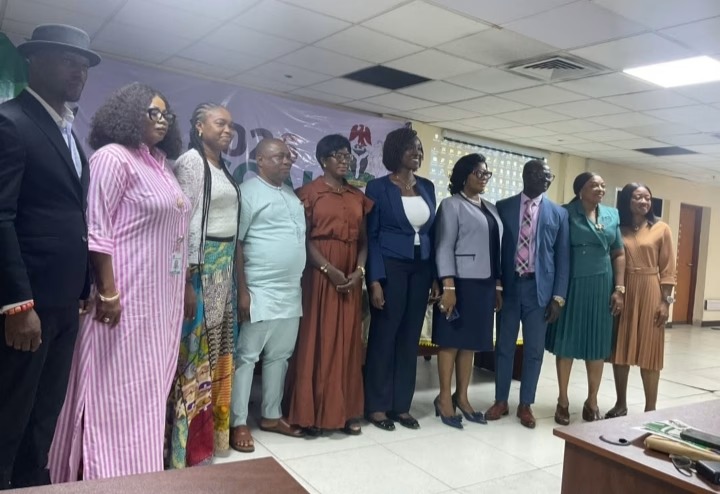
The programme, themed “Stakeholders’ Engagement and Training on the Digitalisation of Subnational Governments’ Fiscal Survey”, aimed to equip stakeholders with the skills needed to shift from manual to digital fiscal data collection and reporting.
Represented by the Ministry’s Director of Information and Public Relations, Carol Ibinabo Matthew, Kenneth said digitalisation would simplify processes, reduce operational bottlenecks and improve the credibility and timeliness of fiscal data for planning, budgeting and policy formulation.
He commended the CBN for adopting a practical approach by engaging directly with end-users and equipping them with the necessary skills, rather than relying solely on instructions.
The commissioner also assured the apex bank of the state government’s continued collaboration in promoting fiscal discipline, accountability and evidence-based governance.
In his remarks, the Rivers State Accountant-General, Dr Uche Ideozu, represented by the Director of Treasury, Mr Petersise Abel, said digitalisation would help subnational governments improve revenue generation, reduce financial leakages, strengthen budget implementation and ensure accountability in public expenditure.
Read Also: nahco-records-n16-04bn-profit-as-nine-month-revenue-rises-16-5
Ideozu stressed the importance of continuous training and retraining of public servants to equip them with the skills required to manage modern fiscal systems.
He also called for accurate and regularly updated fiscal surveys to support economic planning and decision-making, while advocating the integration of revenue databases across Ministries, Departments and Agencies to eliminate duplication and improve coordination.
Earlier, the representative of the CBN Director of Statistics, Abuja, Dr Ezike Ifeoma, said conducting fiscal surveys across the 36 states and the Federal Capital Territory through manual processes was cumbersome, with data validation presenting significant challenges.
She explained that digitalisation would improve the accuracy and reliability of fiscal data while making validation faster and more efficient.
Ifeoma urged participants to take the training seriously and ensure proper classification and presentation of fiscal figures in carrying out their official responsibilities.
Providing an overview of the programme, the Head of Statistics, CBN Port Harcourt Branch, Enegesi Linus, said the training was designed to prepare stakeholders for a transition from paper-based questionnaires to an automated platform capable of transmitting fiscal data to end-users in real time.
He said the platform would reduce errors, shorten reporting time and improve transparency, while strengthening collaboration among fiscal data stakeholders and helping to address challenges affecting data collection at the state level.
The training attracted representatives of relevant ministries, departments and agencies, local government areas, the Ministry of Local Government Affairs and the Rivers State Government Pensions Board.
The programme was formally declared open by the CBN Port Harcourt Branch Controller, Stephen Ikechukwu Okere.
