


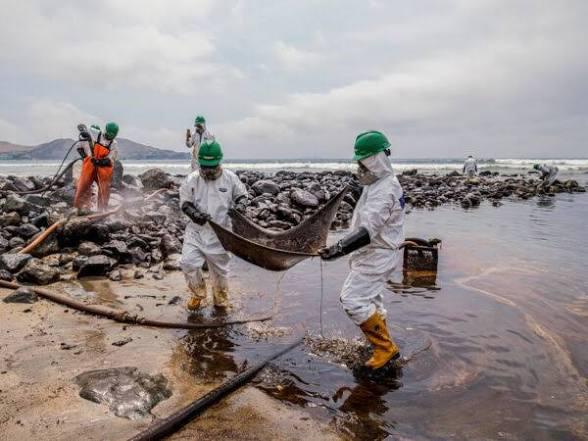
Experts are resounding the alarm that oil pollution and contamination are chief aggravating factors hindering sustainable development in Nigeria.
They hinged their claims on inadequate communication among oil stakeholders and poor community involvement
At the second NNPC Foundation Symposium on Energy and Environmental Communication held at Pan-Atlantic University, Lagos, communication experts pointed out that environmental degradation, especially those in the Niger Delta area, is becoming a threat to lives and development in the region.
According to Professor Angela Nwammuo, oil spillage, gas flaring and leaking of pipelines has made it difficult for many communities in the Niger Delta area to access water because the water is polluted, farmland destroyed and people threatened by their health.
Prof. Nwammuo went further to argue that environmental problems are not simply issues to do with technology but rather communication, hence the need to understand and address them accordingly.
She emphasized that apart from oil pollution, Nigeria is faced with several environmental emergencies such as floods, erosion, deforestation, desertification, and ineffective waste disposal.
Nwammuo cited the low levels of environmental awareness among Nigerians as another challenge to success.
According to her, Nigerians lack the level of information that will allow them to practice environmental sustainability and ensure accountability in their institutions.
Nwammuo, therefore, urged Nigerians to embrace strategic environmental communication.
“Environmental sustainability entails more than policy and technology, it lies in effective communications about environmental matters.”
The speaker urged oil corporations, governmental departments and other relevant institutions to improve their engagement with host communities, enhance their environmental communication strategies and increase their level of transparency and accountability.
During his keynote address, Professor Abdullahi Bashir reiterated the above sentiments. Professor Bashir described climate change and environmental degradation as some of the greatest threats facing Nigerian development across all spheres of life.
Examples of climate threats included flooding, desertification, heat waves and pollution.
According to Bashir, addressing climate change will require measures like ecosystem rehabilitation, investment in resilient infrastructure and early warning mechanisms. However, he reiterated that communication plays an integral role in these processes.
“Communication plays an important role in making climate resilience happen. In its absence, there won’t be any significant effect from policies and interventions,” he noted.
Furthermore, he pointed out some problems such as misinformation, lack of concern among the public, and complexity of climate data, which could interfere with effective communication.
In order to tackle these issues, he advocated the need for more resources to enhance the capacity of journalists, communicators, and social media influencers in covering environmental issues.
Both experts were in agreement about the fact that although oil spillage serves as a main cause behind the environmental disaster in Nigeria, better communication practices, citizen involvement, and coordination between stakeholders will play an important role in reversing the trend.
