


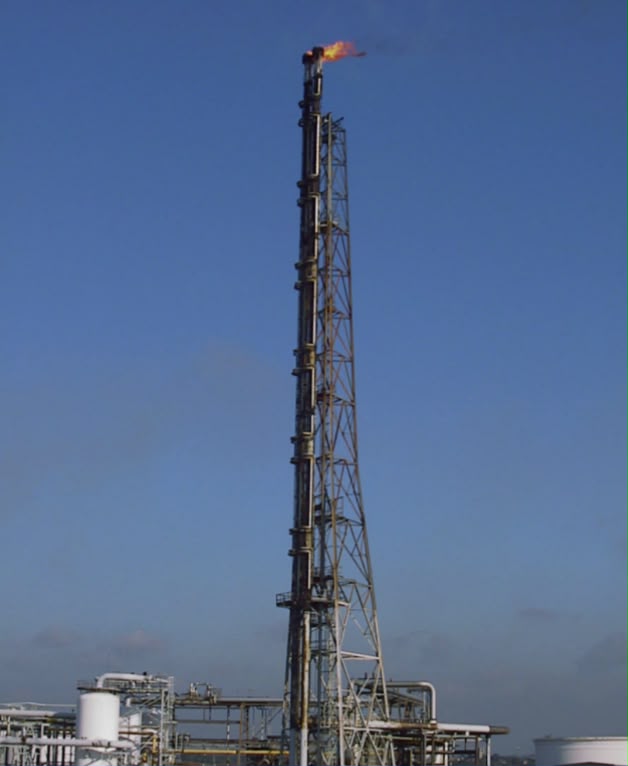
Nigeria is said to have lost an estimated 62,400 gigawatt-hours (GWh) of potential electricity generation from gas flaring between 2024 and 2025.
This figure marks an 18.6 per cent rise from the 50,800 GWh recorded in 2022 and 2023, despite federal penalties aimed at stopping the practice.
This was revealed by Data from the National Oil Spill Detection and Response Agency (NOSDRA) showing that the flared gas carried a value of $2.2 billion during the period. Oil companies, including international and national operators, now face $1.2 billion in penalties.
Operators flared 380.6 million standard cubic feet (SCF) of gas onshore and 243.8 million SCF offshore. The activity released about 33.2 million tonnes of carbon dioxide into the atmosphere.
Gas flaring continues in Nigeria even after many years of government efforts.
The country wastes a valuable resource while the global oil industry moves toward capturing and using associated gas for power, industry and exports.
The World Bank’s Global Gas Flaring Tracker Report placed Nigeria among the top nine gas-flaring nations in 2025. These nine countries accounted for 83 per cent of global flaring although they produced only 46 per cent of world oil.
Global flaring reached 167 billion cubic metres, with Nigeria contributing about nine billion cubic metres to rank seventh.
Professor Emeritus of Petroleum Economics Wumi Iledare said the problem goes beyond weak enforcement.
“Gas flaring in Nigeria reflects a failure of power market economics, gas commercialisation and sector governance,” he explained.
He added that every molecule of flared gas represents lost chances for electricity, industrial growth, jobs, export income and energy security.
The expert noted that Nigeria needs better gas infrastructure, market-based pricing and a reliable electricity market that ensures timely payments to producers. Penalties alone cannot solve the issue, he stressed.
