


In the first half of 2026, Nigeria’s private sector credit reached a total of N472.02 trillion, but high borrowing costs hindered new investments by businesses, particularly small and medium-sized ones.
Additionally, credit granted to the private sector by the Central Bank of Nigeria (CBN) increased by 2.7% to N83.26 trillion in June, compared to May’s N81.04 trillion. The number also surpassed the level achieved during the same period last year, suggesting a gradual recovery in lending activity despite negative economic conditions.
During the six months, private sector credit outstanding has been steadily increasing, with figures from January to February, then rising to N75.62 trillion in March, April, May, and June 2017. Only the total outstanding credit stock is included in this figure, and not any new loans issued.
Despite the indications of credit conditions improving, experts claim that growth remains slow due to elevated interest rates, tight financial conditions, and cautious lending by banks in response to recent regulatory changes.
In the past, the Monetary Policy Committee (MPC) maintained a Mobilization Policy Rate (MPR) of 26.5 per cent, while the Cash Reserve Ratio (CRR) for deposit money banks was at 45% and 16% for merchant banks. The committee maintained the non-Treasury Single Account public sector deposits at 75 per cent CRR and kept the liquidity ratio at 30 percent.
Read Also: https://theportcitynews.com/2026/07/26/fg-sets-up-committee-to-develop-new-vat-framework-under-tax-reform-laws/
Several economists suggested that the decision could prompt the apex bank to ease its monetary policy in response to falling inflation, arguing that lowering lending rates would stimulate investment growth, improve access to finance and support economic expansion.
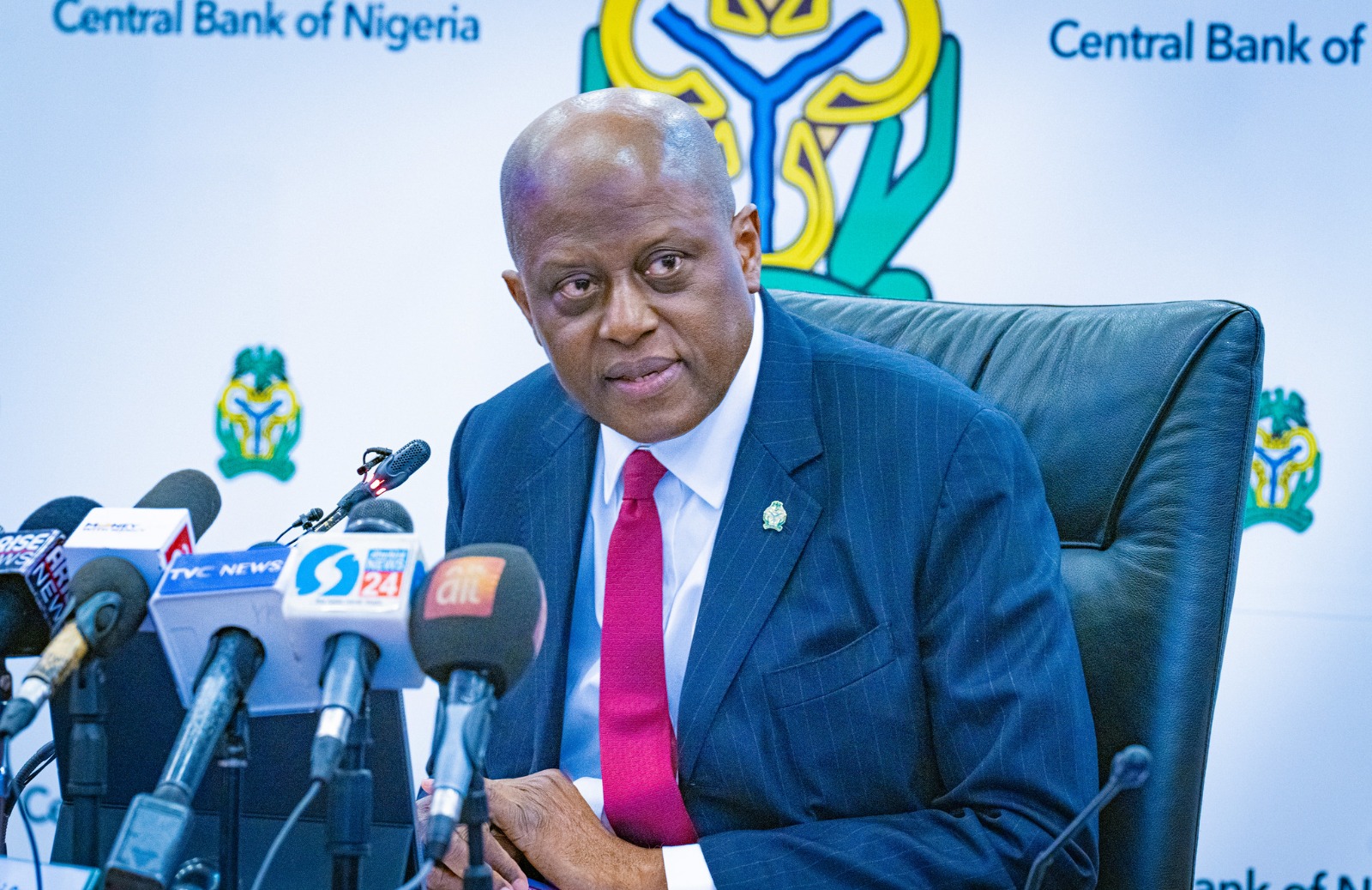
According to CBN Governor Olayemi Cardoso, the moderation of bank lending should not be seen as an indication that we are weakening in the financial system. The withdrawal of COVID-19-era regulatory forbearance had prompted banks to reconsider their loan portfolios, leading to an inevitable slowdown in credit growth.
According to Cardoso, the conclusion was that lending would experience a boost once banks finish their recapitalisation programmes and solidify their capital base. The speaker asserted that Nigeria’s banking industry is not in turmoil and that the current changes are focused on promoting healthy, sustainable credit growth rather than encouraging excessive lending.
Despite the slow credit rollback, many businesses still face difficulties with the high borrowing costs. This has led to companies postponing important investment choices, ensuring liquidity, and waiting for lending rates to stabilize.’
Although lending in the private sector has been on an upward trajectory, analysts anticipate that a significant decrease in borrowing costs is necessary for credit growth to be translated into investment and economic growth.
