


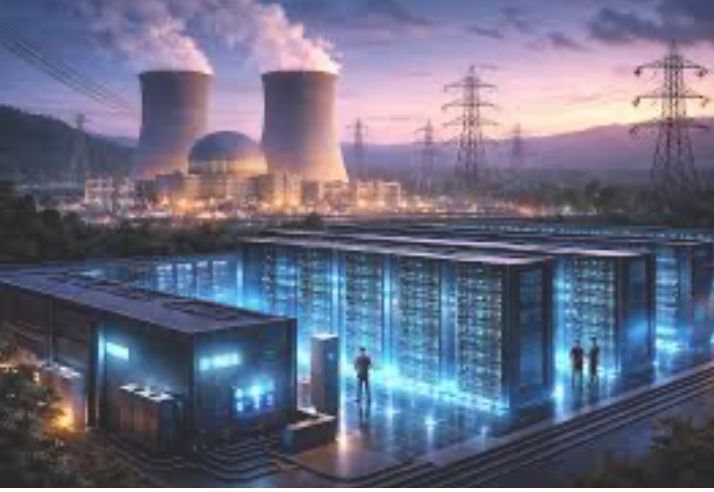
This fast pace of development in the field of artificial intelligence (AI) causes a sudden rise in the demand for electricity and prompts the energy industry to look for new means to power the data centers.
In their turn, industry professionals believe that both nuclear energy and natural gas may serve as good sources to satisfy the growing demand.
With more and more applications of AI entering different spheres of our lives and being incorporated by corporations, there is an increasing need for constant and stable electricity supply for data centers.
Thus, there are attempts of introducing hybrid energy solutions based on both nuclear and natural gas power.
While being a source of reliable and constant electricity supply, nuclear energy is quite expensive and time-consuming.
On the other hand, although it is not environmentally friendly, natural gas is relatively cheap and accessible.
In the US, Blue Energy and GE Vernova have teamed up for a 2.5 gigawatts hybrid power plant in Texas.
The idea is that it will consist of both gas-powered units and small modular reactors, which would ensure reliable power supply for an adjacent data center campus.
According to plans, natural gas will be producing power starting from 2030, while the nuclear part may become operational two years later.
According to the developers, this way of approaching the matter is more effective for meeting current energy demands and cutting down the necessary waiting time.
This is an obvious trend of companies in the fields of technologies and energy that look for solutions in response to their increasing need for electricity because of artificial intelligence developments.
One such company is Google, which has its own energy projects based on both natural and renewable energy resources.
Although there are claims that hybrid energy systems are able to increase energy security and facilitate technological advancements, opponents have noted that using fossil fuel sources will impede efforts towards reducing CO2 levels.
The rising importance of AI infrastructures is becoming central to energy policies around the world due to increasing needs for energy sustainability
