


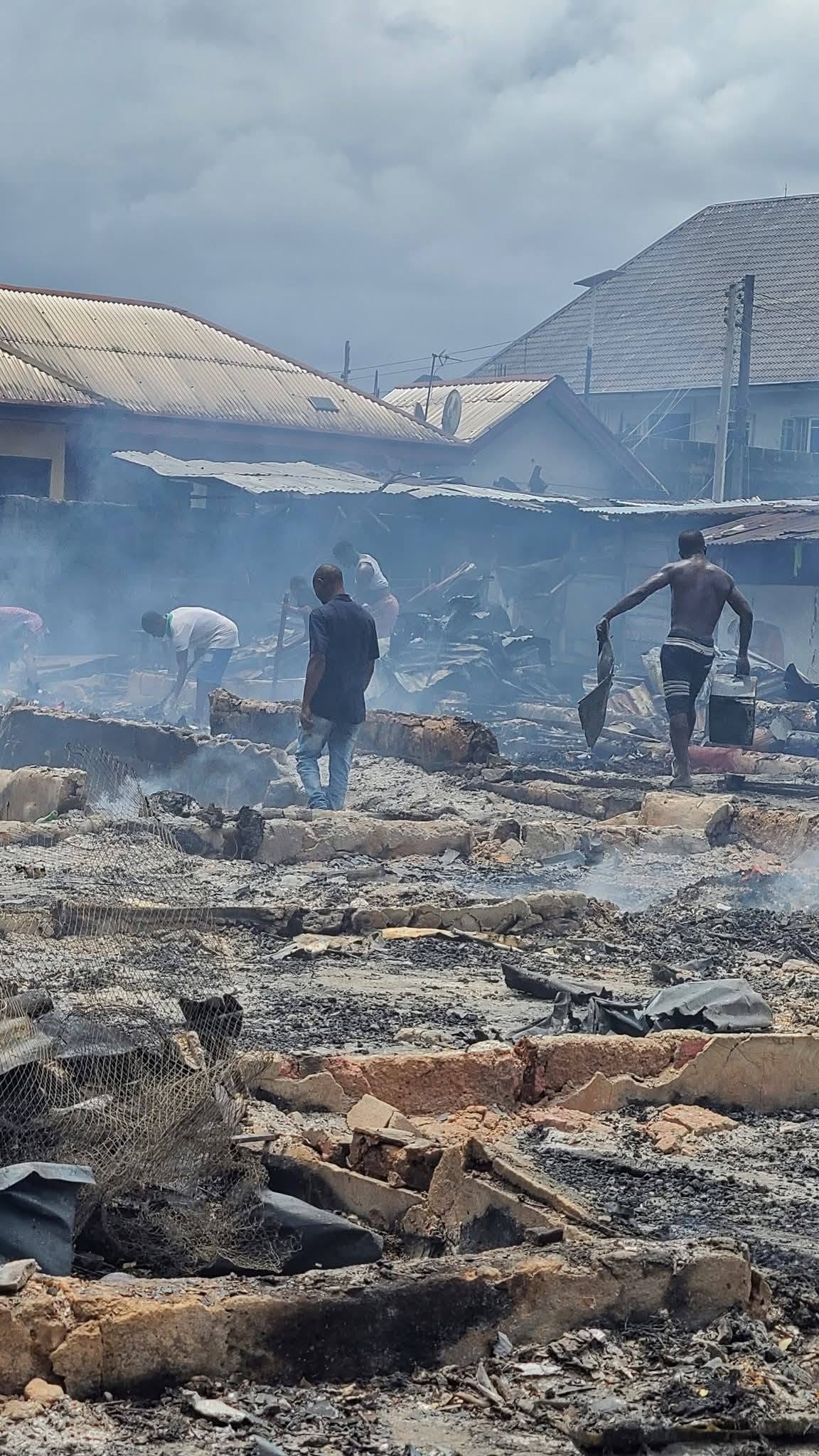
The heartbreaking image of residents walking through piles of ashes, searching for anything they can salvage from what was once their homes, is more than just another news photograph. It is a painful reminder of how quickly lives can change in a matter of minutes. The smoke still hanging in the air tells a story of loss, survival, and questions that demand answers.
More than 40 batcher houses on Onukwuru Street, off Rumuolumeni Road in Port Harcourt, have been reduced to rubble. Families have lost everything they owned. Children have lost the comfort of a home. Parents now face the uncertainty of where to sleep or how to begin again. Thankfully, no lives were lost, but for many, their livelihoods, savings, and personal belongings disappeared with the flames.
If eyewitness accounts are accurate, the fire started from an act many Nigerians consider a normal method of cooking with firewood and handling kerosene. These are everyday activities in communities where cleaner, safer energy alternatives remain out of reach for many residents. Yet, this tragedy also exposes the dangerous consequences of ignoring basic fire safety.
The image from the scene is telling. Residents are not waiting for emergency officials or relief agencies. They are doing what thousands of Nigerians often do after disasters—trying to rescue themselves. Some sift through burnt debris hoping to recover valuables, while others stand helplessly, watching the remains of homes they spent years building. It is a picture of resilience, but also of systemic failure.
The unfortunate reality is that this is not an isolated incident. Fires have repeatedly ravaged densely populated settlements across Nigeria, particularly in areas where houses are built close together, access roads are narrow, and emergency services struggle to reach affected communities in time. Once a fire starts in such environments, it spreads with frightening speed.
But while it is easy to blame negligence alone, doing so would overlook deeper issues. Poverty forces many families to rely on firewood and kerosene because they are cheaper than cooking gas or electricity. Many informal settlements lack fire extinguishers, community fire alarms, or even access to basic fire safety education. In some cases, fire service stations are too far away or lack the resources to respond quickly.
This tragedy should spark more than sympathy. It should trigger action.
Residents must take fire safety more seriously by exercising greater caution when handling flammable substances, keeping children away from open flames, and learning basic emergency response measures. Community leaders can organize awareness campaigns on fire prevention, while landlords and tenants should work together to ensure safer living conditions.
The government also has a critical role to play. Informal settlements cannot continue to be ignored until disaster strikes. There is an urgent need for better urban planning, improved emergency access routes, functional fire stations equipped with modern firefighting tools, and regular public education on fire prevention. Relief for the affected families should also go beyond temporary assistance to include meaningful support that helps them rebuild their lives.
The charred remains captured in the photograph are more than burnt buildings—they are shattered dreams, interrupted futures, and a warning.
The real question is not how this fire started. The more important question is whether Port Harcourt will treat this as another unfortunate headline that fades within days, or as a turning point that compels both citizens and government to prioritize fire safety before another community is reduced to ashes.
Because if nothing changes, today’s victims may simply be replaced by tomorrow’s.
