


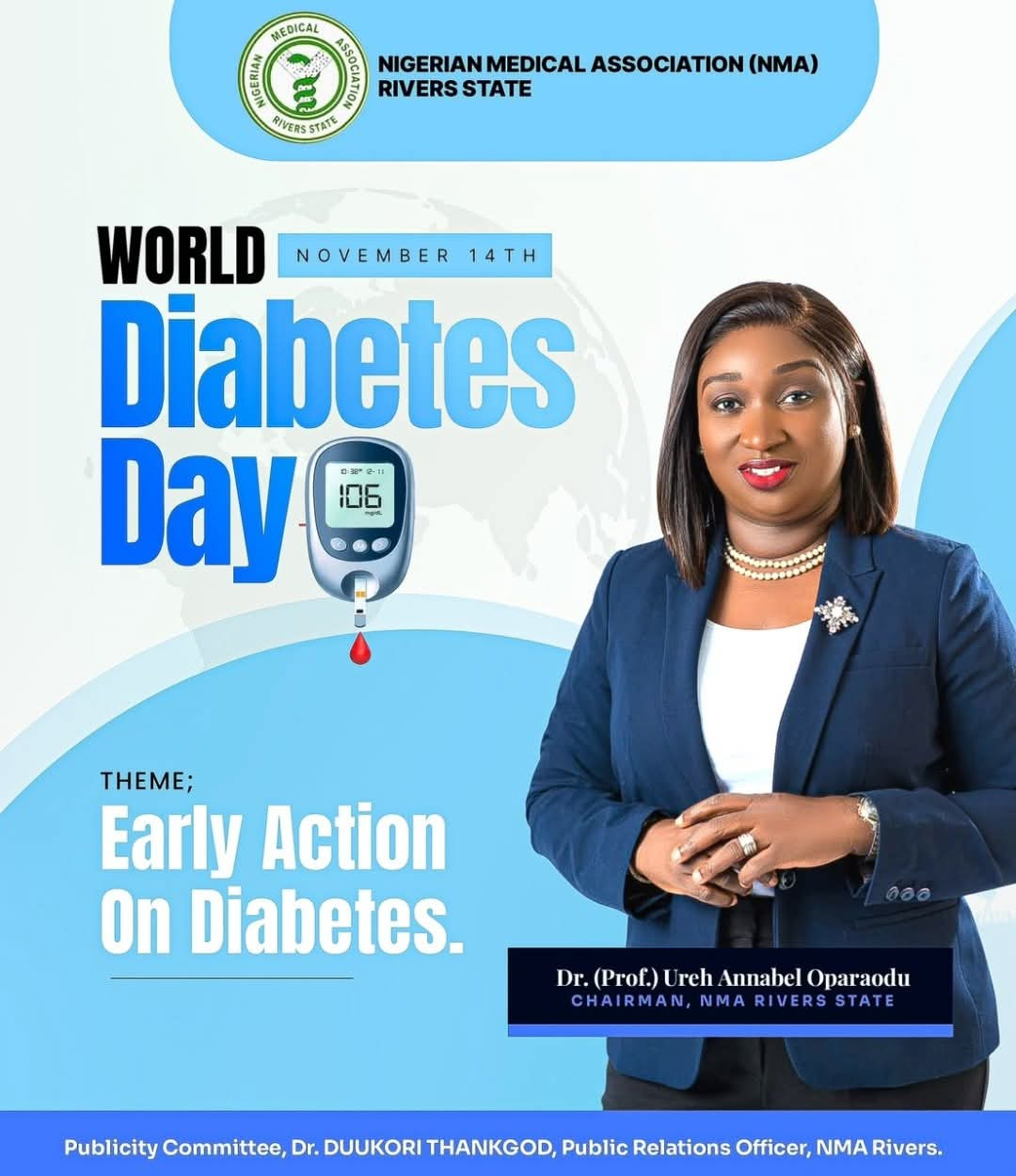
The Nigerian Medical Association (NMA), Rivers State Branch, has advised residents to undergo regular blood sugar tests and adopt healthy lifestyles to prevent diabetes and its complications.
The association gave the advice in a statement released on Saturday, November 14, 2026, to mark this year’s World Diabetes Day, with the theme, “Early Action on Diabetes.”
The Chairman of NMA Rivers, Dr. (Prof.) Ureh Annabel Oparaodu, who spoke on behalf of the association’s leadership and members, described diabetes as a major public health concern requiring early attention.
She explained that diabetes is a long-term health condition that occurs when the body cannot produce enough insulin or properly use the insulin it produces, resulting in high blood sugar levels.
The association listed frequent urination, excessive thirst, increased hunger, unexplained weight loss, fatigue, blurred vision and wounds that heal slowly as common signs of the condition.
It, however, warned that some people may have diabetes without showing obvious symptoms, making regular blood sugar checks important.
NMA Rivers identified obesity, lack of physical activity, family history, unhealthy eating habits and a history of diabetes during pregnancy as some factors that increase the risk of developing the condition.
It noted that although Type 1 diabetes cannot currently be prevented, the risk of Type 2 diabetes can be reduced through healthy eating, regular exercise, weight control and avoiding tobacco.
The association also warned that poorly managed diabetes could result in serious health complications, including kidney failure, blindness, heart disease, stroke and limb amputation.
It therefore urged residents to check their blood sugar levels regularly rather than waiting for symptoms to appear, while encouraging those at risk to seek medical advice.
The statement, signed by the association’s Public Relations Officer, Dr. Duukori ThankGod, also called for increased public awareness and routine screening to promote early diagnosis, prevent complications and improve the quality of life of people living with diabetes.
