


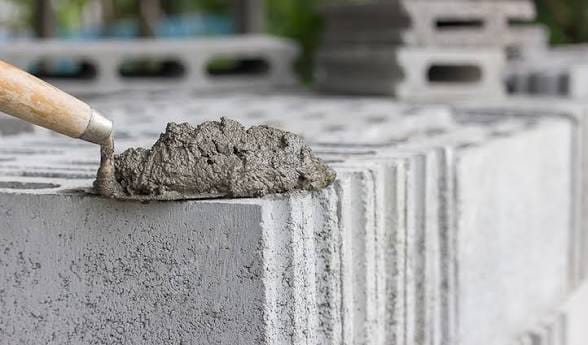
Building a house in Nigeria today is like trying to climb a hill that keeps getting higher. Every week, cement gets more expensive. And when cement costs more, everything about building a house costs more too. This is one big reason so many Nigerians can no longer own their own homes; they are stuck renting, and rent keeps going up.
The Federal Competition and Consumer Protection Commission (FCCPC) has now said something many Nigerians already suspected: cement prices may be manipulated. In simple words, some people may be pushing prices up on purpose, even though Nigeria has enough limestone in the ground to make cement cheaply.
Just look at the numbers. In January, a bag of cement cost around N9,300 to N9,700. By July, some places were charging N13,000 to N15,000 for the same bag. That is almost double the price in just seven months. No worker’s salary doubled in that same time. So how can ordinary people keep up?
What makes this even more painful is that other African countries are not suffering the same way. In Kenya, a bag of cement costs about N7,344. In Tanzania, about N6,528. Even Togo, a country that has no limestone at all and must import the raw materials, sells cement for about N9,180 a bag, cheaper than what many Nigerians are paying right now, in a country blessed with limestone everywhere.
This is not just a “cement problem.” It is a housing crisis in disguise. When cement is expensive, builders spend more money to finish a house. To get their money back, they either sell the house at a high price or rent it out at a high price. Since most people cannot afford to buy, they are forced to rent, and because so many people are chasing a few affordable houses, rent keeps climbing higher and higher.
So who suffers the most? The ordinary Nigerian trying to build a small family house. The young couple hoping to stop paying rent one day. The landlord who has to increase rent just to cover new building costs. Everybody loses, except the people quietly controlling cement prices.
This is why the FCCPC’s investigation must not end in silence. Nigerians want answers: Why does cement cost more here than in countries with less limestone than us? Who is really controlling the price? And what is the government going to do about it, not next year, but now?
There is also a bigger question worth asking: should Nigeria keep depending so heavily on cement alone? Other countries use materials like interlocking bricks, compressed earth blocks, and even bamboo-reinforced designs to build strong, affordable homes. If cement companies refuse to bring prices down to a fair level, then it may be time for the government and builders to seriously explore these alternatives, not as a punishment to cement companies, but as a way to protect the ordinary Nigerian’s dream of owning a home.
The government must act quickly. If cement price manipulation is confirmed, the people behind it must face real consequences, not just a warning letter. Nigerians should not have to choose between “renting forever” and “waiting forever” just because a few people are making too much money from a product this country can easily produce at a fair price. A home is not a luxury. It is a basic human need and no Nigerian should be locked out of owning one.
