


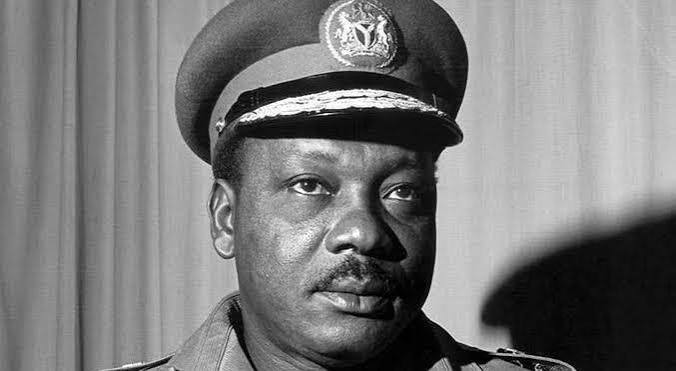
The relatives of Nigeria’s initial military Head of State, Johnson Aguiyi-Ironsi, have requested an official apology from the Federal Government regarding his assassination in 1966. Additionally, the household pressed for financial restitution and genuine peace-building efforts.
The head of the household, Imo Aguiyi-Ironsi, stated these demands throughout a conversation with Arise News on Thursday. “I think the family needs apology. The family needs to be compensated. We need sincere apology. We need sincere reconciliation,” he said.
He characterized his uncle as a forward-thinking commander who was unfairly penalized for an overthrow he played no part in executing. “He was a man of vision. He was a detribalized Nigerian. He was a good leader,” he said.
Imo Aguiyi-Ironsi remarked that his uncle’s period as Head of State was short-lived and concluded in violence.
“He occupied the seat of head of state for only six months, and he was taken away from us.“He was a man of vision. He was a detribalized Nigerian. He was a good leader,” he said.
Imo Aguiyi-Ironsi remarked that his uncle’s period as Head of State was short-lived and concluded in violence.
“He occupied the seat of head of state for only six months, and he was taken away from us. “Not because of a sin he committed, because he wasn’t part of the January 1966 coup.” He maintained that this reality was universally recognized. “Everybody knows that,” he said.
Also see: Navy Recovers 13,000 Litres of Suspected Illegal Diesel in Rivers
In his view, Aguiyi-Ironsi’s murder stemmed strictly from his rank rather than any misdeeds. “Only because of his position as the most senior military officer, he was told to take charge. And then that cost him his life,” he said.
He voiced optimism that his entreaty would resonate with authority figures capable of taking action. “Well, I hope there are people who are in positions to make this happen that are listening to you tonight,” he said.
Aguiyi-Ironsi governed as Nigeria’s leader from January 16 to July 29, 1966, assuming authority in the wake of the January 15, 1966 rebellion that took the lives of the nation’s political authorities.
Though he withstood that initial uprising and assisted in suppressing the rebellion, his subsequent choice to consolidate governance under Decree 34, coupled with his reluctance to try the conspirators, stoked bitterness among northern officers.
He was murdered on July 29, 1966, alongside his host, Lieutenant Colonel Adekunle Fajuyi, during an uprising by northern troops that came to be called the July counter-coup.
