


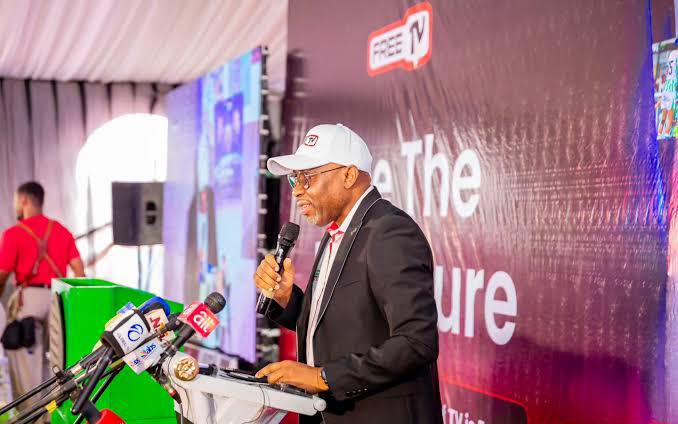
For more than a decade, Nigeria’s long-awaited transition from analogue to digital television remained a promise repeatedly delayed by policy changes, funding challenges, and infrastructure gaps.
Today, that journey has finally taken a significant step forward, marking what many describe as one of the biggest transformations in the country’s broadcasting industry in decades.
The initiative, known as the Digital Switch Over (DSO), is the Federal Government’s programme to replace analogue television broadcasting with digital terrestrial television across the country.
Instead of the traditional analogue signals that have powered television for generations, Nigerians will now receive clearer digital broadcasts with improved picture and sound quality, better signal reception, and access to significantly more television channels.
A key feature of the transition is the launch of FreeTV, a free-to-air digital television platform expected to provide households with access to more than 100 television channels without monthly subscription fees. Viewers with compatible digital televisions or approved digital receivers will be able to enjoy news, sports, entertainment, children’s programming, educational content, and local productions at no recurring cost.
But the transition is about far more than simply improving television viewing. Digital broadcasting uses radio spectrum far more efficiently than analogue technology, freeing up valuable frequencies that can be reassigned to expand broadband internet, strengthen mobile networks, and accelerate the deployment of advanced 4G and 5G services.
Also see: Obio/Akpor Bans Commercial Motorcycles from August 1
Experts believe this “digital dividend” could play a major role in improving connectivity and supporting Nigeria’s growing digital economy.
The government also expects the Digital Switch Over to stimulate economic growth by creating jobs across broadcasting, film production, equipment manufacturing, advertising, telecommunications, and digital content creation. With improved audience measurement and expanded broadcasting capacity, media organisations could benefit from increased advertising opportunities while local producers gain more platforms to showcase Nigerian stories to wider audiences.
For millions of Nigerians, however, the success of the project will ultimately be judged not by policy announcements but by practical implementation. Questions remain over infrastructure readiness, nationwide coverage, consumer awareness, and the availability of affordable digital reception equipment. Industry stakeholders have also raised concerns about ensuring a smooth transition for broadcasters and viewers alike.
Nevertheless, the launch represents an achievement that has been years in the making. After missing several international deadlines and enduring numerous postponements, Nigeria has finally joined many other countries in embracing digital television broadcasting.
