


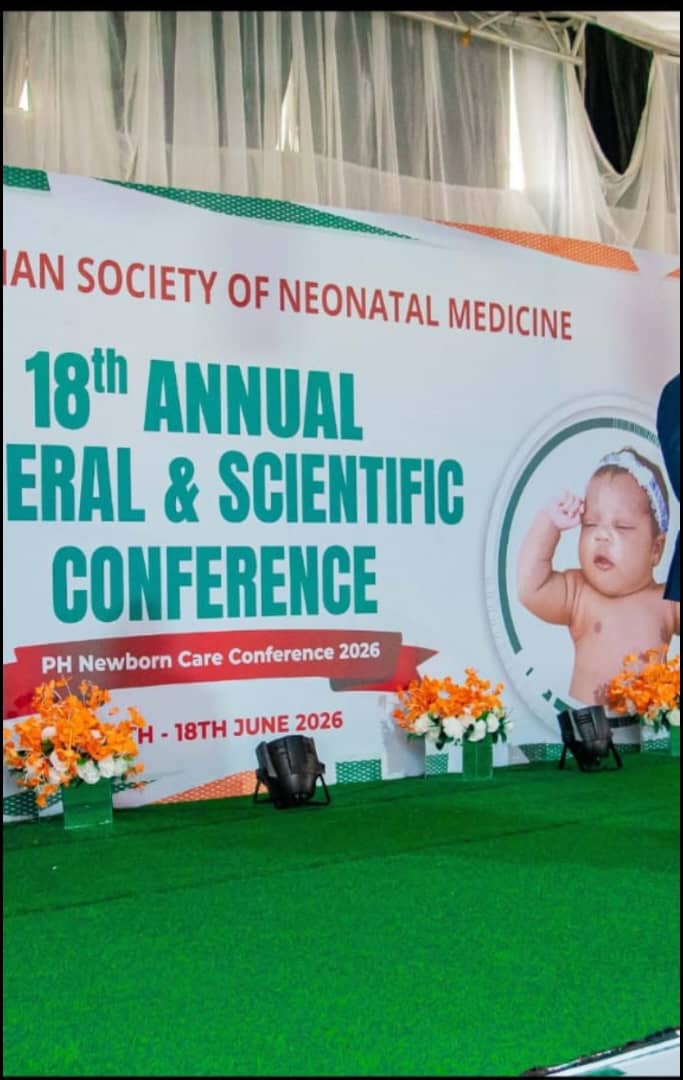
The Federal Government has reiterated its commitment to reducing newborn deaths and improving neonatal healthcare services across the country through targeted interventions and strengthened health systems.
The Coordinating Minister of Health and Social Welfare, Professor Ali Pate, stated this at a conference on newborn care organised by the Nigerian Society of Neonatal Medicine (NISONM) in Port Harcourt. Represented by Dr. Muhamed Ahmed, the minister said the government is expanding key neonatal care programmes, including kangaroo mother care, neonatal resuscitation, and the provision of essential commodities for newborns.
He explained that the Federal Ministry of Health is working closely with state governments to improve the use of health data and ensure timely referrals for specialised neonatal care.
Professor Pate stressed the need for continuous training of healthcare workers, noting that Nigeria’s neonatal mortality rate remains among the highest globally. According to the 2024 National Demographic and Health Survey, about 41 newborns die for every 1,000 live births in the country.
Also see: How One Community Drove Out Bandits With Force
He said strengthening the skills of frontline health workers, promoting early breastfeeding, and improving infection prevention and treatment are critical steps toward reducing newborn deaths.
Speaking at the event, the Permanent Secretary-designate of the Rivers State Ministry of Health, Dr. Vincent Nwachuku, described the conference theme, “Closing the Gap Towards Achieving the Newborn-Related Sustainable Development Goals Targets: Ending Nigeria’s Preventable Newborn Deaths,” as timely. He noted that preventable neonatal deaths remain a major contributor to under-five mortality in Nigeria.
Also, NISONM President, Professor Iretiol Fajolu, expressed concern over the country’s high newborn mortality rate, revealing that nearly 700 newborns die daily. She added that a Comprehensive Emergency Maternal and Newborn Care initiative, which includes a dedicated newborn component, is currently being piloted in Lagos and Kano states.
