


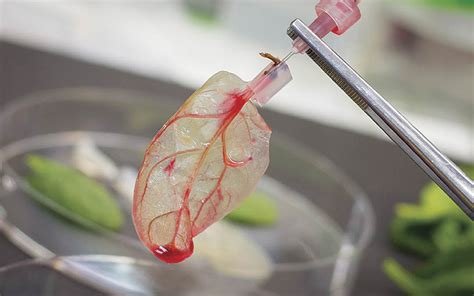
In a groundbreaking development in regenerative medicine, scientists have transformed spinach leaves into functional human heart tissue. This innovative approach leverages the natural vascular structure of spinach to address a significant challenge in tissue engineering: creating a network capable of delivering blood, oxygen, and nutrients to developing tissues.
The Methodology
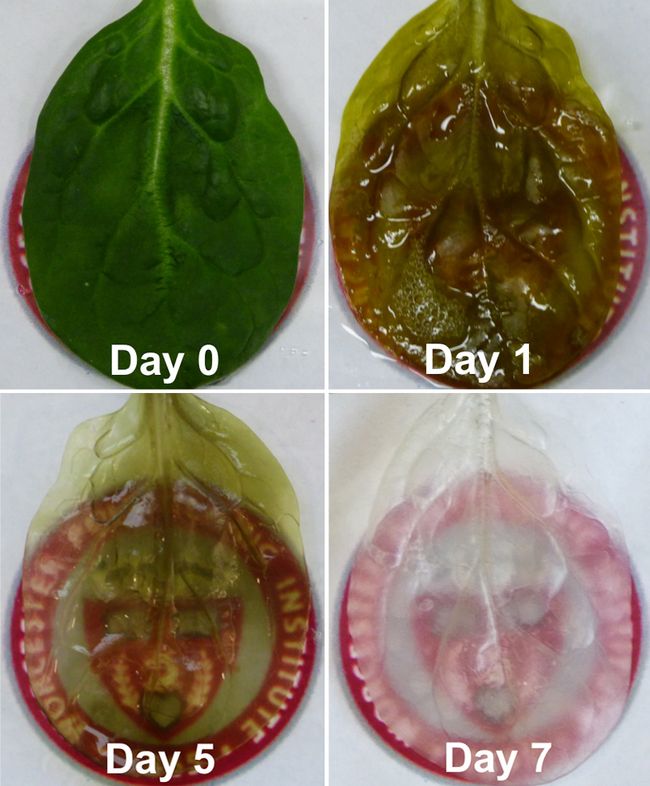
Researchers at Worcester Polytechnic Institute (WPI) initiated the process by removing the plant cells from spinach leaves, leaving behind a cellulose framework that retains the leaf’s intricate vascular network. Cellulose is known for its biocompatibility and has been utilized in various regenerative medical applications. The team then introduced human heart cells onto this scaffold. Remarkably, these cells not only adhered to the spinach framework but also began to contract, simulating the beating of natural heart tissue.
Significance of the Spinach Scaffold
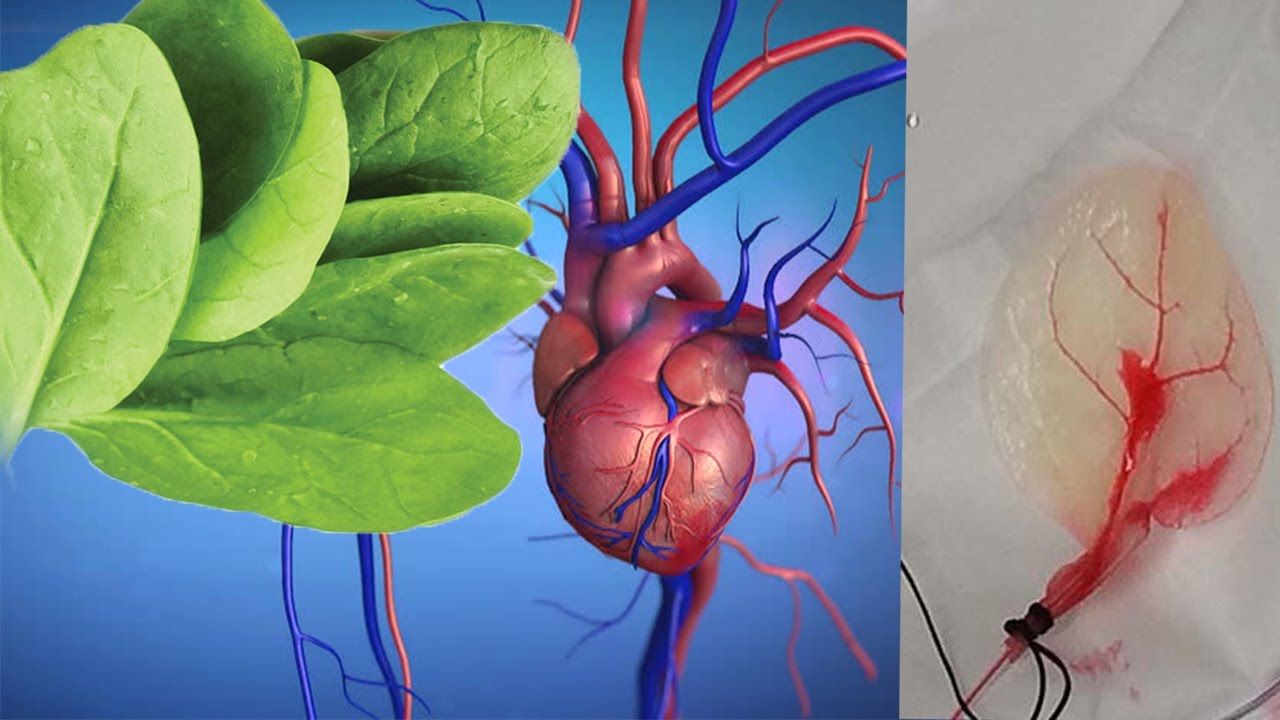
The vascular system of the spinach leaf closely mirrors the network of blood vessels in human tissues, making it an excellent candidate for this application. By utilizing the leaf’s existing structure, scientists can potentially overcome the limitations of artificial scaffolding methods, which often struggle to replicate the complexity of human vasculature.
Potential Applications
This technique holds promise for repairing damaged heart tissues, particularly in patients who have experienced heart attacks. By developing personalized heart patches using this method, there is potential to restore function to compromised areas of the heart. Beyond cardiac applications, the principles demonstrated in this research could extend to engineering other tissues. For instance, the cylindrical structure of certain plant stems might be adapted for creating vascular grafts, and wood’s inherent strength could be harnessed for bone engineering.
Future Directions
While the initial results are promising, further research is necessary to ensure the safety and efficacy of these plant-based scaffolds in human applications. Key considerations include confirming that the cellulose framework does not elicit adverse immune responses and that the engineered tissues can integrate seamlessly with the body’s existing structures.
This fusion of plant biology and medical science exemplifies the innovative approaches being explored to address complex challenges in healthcare. By repurposing natural structures, researchers are opening new avenues for developing treatments that could significantly impact the future of regenerative medicine.
