


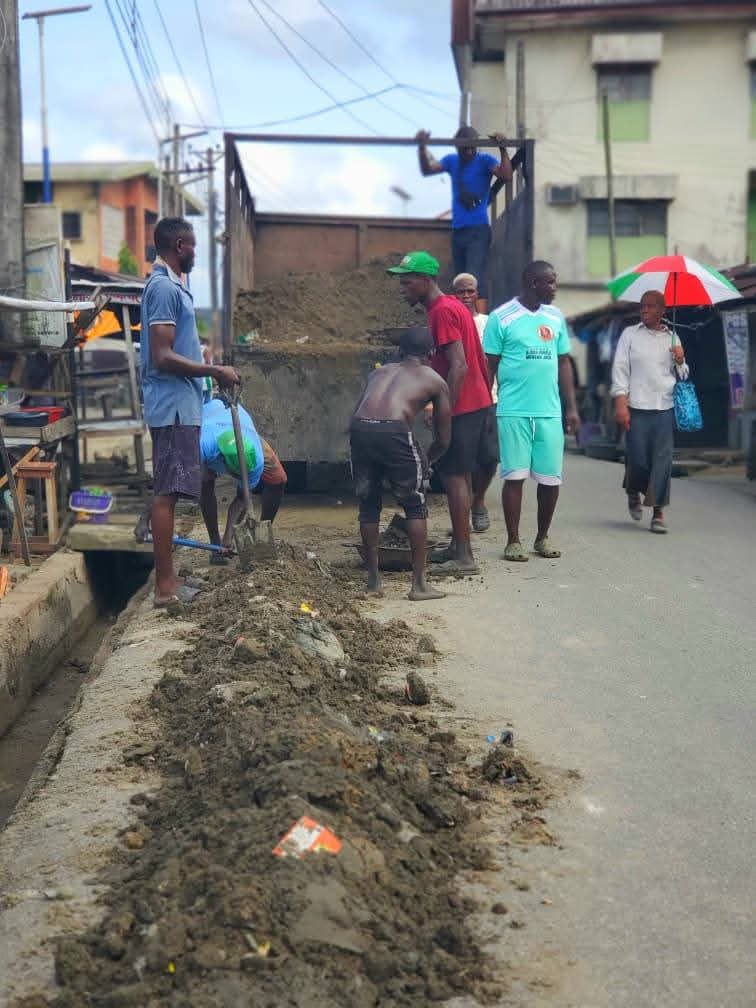
In a deliberate efforts to avert perennial flooding in the area, the Chairman of Akuku Toru Local Government Area of Rivers State, Hon. Aboiya-a Bob-Fubara, has commenced desilting of drainage networks in Abonnema.
The exercise which commenced on Tuesday, July 7, 2026, will according to the chairman end the mayhem brought on the people by the incessant heavy rainfall in the state.
Describing Abonnema as the commercial and administrative hub of the LGA, Bob-Fubara warned residents against disposing wastes in drainages.
He assured the people that the removal of accumulated silt, aquatic weeds and refuse would continue, to restore drainage channel go their original depth and capacity.
According to him, the exercise will enable even the heaviest rainfall to find a free passage to the Atlantic and end the reoccurring submerging of homes and properties during rainy days.
His words: “This exercise will also drastically reduce in vector-borne diseases as blocked drains have historically served as breeding grounds for mosquitoes and pathogens.
“By eliminating stagnant pools, the council is making a direct intervention in the fight against malaria, typhoid, and cholera, thus promoting a healthier population.
“Also, preserving road infrastructure. Standing water gradually weakens asphalt and degrades road bases. This timely desilting will prevent premature road failure, ultimately saving the local government millions of naira in rehabilitation costs and ensuring the longevity of the newly constructed roads.
“It will also boost economic activities. A clean and flood-free environment encourages commerce. Traders can now operate their businesses without disruptions, and vehicular movement around the town will become smoother, positively impacting the local economy.”
Meanwhile, in response to preventive measures, some natives and business owners in the area, commended the chairman.
The exercise, which is currently ongoing across the length and breadth of the headquarters, has been met with widespread applause from residents, market women, and stakeholders who have long decried the devastating effects of blocked waterways.
They noted that the removal of accumulated silt, refuse, and aquatic weeds will restore the drainage channels to their original depth and capacity.
