


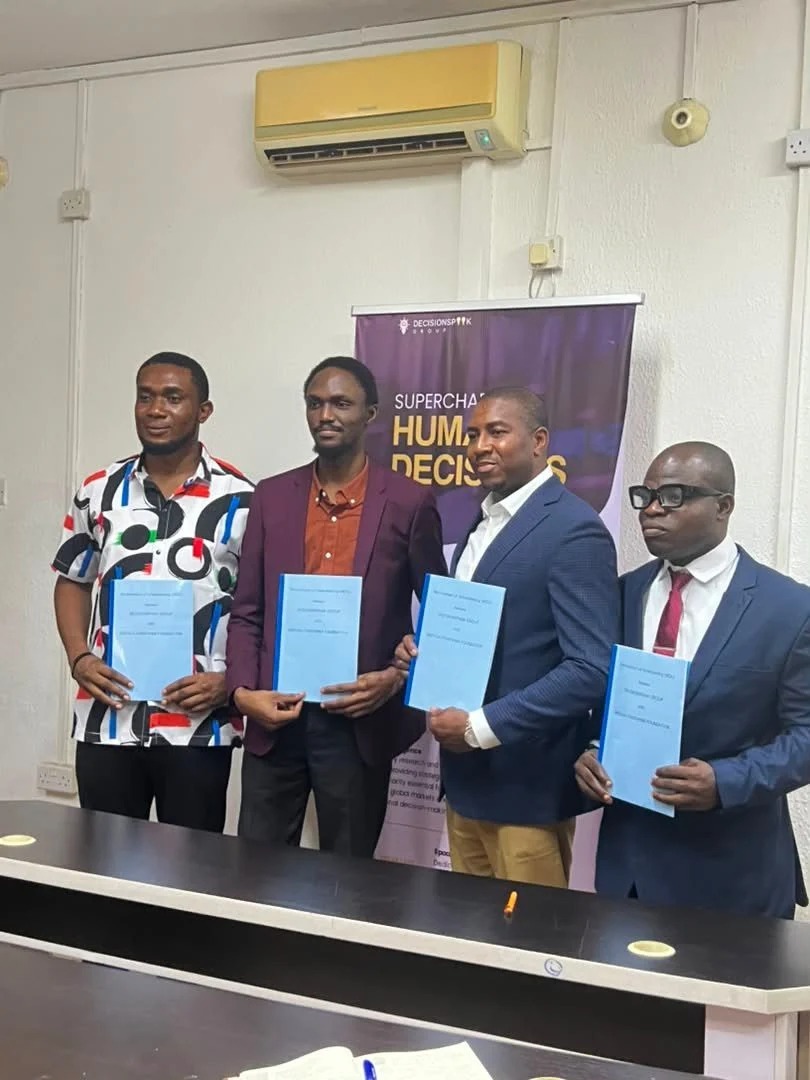
A new partnership between the Gbenga Fawehinmi Foundation and technology company Decision Spaak is aiming to accelerate digital inclusion across Africa by equipping millions of young people with artificial intelligence and future ready technology skills.
The collaboration, unveiled in Lagos on Monday, is part of an ambitious plan to train 10 million Africans in AI, digital literacy and innovation, with a strong focus on underserved communities.
The initiative is designed to give students and young people practical exposure to emerging technologies while preparing them for opportunities in an increasingly digital economy.
Speaking at the unveiling, President and Chief Executive Officer of Decision Spaak, Philip Adekambi, said the programme aligns with the company’s broader mission to make AI education accessible across the continent.
“We are on a mission to train 10 million Africans on AI,” Adekambi said.
According to him, the company currently delivers training through partnerships with educational technology platforms, universities, professional communities and corporate organisations.
He explained that the collaboration with the Gbenga Fawehinmi Foundation marks Decision Spaak’s first major expansion into secondary schools, extending its reach beyond professionals, university students and working adults.
“AI is not just for graduates or working professionals. It can also be for students in secondary schools who can begin to understand the technology early and apply it throughout their lives,” he said.
Adekambi disclosed that the company has already impacted more than 500,000 people through various initiatives, including radio and television programmes, podcasts and technology training sessions across Nigeria and other African countries.
To further remove financial barriers, he said Decision Spaak has established a $50 million scholarship programme to support individuals who cannot afford specialised courses in fields such as artificial intelligence and business analytics.
However, he acknowledged that scaling AI education in schools still comes with challenges, particularly bureaucratic bottlenecks and approval processes involving government agencies and education authorities.
On the foundation’s side, Board Member and Director of the Gbenga Fawehinmi Foundation, Gbenga Agboola, described artificial intelligence as a powerful tool that could help close educational gaps and unlock new opportunities for underserved communities.
The foundation, he said, has spent nearly 20 years supporting vulnerable children and young people through scholarships, mentorship programmes and empowerment initiatives.
“AI has changed the game. It allows us to bring technology closer to our communities and use it to spark development and creativity,” Agboola said.
He added that the partnership would strengthen the organisation’s efforts in promoting digital literacy, STEM education and youth development in communities where it already operates.
Meanwhile, Head of Operations, Governance and Partnerships at the foundation, Joshua Aremu, revealed that the initiative will begin with a pilot programme involving selected students before expanding to a wider audience.
According to him, participants will receive access to educational resources, practical training sessions and hands on learning experiences, while performance assessments will guide future expansion plans.
“We want this to be practical and hands on.
The goal is not just to expose students to AI but to ensure they can apply what they learn to solve problems and create value,” Aremu said.
The partners also disclosed plans to collaborate with schools, community organisations and government agencies to scale the programme and increase access to emerging technology skills across Africa.
