


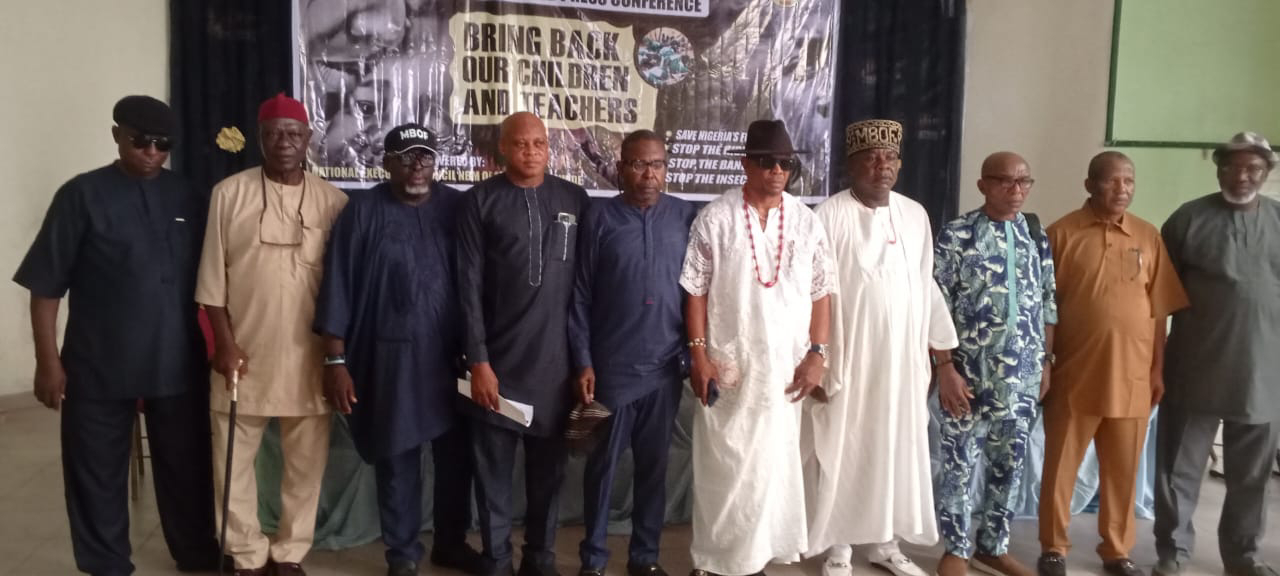
The Body of Founders of the Neo-Black Movement (NBM) of Africa Worldwide has commenced a nationwide campaign tagged “Bring Back Our Children and Teachers,” calling for stronger action to protect children and secure the safe return of every abducted child and teacher across Nigeria.
The campaign was unveiled during a World Press Conference in Asaba, Delta State, under the theme: “Bring Back Our Children and Teachers, Protect Nigeria’s Future, Preserve Humanity.”
Speaking on behalf of the movement, the Coordinator of the Body of Founders, Akpo Bodunrin Diejomaoh, urged governments, security agencies, civil society organisations, traditional institutions, faith-based groups and international partners to intensify collaboration in tackling child abduction, trafficking, exploitation and other threats facing children.
Diejomaoh described the initiative as a humanitarian intervention rooted in compassion and collective responsibility rather than politics, stressing that every child deserves safety, dignity and the opportunity to thrive.
While lamenting the growing insecurity confronting children across the country, including kidnappings, violence and the disruption of access to education, he called on the federal government to intensify efforts in fighting insecurity and corruption.
Diejomaoh said the campaign represents a moral call to action aimed at building safer communities and safeguarding Nigeria’s future by protecting its youngest and most vulnerable citizens.
He stated, “The ‘Bring Back Our Children and teachers campaign, therefore, represents more than a conference theme. It represents a moral commitment to building safer communities, stronger institutions, and a more compassionate society,
“It is our hope that this conference will generate meaningful dialogue, inspire practical action, strengthen partnerships, and renew public commitment to child protection.”
According to him, the movement has consistently demonstrated its commitment to humanitarian service through scholarship schemes, healthcare interventions, educational support, environmental sanitation campaigns, disaster relief efforts, blood donation drives, prison outreach programmes and other community development initiatives across Africa and beyond.
Also see: Nigeria’s Diversity Makes Democracy Essential” – Fubara
The NBM coordinator also called for increased investment in school security, stronger child protection mechanisms and greater community vigilance, insisting that the welfare of children must remain a national priority. He urged parents, teachers, policymakers, traditional and religious leaders, security agencies and ordinary citizens to unite behind the campaign, emphasising that protecting children is a shared responsibility.
Continuing, he stated, “Today, we call upon all relevant authorities to continue strengthening efforts aimed at protecting children and ensuring that every missing or affected child is safely reunited with their family,
“We call for greater investment in educational security,
“We call for stronger child protection systems,
“We call for improved community vigilance,
“We call for enhanced collaboration among government institutions, civil society organizations, traditional institutions, faith-based organizations, and international partners,
“Most importantly, we call for a national culture that places the welfare of children at the center of our collective priorities.”
As part of the initiative, Diejomaoh appealed to Nigerians and the international community to observe a symbolic two-minute sit-down on the floor every morning outside their homes or workplaces until all kidnapped schoolchildren and teachers are rescued and reunited with their families.
Members of the movement demonstrated the gesture by sitting down on the floor for two minutes during the press conference, which was attended by senior officials and members of NBM Worldwide, including the Secretary of the Body of Founders, David Jegede, with acknowledgment of the movement’s President, Dr. Charles Chimezie, as well as representatives of government and security agencies, traditional rulers, religious leaders, civil society organisations and the media.
