


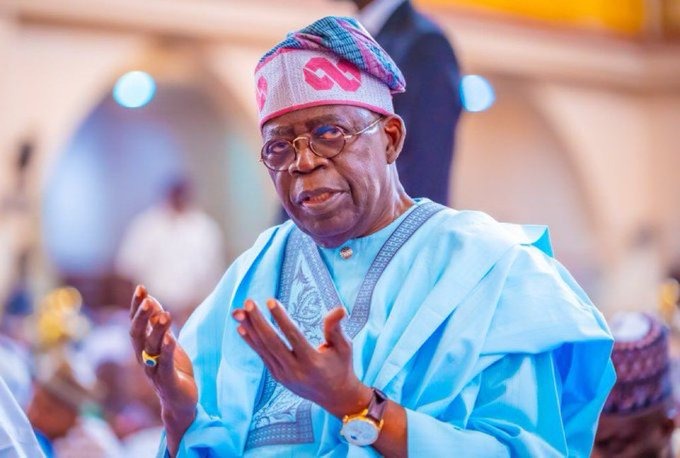
President Bola Ahmed Tinubu’s decision to stay away from the 81st United Nations General Assembly has once again put his relationship with the United States under scrutiny.
For the third consecutive year, Tinubu will not attend the UN General Assembly in New York. Vice President Kashim Shettima is instead leading Nigeria’s delegation. That pattern, by itself, does not establish why the President has chosen not to attend.
The Presidency has maintained that the decision is based on domestic priorities and that Shettima is fully empowered to represent Nigeria. But there is another issue that makes the question difficult to dismiss.
The FBI records controversy
In August, a sworn declaration filed by the FBI in a US federal court stated that records being sought through a Freedom of Information Act case were compiled as part of an investigation involving multiple individuals for drug-trafficking crimes.
The filing has also been reported as acknowledging that an earlier official recognition had been made that Tinubu was the subject of an investigation.
That is a significant development, but it needs to be stated carefully: being the subject of an investigation is not the same as being found guilty of a crime. The available court material does not, by itself, establish that Tinubu committed a drug-trafficking offence.
Nevertheless, the matter raises a legitimate public-interest question: what should Nigeria’s own institutions do when foreign law-enforcement records raise allegations involving a sitting president?
Should the EFCC examine any financial or money-laundering issues that fall within its mandate? Should the NDLEA determine whether there is a basis to examine the drug-related allegations? Should the National Assembly seek further clarification?
These are institutional questions that deserve answers independent of partisan politics. What does presidential immunity mean?
Section 308 of Nigeria’s Constitution provides the President with substantial immunity from civil and criminal proceedings while in office, subject to the exceptions contained in the Constitution. But presidential immunity should not automatically be interpreted as a declaration that every allegation against a sitting president is either true or false.
There is an important distinction between an allegation, an investigation, prosecution, and conviction. Each requires its own legal process and evidentiary standard.
Three years of UNGA absence
The controversy has become more politically charged because of the President’s repeated absence from the UN General Assembly.
Atiku Abubakar has publicly questioned Tinubu’s decision to skip the event for a third consecutive year and has linked the absence to the controversies surrounding the President’s history in the United States.
Those are political allegations and interpretations, however, rather than established findings. The administration, on the other hand, maintains that Shettima’s leadership of the Nigerian delegation does not diminish the country’s representation or diplomatic standing.
Both positions are part of the public debate. What should not happen is for political accusations to automatically become facts or for official explanations to escape scrutiny simply because they come from government.
Nigeria deserves institutional answers
The bigger issue, therefore, goes beyond whether Tinubu attends the UN General Assembly or travels to the United States.
It is whether Nigerian institutions are prepared to examine credible allegations involving the country’s highest office according to the same principles of evidence, due process and institutional independence that should apply to everyone else.
If there is no legal basis for an investigation, the relevant authorities should explain why. If there is a legal basis, Nigerians should know whether the appropriate agencies have examined the available information. And if the evidence does not support the allegations, that conclusion should also be stated clearly.
The answer should not simply be another political exchange between Tinubu’s supporters and opponents. It should come from institutions capable of separating documented facts from allegations and political interpretation.
Tinubu does not necessarily have to travel to America to answer every allegation made against him. But questions surrounding the FBI records, his US history, and his repeated absence from the UN General Assembly are unlikely to disappear simply because the President remains in Nigeria.
The more important question is whether Nigeria’s institutions will address those questions transparently, lawfully and without political double standards.
