


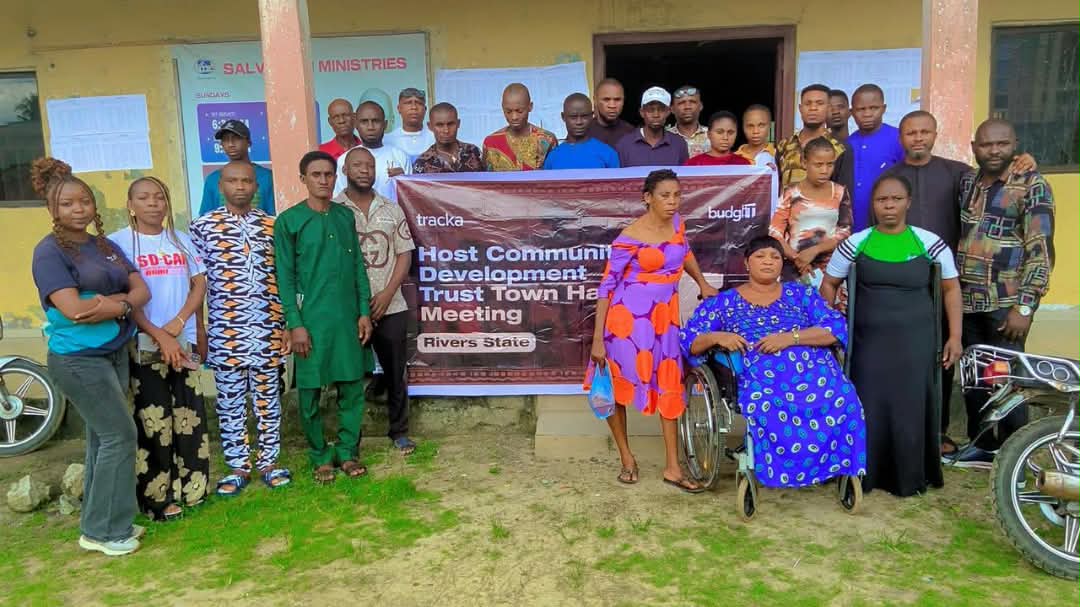
Representatives of the Host Community Development Trust (HCDT) in oil-producing communities in Gokana Local Government Area of Rivers State have been urged to ensure wider consultation with community members when selecting and implementing projects under the Petroleum Industry Act (PIA).
The call was made by the Rivers State Officer of BudgIT Foundation, Mercy Eze, during an HCDT Town Hall Meeting held at Mogho community in Gokana LGA on September 12, 2026.
The sensitisation meeting, organised by BudgIT Foundation with support from the Ford Foundation, was aimed at educating members of the host community about their rights and responsibilities under the HCDT provisions of the PIA.
Eze stressed the need for HCDT representatives to regularly consult the people they represent to ensure that projects reflect the actual needs of the community.
“My call to action to the representatives is to carry the people along more. Let there be proper consultation. Whoever you are representing should be able to say that what you are carrying should be their needs, so that when the project is done, you can say you have met their needs and expectations,” she said.
She also called for frequent town hall meetings where residents could express their priorities and receive information about HCDT funds, projects and implementation.
According to her, community participation should not end with project selection, but should extend to monitoring, ownership and protection of completed projects to ensure sustainability.
Eze said the ongoing sensitisation programme was designed to help host communities understand the HCDT, their rights under the PIA and how they could effectively engage with the process.
She noted that while communities had identified projects such as school and market renovations, there was a need to look beyond infrastructure to issues such as youth empowerment, skills acquisition and financial support for women.
“From what they have said so far today, what I feel is pressing is empowerment for the youths, maybe skill acquisition. Aside from structural projects, they also want empowerment where their youth can learn skills, and women can be empowered with loans and grants,” she said.
Read Also: oil-theft-nscdc-makes-148-arrests-in-rivers
Eze commended the Mogho community for its participation in the town hall meeting, describing the engagement as positive while acknowledging that there were still gaps that needed to be addressed.
The Community Development Chairman of Mogho, Gokana LGA, Benneth Baadom, thanked BudgIT Foundation for the sensitisation and said the community would begin to ask more questions about the HCDT and demand projects that address the needs of residents, particularly women, youths and persons with disabilities.
Baadom identified electricity, healthcare, roads, scholarships and women’s empowerment as some of the priority areas requiring attention in the community.
He said the community’s electricity infrastructure needed improvement, while the health centre required upgrading and roads also needed rehabilitation.
He further called for scholarships and empowerment programmes, noting that oil exploration and pollution had negatively affected agricultural activities in the area.
“We need to know what is happening in the Host Community Development Trust,” Baadom said, urging community members to become more involved in the process.
A community representative, Comrade Gbiga Mene, also commended BudgIT Foundation for creating awareness about the HCDT, saying the meeting had helped residents understand the benefits of the PIA and their role in needs assessment and project implementation.
Mene urged community leaders to prioritise scholarships, skills acquisition and grants for less-privileged residents and persons with disabilities.
He said such interventions would help ensure that HCDT projects benefit a wider range of people within the community.
Speaking on behalf of persons with disabilities, Aakol Helen expressed appreciation to the organisers for including people with special needs in the sensitisation meeting.
She appealed to HCDT representatives to include persons with disabilities in community development programmes and provide opportunities for them to acquire vocational skills.
“We want to learn skills,” she said, calling for support that would enable people with disabilities to become economically self-reliant.
The participants generally called for greater transparency, consultation, and inclusion in the management of HCDT funds and the selection and execution of projects in host communities.
