


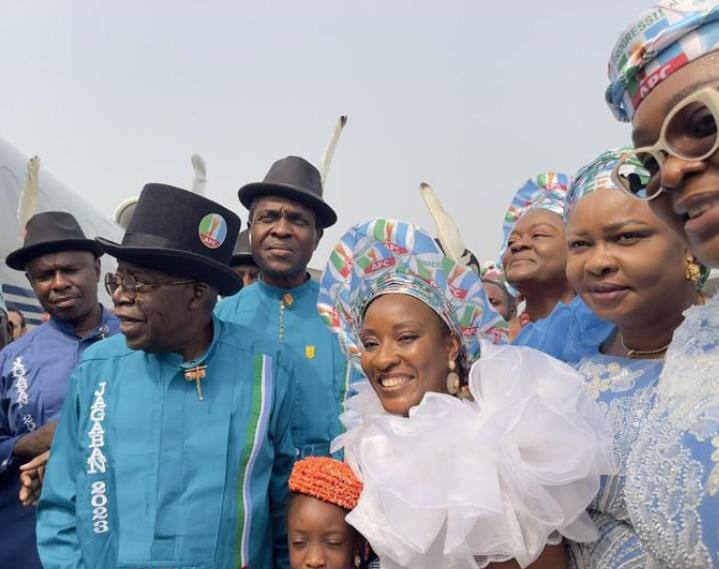
As President Bola Ahmed Tinubu prepares to visit Port Harcourt for the All Progressives Congress (APC) presidential campaign rally on Saturday, November 7, attention is once again turning to Rivers State’s relationship with the Federal Government and what that relationship has delivered for its people.
The rally, scheduled for 10am at the Adokiye Amiesimaka Stadium, is being organised by the Rainbow Coalition and is expected to attract political leaders, party members and supporters from across the state.
However, beyond the political mobilisation and expected show of support for the President’s 2027 re-election bid, the visit presents an opportunity to examine a more important question: what has Rivers State gained from its federal political representation under the Tinubu administration?
In the days leading up to the rally, APC chieftain Princewill Dike highlighted several federal appointments secured by Rivers indigenes under the current administration. Among those mentioned are Ambassador Desmond Akawor, who represents Rivers State on the Revenue Mobilisation, Allocation and Fiscal Commission (RMAFC), Boma Iyaye of the Niger Delta Development Commission (NDDC), and Senator Magnus Abe, Chairman of the National Agency for the Great Green Wall.
The Minister of the Federal Capital Territory, Nyesom Wike, had also disclosed in October that Rivers State secured at least 49 federal appointments under Tinubu, including directors-general, executive secretaries and heads of government agencies.
While such appointments offer Rivers indigenes opportunities to participate in national decision-making and public administration, their actual value to the state should also be measured by the influence they bring, the opportunities they create and the extent to which they translate into development for residents.
Infrastructure is another area expected to feature prominently in discussions surrounding the President’s visit.
The 37.9-kilometre Bodo-Bonny Road, which was temporarily opened in December 2025, represents a major development for Bonny Island, providing a direct road connection to the mainland. The project has the potential to improve transportation, trade and economic activities in the area.
Other projects cited by political participants include sections of the East-West Road, the Kaa-Ataba Bridge linking Khana and Andoni, the Bonny Ring Road and Bridges, and the Federal University of Environment and Technology in Tai Local Government Area.
These projects are important, but their announcement or inclusion in government plans is not enough. Their completion, accessibility, maintenance and direct impact on surrounding communities are what ultimately matter.
For residents of Rivers State, federal representation should mean more than having their indigenes occupy important positions in Abuja. It should also reflect in better roads, improved healthcare, employment opportunities, functional educational institutions and increased economic activities, which Nigerians still cry for.
The question is particularly relevant as Rivers prepares for another election cycle. Political support and appointments may demonstrate a working relationship between the state and the Federal Government, but residents also have a right to ask what that relationship has delivered beyond political recognition.
Ultimately, the value of federal representation should not be determined by the number of political appointments announced or the size of a rally. It should be measured by how much those opportunities and government interventions improve the lives of the people they are meant to serve.
