


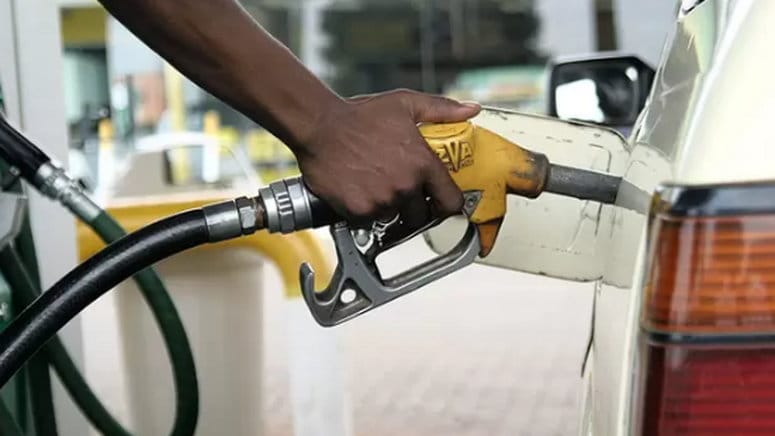
For the average Nigerian, walking past a filling station blackboard has become an exercise in survival maths. Just a month ago, petrol prices climbed toward a shocking ₦1,300 per litre. Then, almost quietly, they eased downward by a few dozen naira. To the ordinary commuter, this “relief” is cold comfort, a rounding error on top of a wound that has never healed since May 2023.
Before President Tinubu’s inauguration-day declaration that “the fuel subsidy is gone,” petrol sold for roughly ₦189 to ₦199 per litre nationwide. Within days, prices more than doubled to between ₦488 and ₦557. By July of that same year, pump prices had hit N617 naira per litre, the highest in Nigeria’s history at the time.
Three years on, that figure has ballooned past ₦1,300, a rise of more than 640 percent. This was not a gradual adjustment. It was a policy that took a subsidy that shielded over 200 million people and tore it apart overnight, with no transition period, no wage adjustment, and no functioning safety net waiting to catch the fall.
Government economists insist the subsidy was unsustainable, pointing to the ₦4.3 trillion spent holding up pump prices in 2022 alone. That figure is real. But so is the cost of removal: transport fares tripled, food prices followed, and inflation ate into wages that never moved.
Nigeria has lived this script before: in 2012, a similar removal pushed prices from ₦65 to ₦140 and was reversed within two weeks after nationwide “Occupy Nigeria” protests made clear the public could not absorb the shock. This time, there was no reversal, only a promise that market forces would eventually stabilize things.
Also Read: http://NUJ Pledges Support to Position Bonny as Tourism Hub
Three years later, that promise remains unfulfilled. Under the old regime, a spike in global crude prices was a government problem, quietly absorbed through subsidy payments. Today, it is a household problem, felt immediately at the pump and passed down through every market stall and transport fare in the country.
When crude prices tensed up a few weeks ago, it was ordinary Nigerians, not the treasury, who bore the adjustment.
Real reform does not mean choosing between a bankrupt subsidy and an unprotected populace. It means building the safety net first, then removing the support. Nigeria did it backwards, and millions are still paying for the effect.
The government must act now. It must stop treating removal of policy as complete once the subsidy is gone. It should urgently fix targeted cash transfers to vulnerable households, expand functional mass transit to cut fuel dependence, and channel refining gains from domestic production into visibly lower pump prices, not profit percentage.
Transparency on subsidy savings is non-negotiable; Nigerians deserve to see where that money goes. The government cannot keep asking citizens to absorb market shocks while critical safety nets remain unbuilt. Amendment without protection is not freedom: it is abandonment. The time for promises has passed; the time for delivery is now.
