


You’ve seen them, or heard of them: a young person on a busy street, talking to voices no one else can hear. Shirt inside out, shoes mismatched, chewing ice and ash because their body craves things that aren’t food. A bus passes and they jump, convinced it’s hunting them.
To strangers, this person looks lost. To them, it’s all real. That is what hard drugs do, they build a private, terrifying world, then lock the door from inside while the rest of us watch.
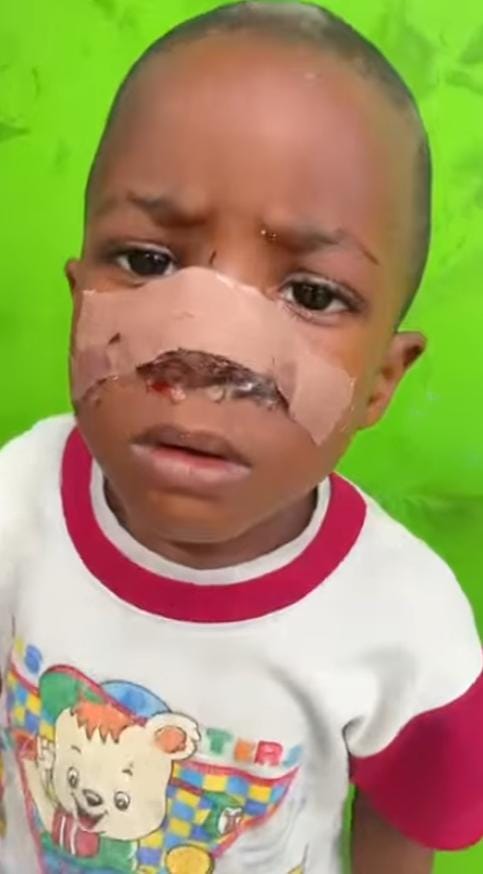
In Okrika, a father under the influence of Colorado bit off his young son’s nose. The boy now lies in hospital, breathing through his mouth, awaiting surgery he cannot afford, a bill of roughly ₦1 million that no ordinary family can raise overnight. His mother is now begging the public for help.
This is why we keep insisting: drug abuse destroys far more than the user. It destroys homes. It destroys children. Anyone choosing a life partner should look past charm to character, to temper, to how someone handles pain, because the wrong choice doesn’t only wound you.
It can cost a child their face, their future. Addiction is not a private matter. When society stays silent, it is children who pay.
Also Read: http://Korokoro Resident Uses WhatsApp to Track Oil Pollution
Drugs don’t create violence out of nowhere. Yes, colorado and similar substances can trigger psychosis; a break from reality, and aggression. But why is this substance so freely available across Okrika, Port Harcourt, and the rest of Rivers State? Why is a ₦500 sachet easier to find than a counselor? Until we confront supply, poverty, and the absence of rehabilitation centers, we are merely shouting at smoke while the fire burns.
Shame does not heal addiction, treatment does. Branding users as monsters only drives them, and their families, into hiding. The father in this story must face the law, without question.
But he also needed intervention years earlier: job support, mental health care, rehabilitation that doesn’t cost a fortune. We cannot arrest or judge our way out of an epidemic.
This boy deserves surgery and justice. He also deserves a society willing to ask harder questions than simply “why did his father take drugs?” Where were the support services? Where was the help before this happened? And who pays for the next child if we fail to build these systems now?
Anger is easy. Policy is difficult. But only policy will keep the next child’s face intact.
Rivers State’s government and leaders must fund rehabilitation centers across Okrika, Port Harcourt, and every local government area. Mental health care and addiction treatment should be free and accessible. Dealers pushing hard drugs on our streets must face real consequences. No poor family should watch a ₦1 million surgery become a death sentence.
Communities and churches, too, must stop burying addiction under shame. Build support groups. Train people to recognize warning signs early. If a neighbor is struggling, don’t gossip, connect them to help instead.
