


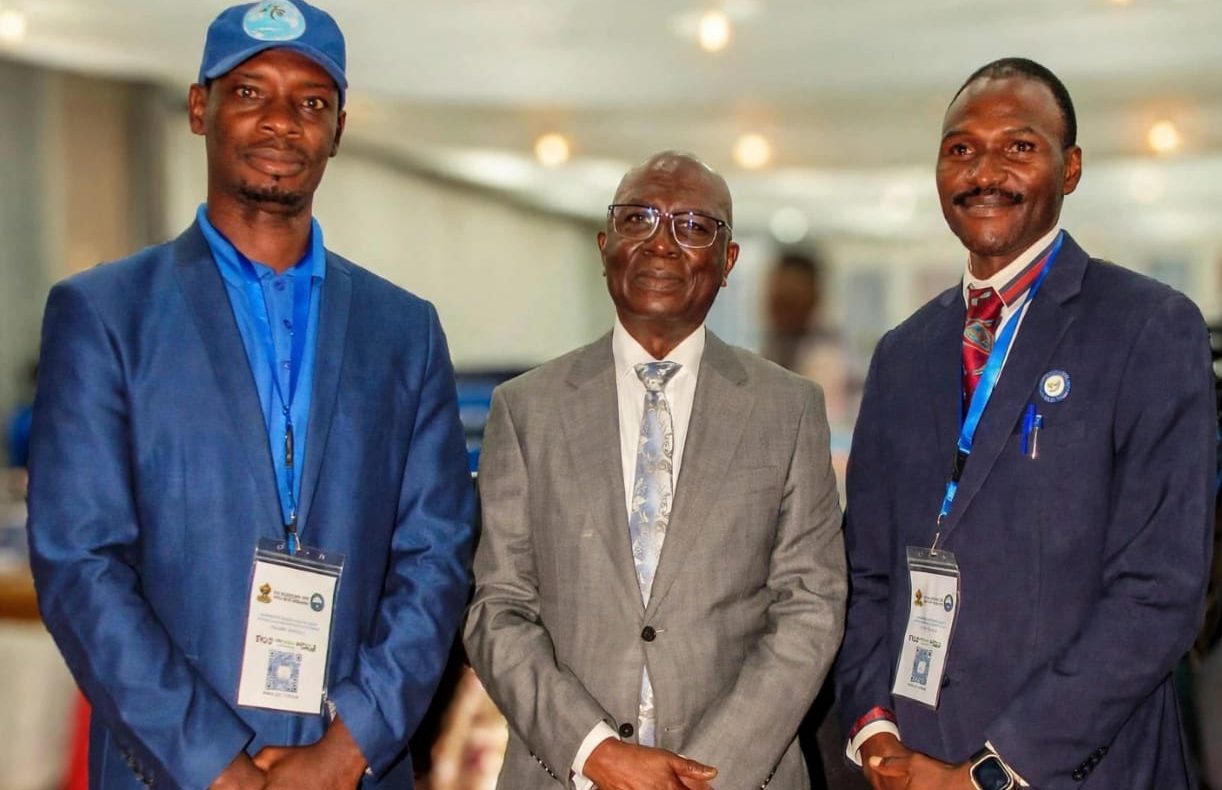
Comrade George Perewei Wilcox, President and Lead Advocate of the Association of Traditional Maritime and Coastal Development Initiative (ATMCDI), has denied allegations linking him to the alleged removal of the Institute of Maritime Studies (IMS), Niger Delta University (NDU), from the budget of the Nigerian Maritime Administration and Safety Agency (NIMASA).
Wilcox described the allegation as false and an attempt to unfairly tarnish his reputation, insisting that he neither had the authority nor the influence to determine the agency’s budgetary allocations.
In a clarification statement issued amid growing concerns over the status of the IMS-NDU project and the proposed Regional Maritime Skills Acquisition Centre, Wilcox provided an account of his involvement in engagements with NIMASA regarding maritime skills development for youths in the Niger Delta coastal communities.
2024 NATIONAL ASSEMBLY PROCEEDINGS
According to Wilcox, the matter came up in 2024 following the third summons issued to NIMASA by the House of Representatives Committee on Public Petitions.
He explained that during the proceedings, NIMASA proposed resolving the matter through Alternative Dispute Resolution (ADR).
Wilcox stated that, in the course of the engagement, the agency presented a document to representatives of the coastal community youths indicating that the Bayelsa State Government had allocated land for the proposed Regional Maritime Skills Acquisition Centre.
He identified Mr. Abdullahi Muazu Abubakar (Rtd.) as the NIMASA representative who presented the document.
2026 SITE VERIFICATION EXERCISE
Wilcox further disclosed that in 2026, a Deputy Director of NIMASA instructed him to visit and verify the proposed project site and establish who was responsible for the property.
He said he carried out the assignment and subsequently submitted his findings to the agency through Mrs. Moji Jimoh, a NIMASA staff member.
According to him, he was also informed that the same location had previously been proposed for a Maritime Skills Centre by a former Director-General of NIMASA, who could not complete the project before leaving office.
He added that a staff member of the institution corroborated the information.
Wilcox, however, said a different account subsequently emerged, indicating that the site was associated with the Institute of Maritime Studies, Niger Delta University.
WHY HE MADE THE SITE PUBLIC
Explaining why he visited the location, took photographs and subsequently made them public, Wilcox said his action was motivated by concerns over the prolonged delay in establishing the proposed Regional Maritime Skills Acquisition Centre.
He maintained that his intention was to draw public attention to the delay and encourage NIMASA to take concrete steps towards delivering the project for the benefit of unemployed youths in the coastal communities.
He stressed that immediately after receiving conflicting information regarding the ownership or institutional affiliation of the site, he forwarded the information to the Deputy Director who had assigned him the verification exercise.
Wilcox insisted that he did not conceal any information from the agency or deliberately misrepresent the status of the property.
REJECTS ALLEGATIONS OVER IMS-NDU BUDGET
Reacting to a recent allegation by a staff member of IMS-NDU, who reportedly accused him of being responsible for the institute’s alleged removal from NIMASA’s budget, Wilcox described the claim as baseless.
He expressed concern that he was being blamed for a budgetary decision over which he had no authority or control.
He also noted that IMS-NDU was reportedly the first Institute of Maritime Studies project initiated by NIMASA, stressing that he had never campaigned against the institution or advocated for its removal.
“How can I, a community advocate with no control over NIMASA’s budget, be blamed for a budgetary decision of a federal agency?” he queried.
REAFFIRMS COMMITMENT TO MARITIME SECURITY AND YOUTH DEVELOPMENT
Wilcox reiterated that he was not an adversary of NIMASA but a stakeholder interested in the agency’s success, particularly in sustaining the zero-piracy status achieved through Operation Deep Blue.
He argued that providing maritime education, vocational training and relevant skills acquisition opportunities for unemployed youths in the Niger Delta coastal communities was essential to sustaining maritime security.
According to him, meaningful human capacity development would provide young people with legitimate economic opportunities and discourage a return to piracy, militancy and sea robbery.
He maintained that his advocacy was driven by the need to address unemployment and promote sustainable development in coastal communities rather than undermine any existing maritime institution.
CALLS FOR PUBLIC CLARIFICATION
Wilcox called on NIMASA to publicly clarify the status of both the Institute of Maritime Studies, Niger Delta University, and the proposed Regional Maritime Skills Acquisition Centre.
He also urged the agency to address the apparent confusion surrounding the two initiatives and provide clear information about their respective locations, ownership, funding arrangements and implementation status.
He cautioned against what he described as attempts to shift responsibility for institutional or administrative decisions onto community advocates who were merely demanding the fulfilment of development commitments.
Concluding his statement, Wilcox said he would not allow himself to be made a scapegoat over the controversy, insisting that his position remained consistent: the Niger Delta coastal communities deserve access to maritime education, skills acquisition and employment opportunities.
By ATMCDI
