


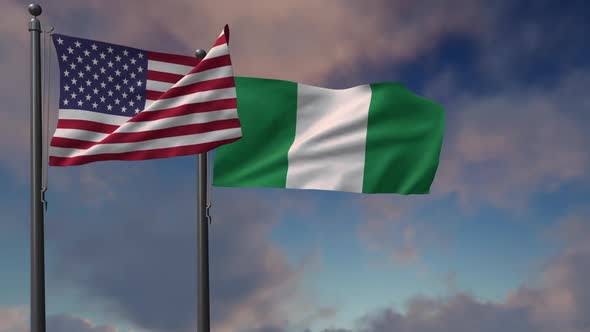
With nearly a year to Nigeria’s 2027 general elections, the country’s democratic process is already attracting international attention.
The latest signal came from the United States, where Congressman Riley Moore said Washington would be closely monitoring the conduct of Nigeria’s next elections, stressing the need for a transparent, credible and peaceful electoral process.
Moore made the remarks during a meeting with Nigeria’s Minister of Foreign Affairs, Yusuf Tuggar, in Washington. According to him, the United States sees Nigeria as a critical democratic and economic partner in Africa, making the credibility of its elections a matter of international interest.
He noted that the U.S. Congress would continue to support democratic governance and would pay close attention to developments leading up to the 2027 polls.
The statement is significant because it comes at a time when Nigeria is still reflecting on the controversies that trailed the 2023 general elections.
Allegations of logistical failures, delayed transmission of election results, voter suppression in some areas and prolonged legal battles left many Nigerians questioning the strength of the country’s electoral system. Those concerns have since fueled calls for reforms ahead of the next election cycle.
Also see: “Authority Not Up for Debate”-Ekpeye Palace Fires Back
While some may view the U.S. position as foreign interference, it is more accurately a reflection of Nigeria’s influence on the African continent. As Africa’s largest economy and most populous nation, Nigeria’s political stability has implications for regional security, trade, investment and democratic governance across West Africa.
A credible election in Nigeria sends a strong signal to the rest of the continent, while a disputed one can create uncertainty that extends beyond its borders.
The United States’ decision to closely monitor the elections also aligns with its longstanding policy of supporting democratic institutions around the world.
In previous Nigerian elections, international observers from the United States, the European Union, the Commonwealth and other international bodies have monitored voting, assessed the electoral process and released reports highlighting strengths and areas requiring improvement.
However, the responsibility for delivering a credible election does not lie with foreign governments. It rests with Nigeria’s electoral umpire, security agencies, political parties and the electorate itself.
The Independent National Electoral Commission (INEC) will once again face the enormous task of conducting an election that is transparent, efficient and acceptable to Nigerians.
Nigerians deserve elections where votes are protected, results are transparent and winners emerge through the genuine will of the people rather than controversy.
