


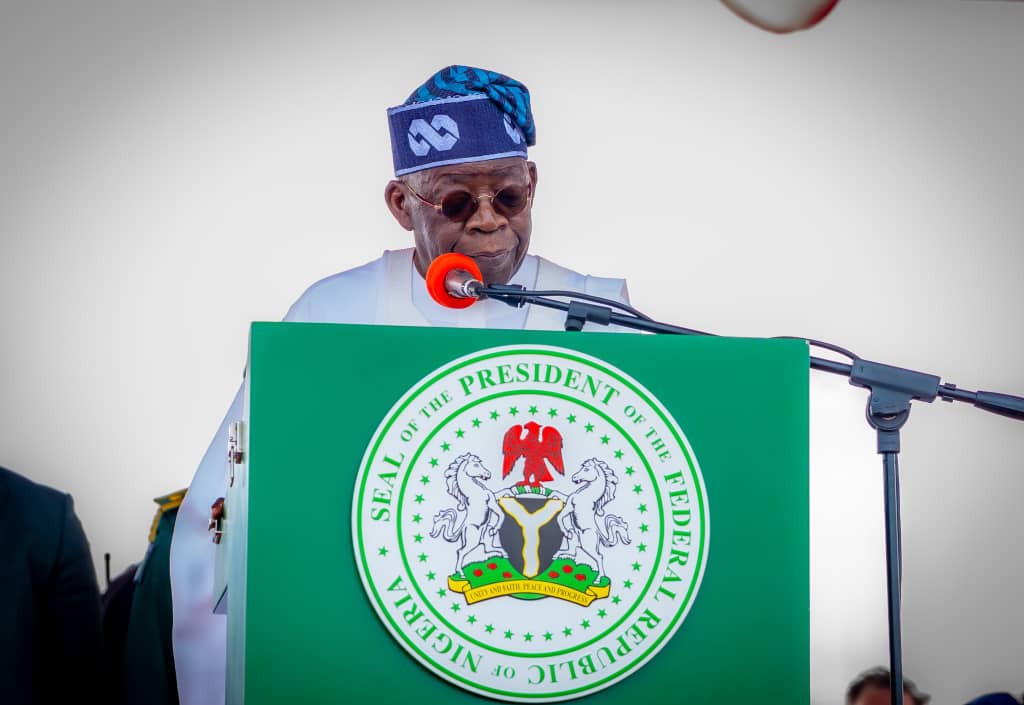
The Bola Tinubu-led government on Friday defended its ongoing economic reforms, saying they have restored stability to the economy, improved fiscal transparency, and strengthened investor confidence, while promising further gains for Nigerians.
In a Democracy Day address marking 27 years of uninterrupted civilian rule since 1999, Tinubu said Nigeria’s democracy had remained resilient, noting that the country had moved from a period of uncertainty to what he described as a more stable economic environment.
He said the reforms introduced since 2023 were necessary to address deep-rooted structural challenges in the economy, adding that they had resulted in increased revenues shared among the federal, state, and local governments.
According to him, improved fiscal management has reduced leakages and ensured that public funds are now more directed towards critical sectors, including infrastructure, education, healthcare, and security.
Tinubu also said the reforms had begun to restore investor confidence, pointing to renewed interest in agriculture, energy, manufacturing, technology, mining, transport, and the creative industry.
On the power sector, he said the Electricity Act signed by his government had decentralised electricity generation and distribution, allowing states to play a more active role in addressing energy challenges.
He added that ongoing interventions in the sector were aimed at expanding access to electricity, especially in rural and underserved communities, describing power supply as a key democratic dividend Nigerians must begin to enjoy more widely.
The President acknowledged that many citizens were still facing economic hardship, but said the government remained committed to tackling inflation, boosting food production, creating jobs, and improving living standards.
He said the next phase of reforms would focus on accelerating growth and ensuring that the gains of economic adjustments are felt more directly by citizens, insisting that “democracy must be felt in the pocket.”
Tinubu urged Nigerians to remain patient with the reform process, saying the measures were necessary to secure long-term economic stability and national prosperity.
