


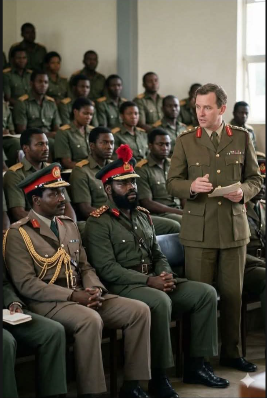
Did you know that in 1964, Emeka Ojukwu, who was the quarter master general of the Nigerian army, called a meeting of all the Nigerian staff officers in Lagos. In this meeting, no British officer was present. The matter to be discussed is a Nigerian affair.
Context:
The Nigerian affair was a whole lot of problems, judging from the standard of living at the time. There was a political war that happened in the Western region between Awolowo and Akintola. The census crisis in 1962 which continued in 1963. The Tiv riots, which the military had to step in and stop. Election malpractices and rigging. Ministers are asking for 10% before contracts are awarded. Then there was the very scary political standoff between Nnamdi Azikiwe and Tafawa Balewa after the 1964 general elections.
(All these might seem little to an average Nigerian today, judging from what we are used to now. But in those days, those were unheard of)
Back to our story:
In this meeting, Emeka Ojukwu asked all of them a question about what would happen in the event of a political crisis, and if conflicting orders were coming from the president Nnamdi Azikiwe, who holds the title of the commander in chief of the armed forces, and from the prime minister Tafawa Balewa, who was democratically elected, forming a government which has Alhaji Ribadu as the defense minister. If the conflicting orders come from the president and the prime minister, who should the army obey?
Silence.
No one had an answer to the question. After further deliberation, they all agreed that Emeka Ojukwu should sort and get the answer to that question from the then GOC, General Welby Everard. The meeting was over.
Also Read: http://Navy Seizes 135,000 Litres of Illegal Fuel In Rivers
But before Emeka Ojukwu could seek an audience with the GOC, he was summoned to the GOC’s office. When Emeka Ojukwu got to the office, the GOC was upset with him because he (The GOC) got information that Emeka Ojukwu had been holding “political meetings”. Apparently, a Nigerian officer, who had attended the meeting and said nothing, had run to the British GOC to tell him all about the meeting. The Nigerian officer is Yakubu Gowon.
Emeka humbly requested the GOC to summon everyone who attended the meeting so he could repeat everything in everyone’s presence. The GOC did, and when everyone who attended the meeting had arrived, Emeka Ojukwu repeated all that was discussed in the meeting. When he finished, the general was lost in thought. Then he asked Emeka why he didn’t come to him first. Then Emeka Ojukwu told the general that it was a Nigerian affair and if the worst comes to the worst, the British high command might order him (the general) to stand down. What happens then? Again, the general thought about it and told Emeka Ojukwu that he was right. Then the general, who didn’t have the answers, agreed to consult the Attorney General of the Federation and get a ruling on the matter.
Then the general turned to “Jack” and ticked him off for spreading alarmist rumors. Outside the general’s office, Emeka Ojukwu approached Jack and asked him why he had gone to the general behind his back. Jack apologized, telling Emeka he didn’t understand what he (Emeka) was talking about in the meeting. Emeka Ojukwu calmly told Jack to ask for clarification next time such a thing happens.
When General Welby Everard consulted the attorney general, he got a ruling that in the event of conflicting orders from the president and the prime minister, the army should follow the orders of the democratically elected person. That is the prime minister and his subordinate.
What this question from Emeka Ojukwu and the whole incident would solve was that 2 years later, the remaining cabinet of the Tafawa Balewa government willingly abdicated power to General Ironside, and the president had no real constitutional backing to stop it.
Lesson: The way you handle small things will always be the way you handle bigger things.
What lessons have you learned from this story?
Know Your History.
By Akanu Ujah Agwu
