


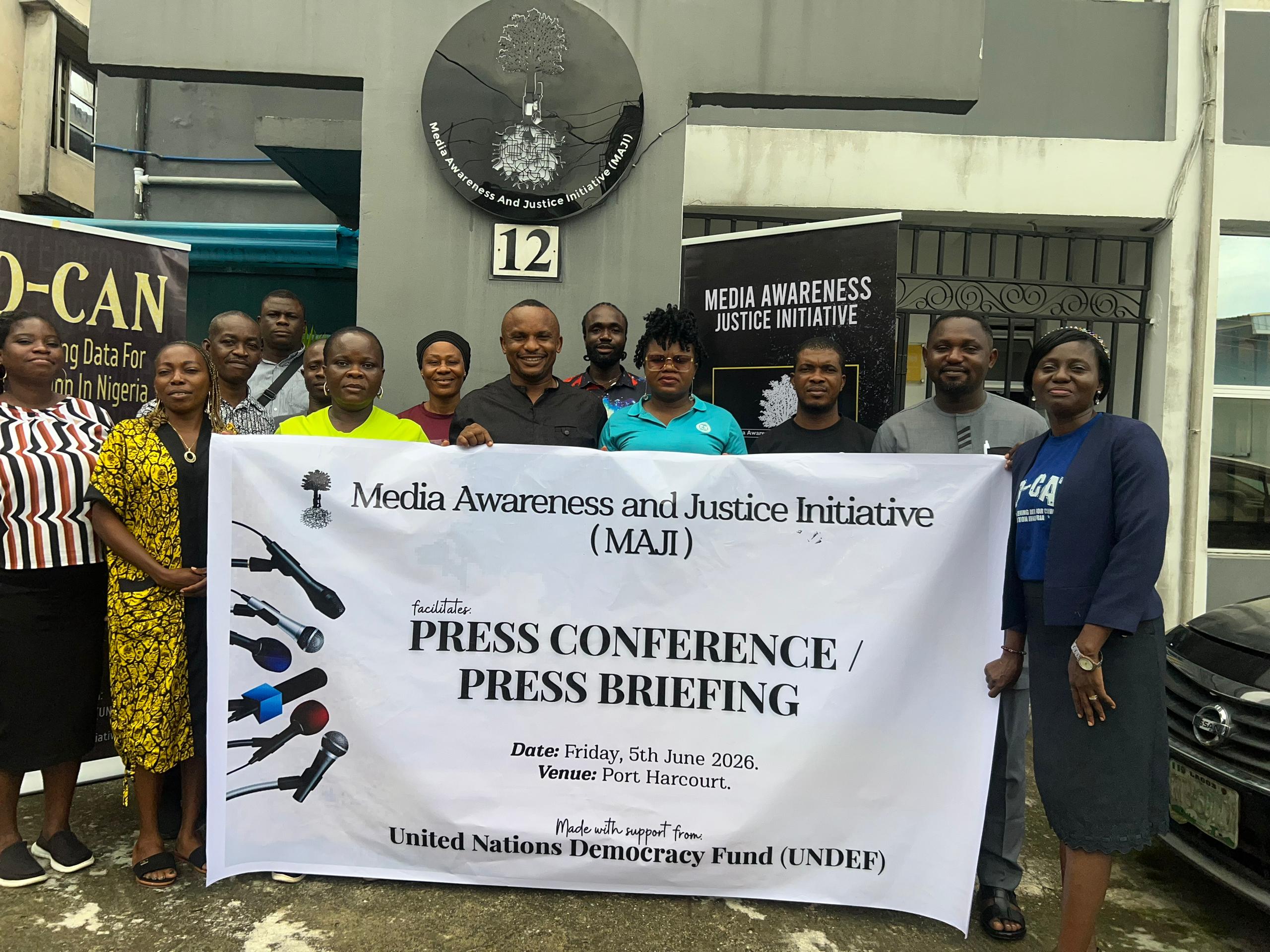
As the world marks World Environment Day, governments and stakeholders have been called upon to intensify efforts and adopt effective approaches to significantly reduce the use of ozone-depleting substances and the indiscriminate emission of greenhouse gases in the Niger Delta region.
Speaking in commemoration of the day while briefing journalists in Port Harcourt, the Lead Project Officer for Environment Conservation at the Media Awareness and Justice Initiative (MAJI), Ikechukwu Ahaka, urged government environmental agencies and relevant stakeholders to embrace technological tools and inclusive strategies to protect the environment.
Ahaka emphasized the need for increased public sensitization and stronger government-backed actions to curb environmentally harmful practices that threaten public health and degrade ecosystems.
He noted that persistent environmental challenges stemming from oil exploration activities, industrial emissions, and human-induced pollution continue to worsen air quality and endanger communities across the region.
Reaffirming MAJI’s commitment to environmental protection, Ahaka highlighted the organisation’s “Strengthening Data for Climate Action in Nigeria (SD-CAN)” project, supported by the United Nations Democracy Fund (UNDEF). He explained that the initiative deploys low-cost air quality monitors across communities in Akwa Ibom, Bayelsa, and Rivers states to generate real-time data on pollution levels.
According to him, the data is analyzed and made accessible through the DATACAB environmental portal, enabling communities, civil society organisations, journalists, and government agencies to make informed decisions and hold polluters accountable.
“Our approach is rooted in evidence-based advocacy. By making environmental data accessible, we empower communities to engage meaningfully in climate action and demand accountability,” he said.
Ahaka further revealed that MAJI has been building the capacity of community members, government agencies, media professionals, and civil society groups to utilize data-driven tools for environmental monitoring and governance.
He attributed the worsening air quality in the Niger Delta to lapses in enforcement by regulatory authorities and urged them to leverage available environmental data to track and curb pollution.
The MAJI official also called for environmentally friendly methods in the disposal of seized illegal petroleum products by enforcement agencies, warning that current practices contribute to further environmental degradation.
Highlighting community-level interventions, Ahaka said the organisation has trained local populations to adopt sustainable practices such as the use of clean cookstoves made from locally sourced materials. He noted that such initiatives help reduce indoor air pollution, which disproportionately affects women and children.
He also stressed the importance of engaging young people through environmental education, revealing that MAJI has established environmental clubs in secondary schools to raise awareness and discourage involvement in environmentally harmful activities, including artisanal refining.
Ahaka expressed concern that many young people perceive pollution and gas flaring as normal due to lack of awareness, underscoring the need for targeted education and sensitization.
He added that data collected from air quality monitoring indicates significant pollution spikes, particularly at night, suggesting ongoing illegal activities that require urgent government intervention.
To address these challenges, MAJI made several recommendations, including: Intensifying efforts to reduce ozone-depleting substances and greenhouse gas emissions, ending gas flaring, which has been declared illegal in Nigeria.Strengthening environmental regulatory agencies with adequate policies, manpower, and technology.
Promoting the adoption of inclusive and technology-driven environmental protection strategies.Encouraging multi-stakeholder collaboration, including government, civil society, and the media
Ahaka called on journalists to amplify data-driven environmental reports to enhance public awareness and advocacy.
“We cannot fix what we cannot measure. Now that we have evidence, we must act. Protecting our environment is a collective responsibility,” he said.
He urged all stakeholders to work collaboratively to safeguard the environment, protect livelihoods, and secure a sustainable future for communities in the Niger Delta.
