


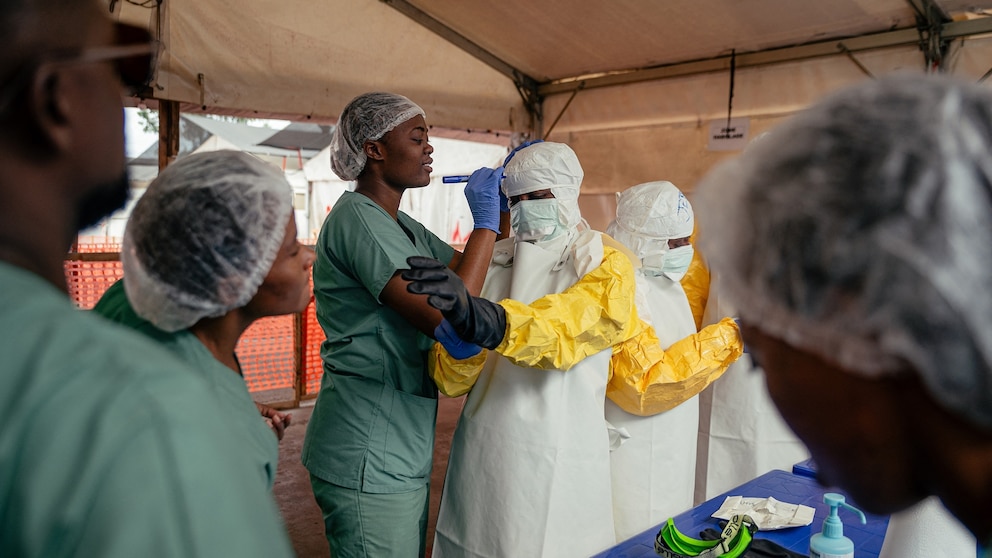
The Director-General of the Nigeria Centre for Disease Control and Prevention (NCDC), Dr. Jide Idris, has called on state governors to increase funding for healthcare workers and strengthen disease surveillance systems as concerns grow over the re-emergence of the Bundibugyo strain of the Ebola virus in parts of Africa.
Speaking at the third Adetokunbo Alakija Memorial Lecture and the induction ceremony of new members into the Nigerian Society of Travel Medicine (NSTM) in Lagos on Thursday, Idris stressed the need for greater collaboration between federal and state authorities to prevent the virus from entering Nigeria.
According to him, the Federal Government has already put several preventive measures in place, including enhanced screening at airports and improved contact-tracing mechanisms. However, he noted that state governments must also invest in healthcare personnel and infrastructure to strengthen the country’s preparedness.
“Our focus is to stop any potential Ebola case from crossing into Nigeria,” Idris said. “While federal agencies are working at major entry points, states also have a critical role to play. Health workers need adequate support, training and resources to respond effectively.”
He added that discussions were ongoing with governors and state health commissioners to encourage increased investment in the health sector, noting that some states had already taken positive steps.
Also speaking at the event, Chairman of the NSTM Board of Trustees, Dr. Patrick Chukwuma, highlighted the importance of travel medicine in preventing the spread of infectious diseases.
He explained that increased global movement has made travel a major factor in the transmission of illnesses such as Ebola and COVID-19, making health monitoring of travellers more important than ever.
“Travel medicine is about protecting travellers and safeguarding public health,” Chukwuma said. “Many infectious diseases move across borders through travel, so healthcare professionals must remain vigilant.”
Also see: P’Harcourt Woman Dies from Suspected ‘One-Chance’ Attack
Addressing newly inducted members of the society, he encouraged them to make travel history a routine part of patient assessments, describing it as an important tool for detecting and preventing imported infections.
Lagos State Commissioner for Health, Prof. Akin Abayomi, said the state remained particularly vulnerable because of its high volume of international travel. He noted that the government had intensified collaboration with airport authorities to strengthen preventive measures against Ebola and other infectious diseases.
Abayomi also disclosed that efforts were underway to introduce legislation that would make health insurance mandatory for Lagos residents.
In a keynote address titled “From Prevention to Protection: Integrating HIV into Nigeria’s Travel Health Architecture,” Director-General of the National Agency for the Control of AIDS (NACA), Dr. Temitope Ilori, said population movement continued to present challenges in HIV prevention and treatment efforts.
She noted that travellers, traders, students, transport workers and migrants often face disruptions in access to healthcare services. According to her, travel health systems can serve as effective platforms for delivering voluntary HIV-related services without restricting movement. The event also featured the induction of 52 new members into the Nigerian Society of Travel Medicine.
Meanwhile, the Federal Government has intensified health screening procedures at airports, seaports and land borders across the country. Officials have stated that travellers identified as high-risk or showing symptoms associated with Ebola and other viral haemorrhagic fevers will undergo additional screening, isolation and referral when necessary.
Authorities have maintained that Nigeria has not recorded any confirmed Ebola case, but emphasised that nationwide preparedness measures remain active to protect public health.
