


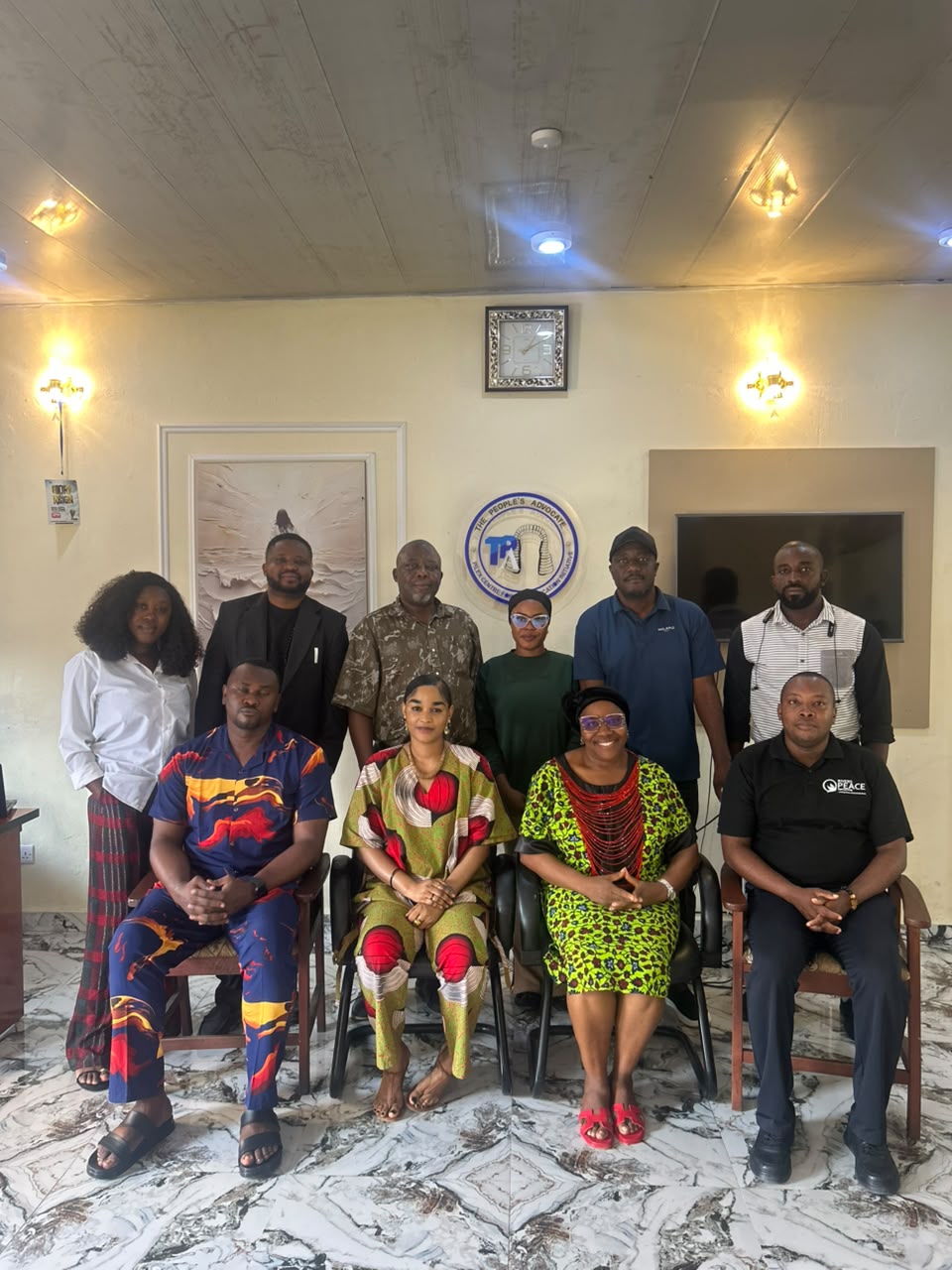
The Rivers Peace Initiative (RPI), in collaboration with the PILEX Centre and other civil society organisations (CSOs), has commenced work on a Citizens’ Charter aimed at placing the needs and aspirations of Rivers State residents at the centre of the 2027 governorship election.
The initiative is part of preparations for the Rivers We Want 2027 Governorship Dialogue, scheduled for Friday, October 23, 2026, at Osborne La Palm Hotel, Port Harcourt.
The charter is expected to outline the priorities of citizens and serve as a framework for engaging governorship candidates on their commitments to development, good governance and public accountability.
Founder of the Rivers Peace Initiative, Obinna Ebogidi, said the organisation had convened a working meeting of civil society groups to agree on strategies, responsibilities and timelines for developing the document, with implementation already underway.
The meeting brought together representatives of the Civil Liberties Organisation (CLO), Community Resource Development Foundation (CREDEF), Kebetkache Women Development and Resource Centre, Miideekor Environmental Development Initiative (MEDI) and Eco Women Connect.
Ebogidi expressed appreciation to the PILEX Centre for hosting the meeting and providing a conducive environment for collaboration.
Speaking on the significance of the charter, Coordinator of the PILEX Centre, Courage Nsirimovu, said it would serve as an accountability tool for engaging political candidates before and after the election.
Nsirimovu stated that candidates would be expected to commit to the charter, adding that those who failed to address the people’s priorities risked losing their support.
He explained that candidates who endorsed the document would be held accountable for implementing their commitments if elected, warning that failure to fulfil the people’s expectations could trigger public campaigns against their administrations.
Nsirimovu stressed the need to prioritise environmental protection, citing the environmental challenges confronting communities in the Niger Delta.
He referred to the death of Joy Amos following a gas explosion in Bille, Degema Local Government Area, and raised concerns about residents’ exposure to volatile organic compounds and other potentially toxic gases.
According to him, the situation highlights the environmental and health risks confronting communities affected by pollution across the Niger Delta.
He called for environmental remediation to be made a key component of the charter, stressing that communities needed concrete commitments to address pollution and protect public health.
Other priority areas identified for inclusion in the document include electricity and energy supply, food security, security, human rights, road infrastructure, agriculture, investment and the revitalisation of the state’s ports.
The charter is also expected to reflect the concerns of rural and urban communities, entrepreneurs, professionals, civil society organisations and public sector workers.
Nsirimovu emphasised that governance should be centred on the welfare of citizens rather than the private interests of political officeholders.
He said the initiative was intended to ensure that the 2027 governorship conversation focused on practical solutions to the challenges facing Rivers State and commitments that residents could monitor.
The Rivers We Want 2027 Governorship Dialogue is expected to provide a platform for candidates to present their plans and engage with citizens on their expectations for the state’s future.
The initiative is being organised under the theme, “Rivers 2027: The People’s Agenda.”
