


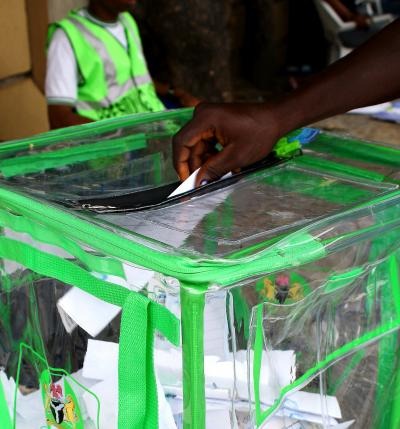
There is something profoundly corrosive about hearing confessions from the very people charged with defending our democratic norms. When a senior government official speaks proudly as though cynicism were a badge of honour, we should be alarmed, not merely offended. We expect our leaders to model integrity and restraint. Instead, some appear willing to stoop so low to conquer that they risk turning the offices they occupy into objects of national embarrassment.
Ask yourself: what has happened to public duty when political conversation turns to the mechanics of thwarting the people’s will? The remark attributed to Nyesom Wike, the FCT Minister, that if President Bola Tinubu truly wanted Osun State he would have secured it and that the opposition candidate would have been taught ‘the difference that day’, reads less like political bravado than a braggadocious boast about the ability to manipulate an electoral outcome. This has been his usual trait.
And that raises a disturbing question: what exactly is there to boast about? Is rigging an election something any reasonable citizen should admire? To claim pride in subverting the ballot is to flaunt contempt for democracy itself.
It is no small matter when those who ought to protect the ballot appear to celebrate their ability to break it. Elections are not political boxing rings where victory belongs to whoever wields the greater muscle, machinery or cunning. They are the constitutional means through which citizens confer legitimacy on those who govern them. To deliberately frustrate that choice is not political ingenuity; it is an assault on democracy.
Such rhetoric normalises an anything-goes approach to politics where the ends justify the means and the popular will becomes an obstacle to be engineered around. If those at the top speak as though electoral manipulation were simply another political tool, what incentive is there for officials at the lower levels to resist pressure? What message does it send to electoral officers, security agents and political operatives who are expected to protect the integrity of the process?
Read Also: matawalle-to-lead-security-and-intelligence-operations-for-tinubus-2027-re-election-council
This is how democratic decay begins with the gradual normalisation of conduct that should ordinarily provoke outrage. The tragedy is not simply that politicians fail the people. It is that the moral boundaries of political conduct appear to be shifting so dangerously that actions once considered shameful can now be presented as evidence of political prowess.
Femi Kuti’s lament, ‘I sorry, sorry for Nigeria’, captures the mood perfectly. It speaks not merely to political failure but to moral collapse: a nation where integrity can become optional and the instruments of the state can be repurposed for partisan advantage. We must reject the notion that ‘anything is fair in politics’. To accept it is to surrender to a bleak and entirely avoidable future.
Once society accepts politics as a game in which anything goes, the ballot becomes little more than theatre. The winner is no longer necessarily the candidate preferred by the people but the one with the better machinery for manipulating the process. Elections then cease to be instruments of popular sovereignty and become elaborate exercises in political engineering. We must reject that descent.
There is nothing noble about winning at all costs. There is certainly nothing patriotic about defeating the people’s choice through manipulation. Political victory without legitimacy is merely power wearing borrowed clothes.
Public officials must be held to a higher standard. Words matter, and any apparent boast about subverting elections should invite public scrutiny, legal examination, and where the evidence warrants it, accountability. For democracy to survive in Nigeria, its guardians must remember that their legitimacy rests on consent, not coercion; on transparency, not secrecy; and on the sanctity of the vote, not the technical skill of undermining it.
Nigeria’s democracy cannot survive on the assumption that political power excuses political misconduct. Those who govern must remember that their legitimacy comes from the consent of the governed, not from their ability to intimidate, manipulate or outsmart them.
Democracy is not protected by those who merely win elections. It is protected by those who respect the vote even when the result does not favour them.
Anything less is not politics. It is mischief masquerading as statesmanship
Okiwelu Azed P.
