


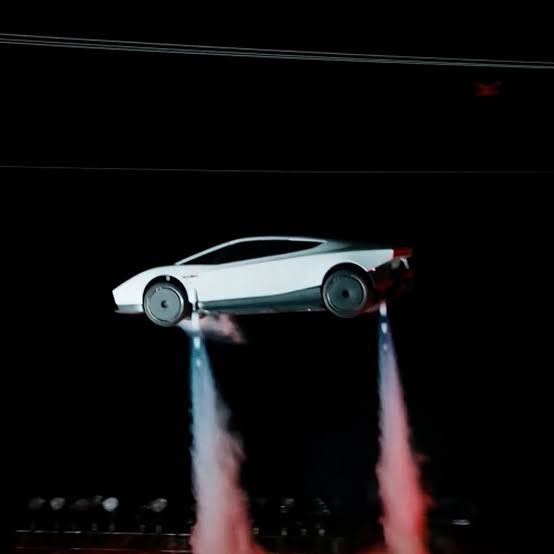
Elon Musk has unveiled a new version of Tesla’s Roadster sports car equipped with rocket-style thrusters, describing the vehicle as a major step towards making flying cars a reality.
The unveiling took place on Thursday at a SpaceX testing facility in Texas, United States, where the vehicle demonstrated its ability to launch into the air, perform aerial manoeuvres, and land on its wheels.
According to reports, the vehicle combines Tesla’s electric vehicle technology with aerospace technology developed in collaboration with SpaceX, Musk’s rocket company.
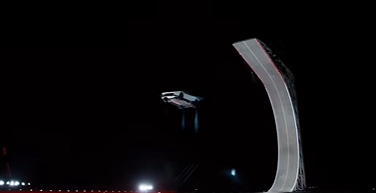
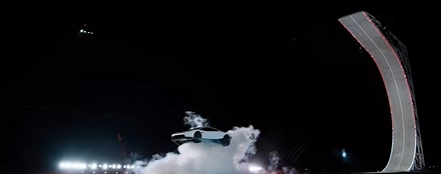
During the demonstration, the Roadster reportedly used high-pressure air propulsion systems to propel itself into the air, while a suction system enabled it to travel upside down along a specially designed ramp.
Musk, who has repeatedly discussed the possibility of flying cars, described the development as a collaboration between what he called the world’s best car company and the world’s best rocket company.
The billionaire also indicated that the vehicle’s success was not guaranteed, highlighting the experimental nature of the technology.
Tesla is targeting 2028 for the commencement of production, although the vehicle faces regulatory and safety challenges that could affect when, or whether, it becomes available for public use.
The rocket-equipped version is also expected to be a specialised model rather than an ordinary passenger vehicle. Its ability to perform aerial manoeuvres does not mean it is approved for unrestricted flight or everyday use on public roads.
The unveiling marks another development in Musk’s long-running ambition to push the boundaries of transportation through electric vehicles, autonomous technology and innovations drawn from the aerospace industry.
Tesla, founded in 2003, is widely known for its electric cars and energy products. SpaceX, established by Musk in 2002, focuses on rocket launches, spacecraft and space transportation.
Although the new Roadster has been described as a flying car, questions remain about its practicality, affordability, regulatory approval, and eventual availability to ordinary consumers.
If the technology advances beyond demonstrations and meets the necessary safety requirements, it could open a new chapter in the development of high-performance vehicles. For now, however, the public will have to wait to see whether Musk’s latest transportation vision can move from an impressive demonstration to a commercially viable product.
