


For every Nigerian who leaves home in search of a better future, there is a story of sacrifice. For Nnani Adaobi Marian, that dream ended in tragedy.
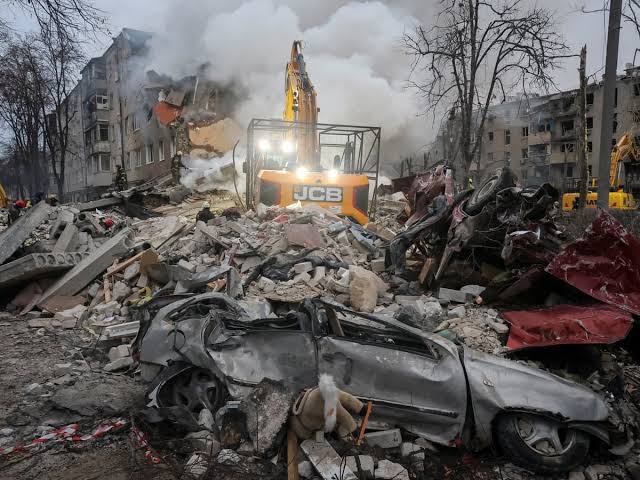
The 23-year-old Nigerian medical graduate reportedly died after sustaining severe injuries during one of Russia’s latest missile and drone attacks on Ukraine.
Reports indicate that she was caught in the bombardment and later succumbed to her injuries, becoming yet another civilian casualty in a conflict that has continued to devastate lives more than four years after it began in February 2022.
Her death has sent grief through Nigeria, not only because she was young and full of promise, but because it highlights a painful truth: wars are not fought only by soldiers. Their deadliest consequences are often borne by ordinary people simply trying to study, work, or build a future.
Like many Nigerians, Marian had travelled abroad in pursuit of a medical education, a journey that represents hope for countless families. Ukraine had, for years, become a preferred destination for Nigerian students studying medicine, engineering, aviation and other professional courses because of its relatively affordable tuition and internationally recognised institutions. For many families, sending a child there was viewed as an investment in a brighter future.
Also see: Commercial Bus Kills Wheelbarrow Pusher In Port Harcourt
Then came the war. When Russia launched its full-scale invasion of Ukraine in 2022, thousands of Nigerians found themselves trapped in a rapidly unfolding humanitarian crisis. While many were eventually evacuated, others remained for reasons ranging from academic commitments to financial constraints and personal circumstances.
Even today, despite repeated warnings and continued attacks, some foreign nationals continue to live in parts of Ukraine where the risks remain dangerously high.
Marian’s death is a heartbreaking reminder that conflict does not discriminate. Missiles do not distinguish between soldiers and students. Airstrikes do not spare those whose only ambition is to save lives as future doctors.
Every young Nigerian lost abroad represents more than another name in a news report. It is the collapse of years of sacrifice, countless prayers, and the aspirations of families who invested everything in the belief that education would unlock a better life.
The tragedy also renews calls for governments to strengthen support systems for citizens living in conflict-prone regions. While no country can entirely shield its citizens from the horrors of war, timely communication, effective evacuation plans, and sustained diplomatic engagement remain critical in reducing such devastating losses.
Wars are often remembered by the territories they capture or the treaties they produce. But history should also remember the dreams they destroy. For one Nigerian family, the Russia-Ukraine war is no longer a distant geopolitical conflict, rather, it is a deeply personal tragedy that has stolen a daughter, a future doctor, and a life filled with promise.
And perhaps that is the greatest cost of war: not the buildings reduced to rubble, but the futures that never get the chance to be lived.
