


Some experiences in agriculture never leave your memory. After one cropping season, management gave all staff a break for the festive period. Everyone went home happy, expecting to resume work in the new year.
When work resumed, our most experienced tractor operator, Awwal, was nowhere to be found. His phone was not going through. I called my boss and asked after him. He assured me he would find a way to reach him.
A few days later, my boss called me. “Ezekiel… Awwal is gone.” I was speechless.
According to his wife, he had complained of severe stomach pains before passing away days later. The entire farm was thrown into mourning. We contributed money among ourselves, and the head office in Abuja also supported the family for his burial.
Life had to continue. A replacement operator was employed, and because the farm had acquired another tractor, two operators were brought in.
A few months later, one of them, Ilayi, started complaining of serious stomach pains. At first, I thought it was ulcer. But the pain became worse.
I gave him some days off to seek treatment. Two days later, I visited his house only to be told he had been rushed to the General Hospital.
When I got there, he was writhing in pain. The doctors carried out tests and scans but couldn’t immediately identify the cause.
Also Read: http://Foundation Boosts South-East Digital Transformation With New AI-Tech Hub
Two days later… Ilayi died. At that moment, I became deeply worried.
Two tractor operators, two deaths. Similar complaints, the same stomach pains. Something didn’t feel right.
We buried him. The farm owner gave him a befitting burial, placed his three children on scholarship, and supported his wife with money to start a business. To this day, those children continue to benefit from that scholarship.
A new operator, Galoma, was later employed. One day, he called me aside. “Manager, some people are not happy that this farm is growing.”
I looked at him in surprise.”Why?” He said some villagers feared that as the farm expanded, they might eventually lose access to land or influence in the area.
Whether that fear was justified or not, I honestly don’t know. But it made me realize something important:
People can misunderstand your intentions, no matter how good they are. As the season progressed, Yahaya—the other operator employed alongside the late Ilayi—suddenly became seriously ill.
This time, it wasn’t stomach pain. It started with persistent hiccups and health complications. His family quickly took him away for treatment. Thankfully, he recovered.
But immediately after recovering, he resigned and never returned to the farm. That was the day I learned one of the biggest lessons of my agricultural career.
Before establishing a large-scale farm in any community:
(1) Carry the people along.
(2) Build trust with the villagers.
(3) Engage community leaders.
(4( Create opportunities for locals.
(5) Maintain good relationships with your host community.
(5) Never assume everyone understands your intentions.
A farm can have money. A farm can have tractors. A farm can have investors.
But without community acceptance, peace of mind can become your most expensive input.
Agriculture is not only about crops and livestock. It is also about people.
And sometimes, managing relationships is harder than managing a 1,000-hectare farm.
May the souls of Awwal and Ilayi continue to rest in peace. The Nigerian agricultural space is too toxic
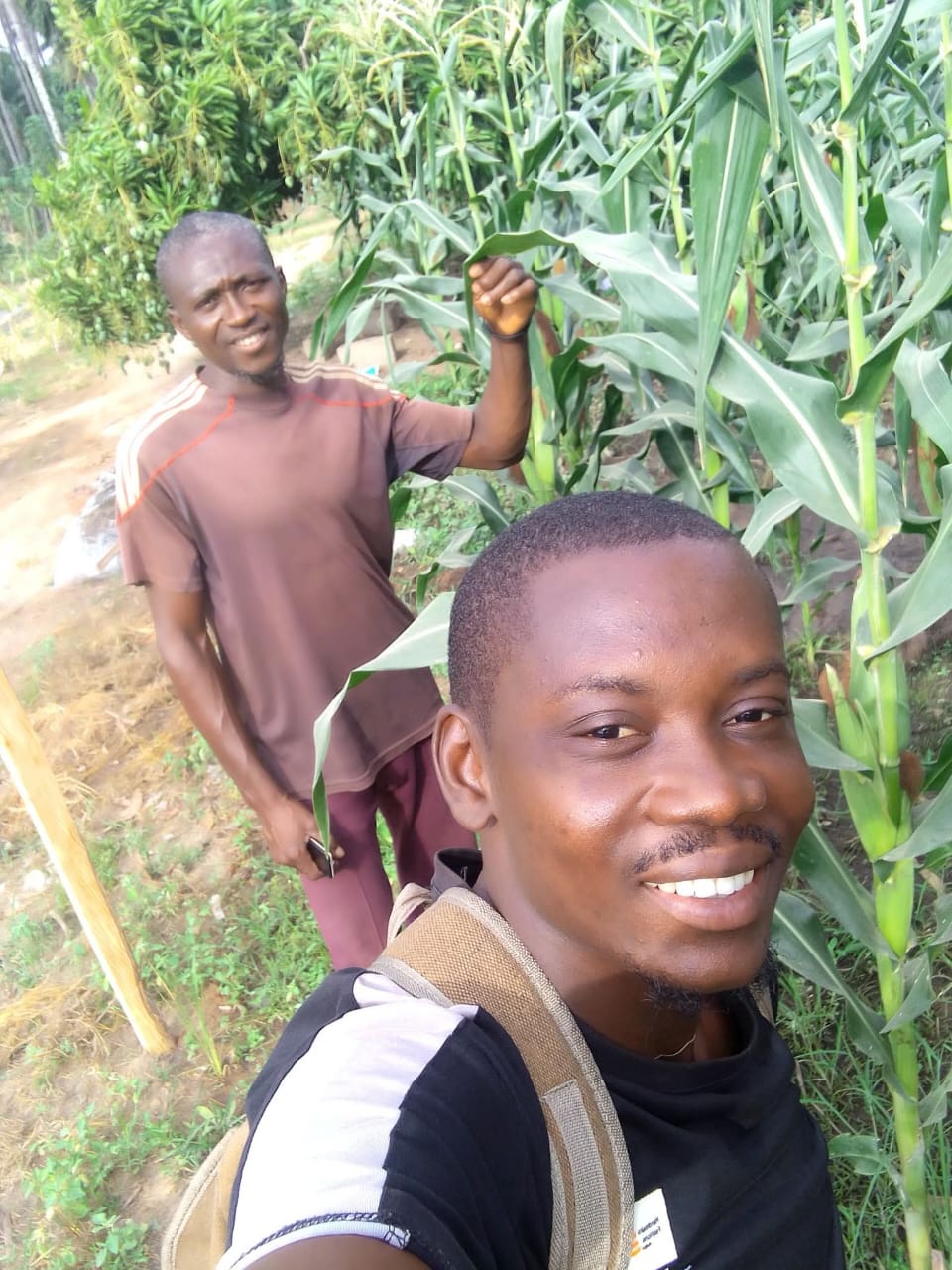
The attached picture is of me and Yahaya, the operator who survived their attack…
Umaru Ezekiel Esud
