


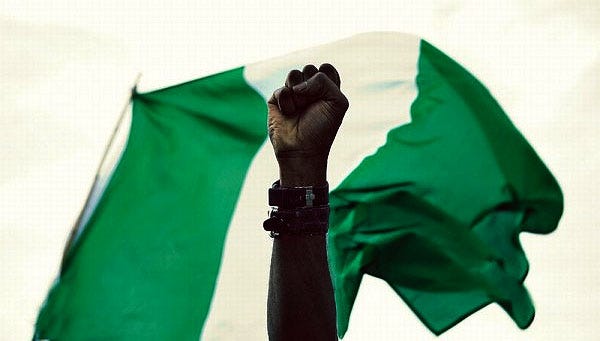
In a democracy, the role of civil society is not a luxury it is a necessity. It is the chorus of voices that refuses to be silenced when institutions falter, when laws fall short, or when public trust wanes. As Nigeria prepares for its pivotal 2027 general elections, the spotlight on civil society’s contribution to safeguarding democratic processes has never been brighter or more urgent.
At the heart of the current debate is the amended Electoral Act 2026, a piece of legislation meant to refine Nigeria’s electoral framework ahead of the upcoming polls. Yet, its passage has sparked widespread contention not just among politicians but across civic platforms and grassroots movements.
Many civil society organisations (CSOs), journalists, activists and labour unions have denounced the new law for failing to mandate real-time electronic transmission of election results a reform widely seen as critical to curbing result manipulation and enhancing public confidence in electoral outcomes. In response, CSOs under the umbrella of the Movement for Credible Elections have staged protests at the National Assembly to demand stronger safeguards in the electoral process.
Pressure from these groups has already yielded tangible results. After initial resistance by lawmakers, the Senate reversed its earlier rejection of provisions requiring electronic transmission of results following sustained advocacy by civil society, labour unions and legal experts. This reversal underscored the influence that organised civic pressure can exert on legislative decision-making an important reminder that democratic reforms are often won not solely in committee rooms but in street rallies, press conferences and public forum.
Nigeria’s civil society has also mobilised beyond protest lines. Groups such as the, Young People’s Initiative for Credible Leadership recently applauded the conduct of peaceful and transparent area council elections in the Federal Capital Territory, based on independent observation missions they deployed across polling units. Their monitoring and public reporting helped highlight positive electoral practices, offering a counter-narrative to dominant discourse of voter apathy and malpractice.
News: INEC’s Preparedness: Learning From Past Elections to Restore Public Confidence
Still, the challenges are stark. Some civil society critics warn of deepening democratic risks following local polls where irregularities and low voter turnout were reported, urging urgent electoral reforms to prevent erosion of public confidence ahead of national elections.
This level of engagement reflects a broader understanding within civic spaces: that democracy does not hinge solely on casting ballots, but also on public participation, transparency, and accountability at every stage.
The current activism is not happening in a vacuum. It builds on a legacy of citizen mobilisation in Nigeria from advocacy around electoral technology to grassroots campaigns for transparency, accountability, and constitutional reform. In recent years, CSOs have collaborated with international partners and domestic stakeholders to push for electoral reforms and to educate citizens on their rights and responsibilities at the ballot box.
Yet, civil society’s role should not be reduced to protest alone. It must also encompass voter education, independent election observation, research on democratic practices and constructive dialogue with government institutions and political parties. Organisations that map irregularities, publish findings, and propose evidence-based reforms provide the architecture upon which resilient democratic systems are built.
Critics argue that Nigeria’s civic space has sometimes been under pressure whether through restrictions on protest, limits on freedom of expression, or political pushback against dissenting voices. These constraints make the role of CSOs even more critical. A healthy democracy depends on citizens’ ability to organise, to speak truth to power, and to hold leaders accountable without fear of reprisal.
As the 2027 general elections approach, Nigeria stands at a crossroads. The choices made now about electoral laws, civic participation, and institutional transparency will shape public trust in democratic governance for years to come. Civil society, in its many forms, remains an indispensable watchdog and partner in that journey. It calls on authorities to strengthen, not weaken, democratic processes; it holds institutions to account when performance falls short; and it reminds citizens that democracy is not a spectator sport but a collective project.
In a nation as diverse and dynamic as Nigeria, democracy will only flourish when its citizens are empowered to defend it and when civil society is recognised not as an adversary, but as an essential guardian of the public will.
