


More than 103 million Nigerians are now on the voters’ register ahead of the 2027 general elections after over 10.6 million new voters were captured during the three phases of the Continuous Voter Registration (CVR) exercise.
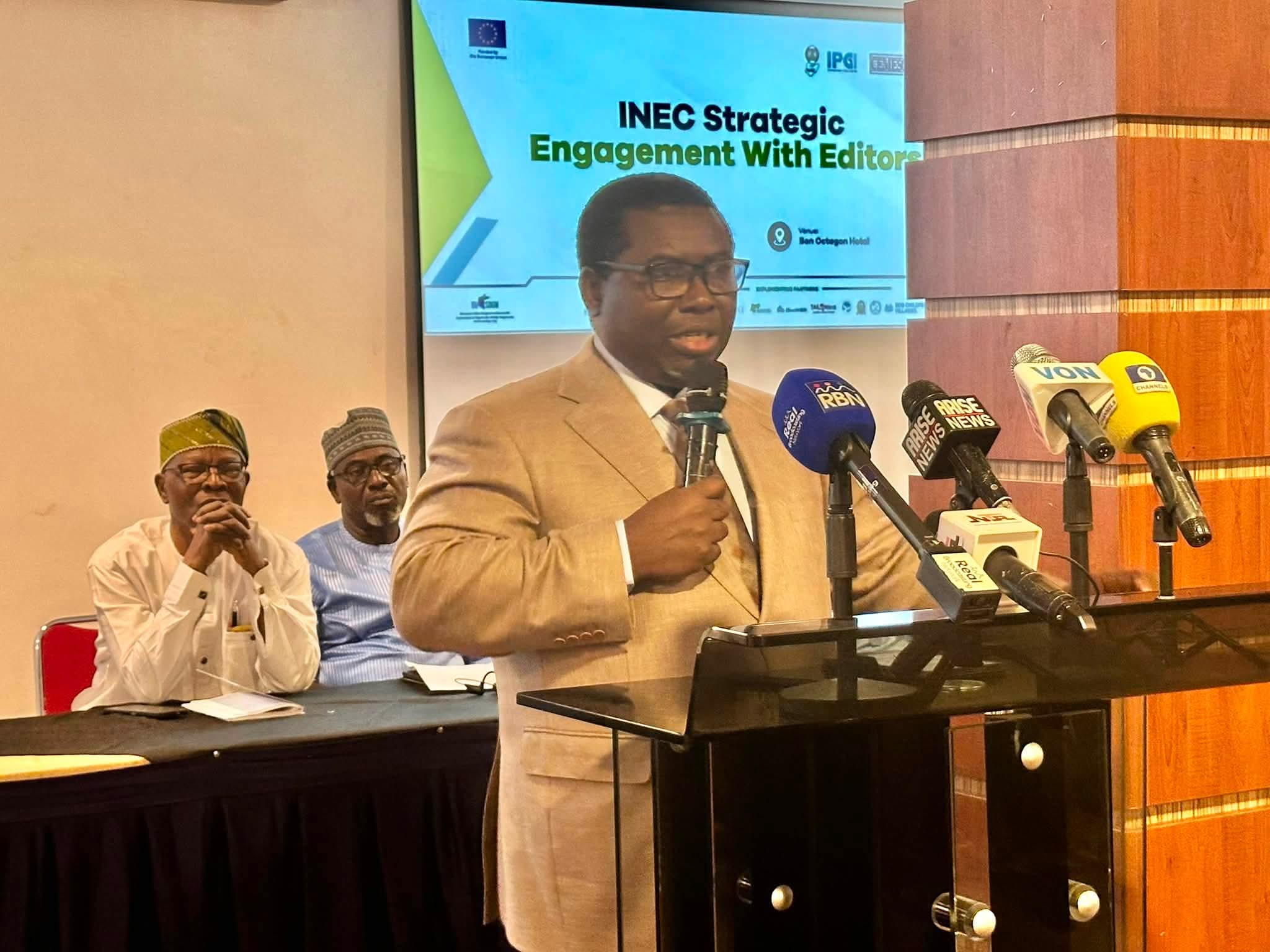
The Chairman of the Independent National Electoral Commission (INEC), Joash Amupitan, disclosed this on Monday in Abuja at a strategic workshop organised by the commission in partnership with Development Alternatives Incorporated (DAI) and the Nigerian Guild of Editors (NGE).
The workshop, held at BON Hotel Octagon in Jahi District, had the theme, “Strengthening Democracy Through Partnership Among Editors, Civil Society and Electoral Institutions.”
Amupitan said INEC had concluded the public display of the Preliminary Register, which allowed eligible voters to raise claims and objections. He added that the commission had also completed the final cleaning of the register through the Automated Biometric Identification System (ABIS).
The INEC chairman said the nationwide distribution of Permanent Voter Cards (PVCs) would begin on Friday, 9 October 2026..He urged registered voters who were yet to collect their cards to do so ahead of the 2027 elections.
Speaking to media executives, civil society organisations and electoral officials, Amupitan said improving the commission’s operational capacity would not be enough to strengthen democracy if Nigerians lacked confidence in the electoral process.
“The ultimate arbiter of electoral integrity is public trust,” he said.
He said INEC would continue to strengthen technology-based measures aimed at protecting the integrity of elections, including further improvements to the Bimodal Voter Accreditation System (BVAS) and the INEC Result Viewing Portal (IReV).
According to him, the measures are intended to ensure that legitimate votes are properly processed and transparently accounted for. Amupitan also called on media organisations to create dedicated fact-checking desks to tackle the spread of false information during the election period.
He said INEC was prepared to provide editors with direct and timely access to information on incidents at polling locations, logistics and security developments to enable them to verify reports before publication.
He further proposed the creation of a permanent feedback channel between INEC and the NGE throughout the 2027 election cycle.
The workshop also provided an opportunity for media and civil society leaders to outline the responsibilities of journalists and electoral institutions ahead of the elections.
The President of the NGE, Eze Anaba, said elections were not limited to the casting and counting of votes, but also involved sustaining public confidence in the competence and impartiality of electoral institutions.
He urged newsrooms to uphold accuracy, fairness and balance in their election coverage while asking INEC to ensure that journalists had timely access to relevant information.
The Director of Voter Education and Publicity at INEC, Victoria Eta-Messi, warned that fake news and deliberate disinformation could discourage citizens from participating in elections.
She urged media organisations to use their platforms to provide Nigerians with accurate information as the PVC collection exercise begins. DAI Team Leader, Rudolf Elbling, said credible elections depended on an ethical and fact-based media.
He identified election technology, the safety of journalists and information disorder as some of the major issues that could affect election coverage in 2027.
The Executive Director of the Centre for Media and Society (CEMESO), Akin Akingbulu, described editors as important gatekeepers in the electoral information chain.
He warned journalists against publishing unofficial or unverified election results. “Verification is a two-way street. Verify before you amplify,” he said.
Similarly, the Executive Director of the International Press Centre (IPC), Lanre Arogundade, identified political interests, competing information campaigns and financial pressures on newsrooms as factors that could affect objective election reporting.
The INEC National Commissioner and Chairman of the Information and Voter Education Committee (IVEC), Mohammed Haruna, used the workshop to highlight some of the commission’s recent activities.
He cited the governorship elections in Anambra, Ekiti and Osun, describing the Osun election as the commission’s most successful poll so far.
He also listed the Federal Capital Territory Area Council elections, legislative bye-elections and the monitoring of political party primaries across the 22 registered political parties among INEC’s recent activities.
The Chief Press Secretary to the INEC chairman, Adedayo Oketola, said the workshop was built around three major objectives.
These include rebuilding confidence in INEC through regular and transparent engagement with the media, creating a 24-hour communication channel that would allow newsrooms to verify information quickly, and promoting closer cooperation among electoral officials, civil society organisations and the media.
He said the approach would help the different stakeholders fulfil their respective responsibilities in providing voters with accurate information and strengthening civic participation.
The workshop ended with technical sessions led by experts including Tony Onyima, Lai Olurode, Lobe Hvass, Lanre Idowu and Lanre Arogundade. The sessions examined issues ranging from election technology and law enforcement to deepfakes, voter safety and the prosecution of electoral offences ahead of the 2027 elections.
