


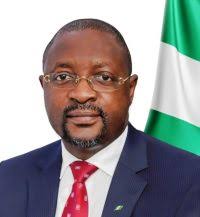
Special Adviser to President Bola Tinubu on Media and Public Communication, Sunday Dare, has censured the recommendation by the presidential candidate of the African Democratic Congress, Atiku Abubakar, to underwrite crude oil supplied to local refineries.
Dare asserted the recommendation would generate fiscal and commercial imbalances. He contended that selling federation crude to local processing facilities at concessionary rates would diminish state revenue.
The presidential envoy expressed this in a message on his X handle on Wednesday while responding to Atiku’s stance on reinstating fuel subsidies if voted into office in 2027.
He indicated the recommendation, which would entail supplying crude to local processors at reduced rates, would cause an “immediate fiscal hole” in the Federation Account.
“The Arithmetic Flaw in ‘Subsidizing the Barrel’
“Atiku’s proposition to sell crude to local refineries at ‘preferential prices’ sounds attractive until you look at the fiscal math:
“Who Pays the Bill? Selling federation crude below market price creates an immediate fiscal hole in the Federation Account, directly slashing allocations to federal, state, and local governments for schools, hospitals, and security.
“Distorting the Domestic Market: Preferential crude allocations risk creating artificial monopolies, destabilising smaller indigenous modular refiners, and violating the clear deregulatory provisions of the Petroleum Industry Act (PIA).
“The Return of Smuggling: Any regime that creates a wide gap between Nigerian pump prices and neighbouring West African markets guarantees a return of cross-border fuel arbitrage, no matter how many ‘auditors’ are promised.
“This idea is an economic safari. Applying painkillers to a festering wound.”
Dare’s remarks came after Atiku’s reiterated assertion that he would reintroduce fuel subsidies if voted into office in 2027.
Also see: Rivers Will Not Return to Political Crisis, Fubara Declares
Atiku had on Tuesday stated his stance on subsidies had remained constant, while distancing himself from remarks by one of his media spokespersons, Paul Ibe, who had indicated that the intervention would be incrementally withdrawn as the economy stabilized.
“Earlier, one of my press aides contradicted me in a policy statement as far as subsidy is concerned.
“I want to repeat categorically that when I said I would return to subsidy, I will! Nigeria is rich enough to look after the welfare of its citizens. Let it be clearly stated that he was not speaking on my own authority,” Atiku said.
Ibe had previously clarified that Atiku’s suggested subsidy would be linked to crude oil extraction and local refining, with petroleum delivered to domestic refiners at a reduced rate.
He noted the mechanism would offer provisional relief, boost economic output, and lower the expense of fuel.
“The crude oil will be sold at a discounted price, subsidised to refiners, and that will enable refiners to be able to produce fuel and diesel at a cheap cost. And when they produce cheaply, they will sell at the real pump price,” the aide said.
Dare, nonetheless, maintained that concessionary crude distributions could warp the internal market and spawn synthetic monopolies while undercutting smaller local modular refiners.
He also noted the arrangement could produce a valuation disparity between Nigeria and adjoining West African nations, likely prompting transborder fuel arbitrage.
Atiku’s stance has reignited discussion surrounding the elimination of the petrol subsidy, which Tinubu declared during his swearing-in ceremony on May 29, 2023.
The government has championed the decision as imperative to reinforce national finances, whereas Atiku has maintained that the elimination has fueled escalating living expenses for citizens.
