


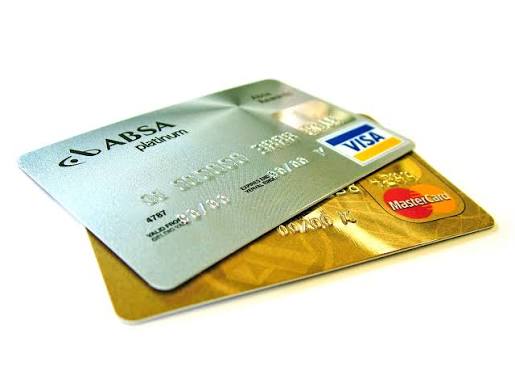
Nigerian financial institutions are relaxing caps on foreign transactions using local payment cards, signaling the most pronounced evidence to date that the Central Bank of Nigeria’s foreign-currency overhaul is rebuilding dollar availability and steadying local money values.
Guaranty Trust Bank Plc, among the nation’s five largest financial firms, raised its quarterly international spending threshold to $20,000. That represents a dramatic shift from the $6,000 ceiling instituted last November and a twentyfold jump from the $1,000 boundary in July 2025. Access Bank Plc and United Bank for Africa Plc are similarly broadening capacity, although Stanbic IBTC Holdings Plc retains a narrower monthly allowance of $100.
The loosened restrictions yield prompt relief for local households, scholars, and commercial ventures long constrained by severe dollar shortfalls. Following revised regulatory directives, the top educational fee transfer cap for learners overseas was additionally increased to $25,000 each term, up from $15,000.
“This reflects the improved liquidity in the foreign exchange market and shows the focus of banks in maximizing income from card payments,” stated Ayokunle Olubunmi, head of financial institutions ratings at Agusto & Co.
The adjustment comes after ongoing policy measures intended to expand the local currency market. Central Bank Governor Olayemi Cardoso observed during a commercial conference in Lagos that open trading dynamics now determine market results rather than routine regulator interventions. Cardoso noted that net currency reserves rebounded beyond $40 billion from slightly above $3 billion at the beginning of the reform initiative, while overall assets touched approximately $52 billion.
Muda Yusuf, chief executive officer of the Centre for the Promotion of Private Enterprise (CPPE), mentioned that the growth in card expenditure allowances indicates major gains in market liquidity and investor trust across Nigeria’s currency trade.
“It’s an indication that the liquidity in the foreign exchange market has improved significantly and we can see that from the stability of the exchange rate. We can also see that reflected in our foreign reserves. All of these things reflect the level of confidence,” Yusuf remarked.
According to him, commercial operations and private citizens are no longer strained to secure foreign funds for legitimate settlements, contrasting previous periods when access to dollars remained severely restricted.
“It also means that citizens and those who use foreign exchange are no longer desperate about foreign exchange usage. Whether you want to use it through your card or access it for international trade, there is no anxiety, there is no pressure and there is no desperation. All of these things have arisen because the level of confidence in the foreign exchange market and the outlook for the market have been very reassuring,” he added.
Yusuf pointed out that the recalibration of global spending limits by financial institutions illustrates rising faith in the permanence of currency market adjustments.
Also see: UNICAL Denies Links to Unauthorized Off-Site Learning Hub in Port Harcourt
“That is why we are seeing all these positive developments around the use of the naira card abroad and the limits that are now being adjusted by banks. It is a very good development, and I hope we can sustain it. I am confident we will.”
The expansion follows various strategy changes by the top regulatory authority intended to broaden currency flow and ease access to global legal tender for legitimate requirements.
Under the regulatory authority’s updated foreign exchange guidelines, the upper boundary for tuition disbursements for scholars pursuing higher education programs overseas was elevated to $25,000 each semester, up from the prior $15,000.
“Payment of tuition fees for undergraduate/postgraduate studies shall be subject to a maximum limit of $25,000.00 per semester,” the manual specifies.
The increase in global payment bounds also highlights strengthening trust among lending institutions that currency supplies have recovered adequately to accommodate everyday consumer transactions.
Access Bank recently announced an exchange conversion metric of N1,378 per dollar for global card transactions executed via its local debit options. The institution permits holders of Visa Signature and Visa Platinum payment cards to spend up to $3,000 monthly, while Visa Classic and Mastercard cardholders operate under a monthly limit of $2,000.
United Bank for Africa (UBA) similarly listed N1,378 per dollar for global transactions conducted on local payment options as of August 3, 2026, advising account owners to finalize processing early as conversion rates update daily alongside market movement.
Stanbic IBTC, by contrast, continues to enforce a substantially reduced international spending cap of $100 monthly across its local debit cards, applicable at point-of-sale systems, online checkout platforms, and automated teller networks.
The institutions’ renewed interest in international card operations aligns with regulatory observations that local currency markets have attained sufficient liquidity to operate with minimal central supervision.
