


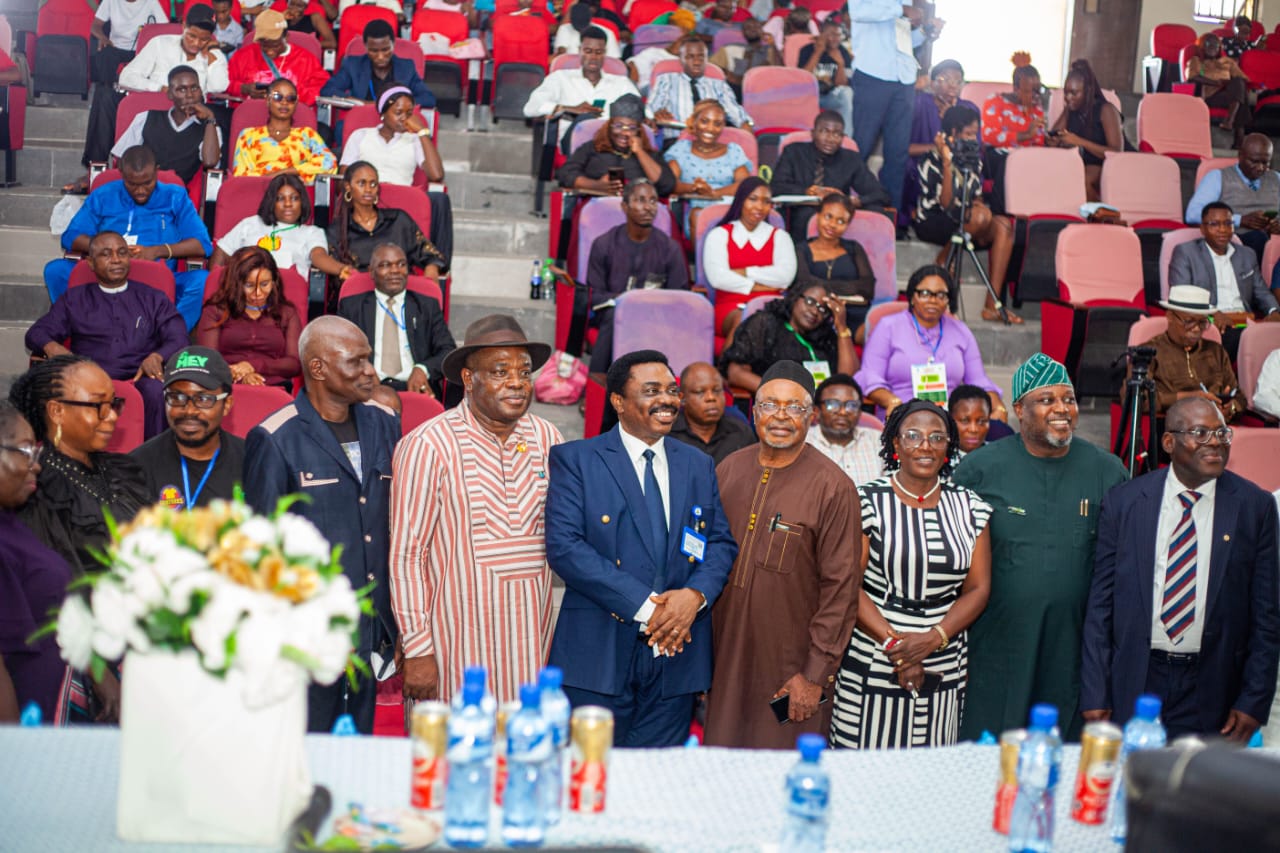
Environmental experts, academics and policymakers have called for intensified environmental education to bridge knowledge gaps and equip citizens with the skills, values and attitudes needed to tackle environmental challenges across Rivers State, the Niger Delta and Nigeria.
The call was made at the Environmental Education Summit organised by the Department of Adult and Non-Formal Education, Faculty of Education, University of Port Harcourt, in collaboration with the Centre for Social Studies and Development (We the People).
The summit was themed, “From Literacy to Action: Developing a Blueprint to Strengthen Environmental Education for Achieving Environmental Sustainability in Nigeria.”
Delivering the keynote paper titled “From Literacy to Action,” Professor of Radio Ecology and Environmental Biology and Senior Adviser on Technical and Diplomatic Affairs in the Office of the Secretary to the Government of the Federation, Prof. Babatunde Bolaji, stressed that environmental sustainability cannot be achieved without active community participation.
Read Also: fg-upgrades-ippis-with-new-digital-hr-system-across-civil-service
He advocated a return to community science, where local communities play leading roles in environmental conservation, noting that indigenous conservation practices had long protected biodiversity before modern environmental policies emerged.
According to him, environmental education should be integrated into primary school curricula in a simplified and practical manner to nurture environmentally conscious children capable of driving long-term behavioural change.
Prof. Bolaji also highlighted efforts by the Federal Government to promote environmental sustainability, citing initiatives including the establishment of a committee on environmental action and green economy as well as the creation of the University of Environment and Technology in the Niger Delta.
Representing the Vice-Chancellor of the University of Port Harcourt, Prof. Princewill Chike, Prof. Chukwudi Onyeaso underscored the influence of the environment on human behaviour and development, urging citizens to keep their surroundings clean and environmentally friendly.
He noted that poor waste disposal practices, including blocking drainage channels, contribute significantly to flooding and other environmental challenges, stressing that the summit’s recommendations should attract national attention.
Also speaking, Rivers State Commissioner for Education, Dr. Peter Nwagor, represented by the Director of Higher Education in the ministry, Magdalene Wilcox, reaffirmed the State’s commitment to supporting environmental sustainability through policy collaboration with universities.
She said the Rivers State Government, under Governor Siminalayi Fubara, is prepared to receive the blueprint from the summit and work with tertiary institutions on green research, curriculum development and campus sustainability initiatives.
Earlier, the Head of the Department of Adult and Non-Formal Education, University of Port Harcourt, Prof. Angela Ugwu, said the summit was convened to develop a strategic roadmap for strengthening environmental education and translating knowledge into practical action.
Read Also: rivers-police-bust-gang-behind-murder-of-two-men
She observed that Nigeria’s National Policy on Environment identifies low public awareness as a major obstacle to environmental protection, stressing that environmental education remains a critical tool for building environmentally responsible citizens.
The programme coordinator and Professor of Adult and Environmental Education, Prof. Festus Mbalisi, said environmental degradation across the country, including flooding, coastal erosion and desertification, is largely driven by human activities and behaviours.
He maintained that environmental education remains the most effective means of changing attitudes and encouraging responsible environmental practices, adding that the summit would produce a communiqué and policy brief to guide government engagement on environmental education and sustainability.
