


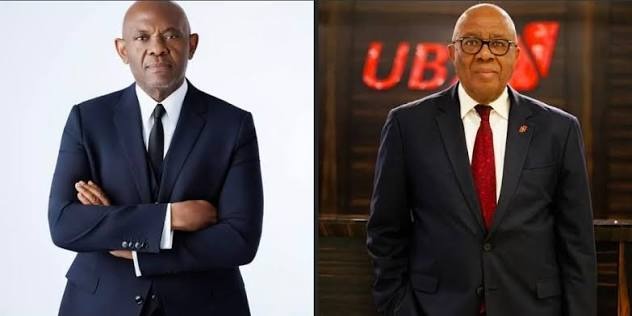
United Bank for Africa (UBA) has announced the retirement of its Group Chairman, Tony Elumelu, effective August 21, 2026, after completing the maximum 12-year tenure for non-executive directors as stipulated by the Central Bank of Nigeria’s (CBN) Corporate Governance Code.
The bank’s Board of Directors, at its meeting on July 6, approved Elumelu’s retirement and appointed long-serving non-executive director, Emmanuel Nnorom, as his successor, effective the same date.
Elumelu, who played a pivotal role in transforming Standard Trust Bank into one of Nigeria’s leading financial institutions before its merger with UBA in 2005, leaves behind one of Africa’s largest banking groups with operations in 20 African countries and offices in the United Kingdom, United States, France and the United Arab Emirates.
UBA enters the leadership transition with a strong financial position. The bank closed the 2025 financial year with total assets of N33.17 trillion, customer deposits of N27.2 trillion, shareholders’ funds of N4.25 trillion, and a capital adequacy ratio of 23.2 per cent, comfortably exceeding the CBN’s minimum capital requirement.
Although the bank recorded lower profitability in 2025, with profit after tax declining to N404.7 billion from N766.6 billion in 2024, management attributed the drop largely to the absence of the exceptional foreign exchange revaluation gains that boosted earnings in the previous year.
The bank maintained steady growth in its balance sheet and continued to strengthen its capital base through a successful rights issue.
Speaking on his retirement, Elumelu described serving UBA as one of the greatest privileges of his career and expressed confidence in Nnorom’s ability to build on the bank’s achievements.
Nnorom, a chartered accountant with more than four decades of experience in banking, finance and auditing, pledged to sustain UBA’s growth strategy and strengthen its position as Africa’s global bank.
Industry analysts say the seamless succession reflects UBA’s commitment to strong corporate governance and institutional continuity.
While the bank faces challenges including tighter regulatory capital requirements, fintech competition and currency volatility across its African markets, stakeholders believe its robust capital position, diversified operations and established governance framework provide a solid foundation for its next phase of growth.
