


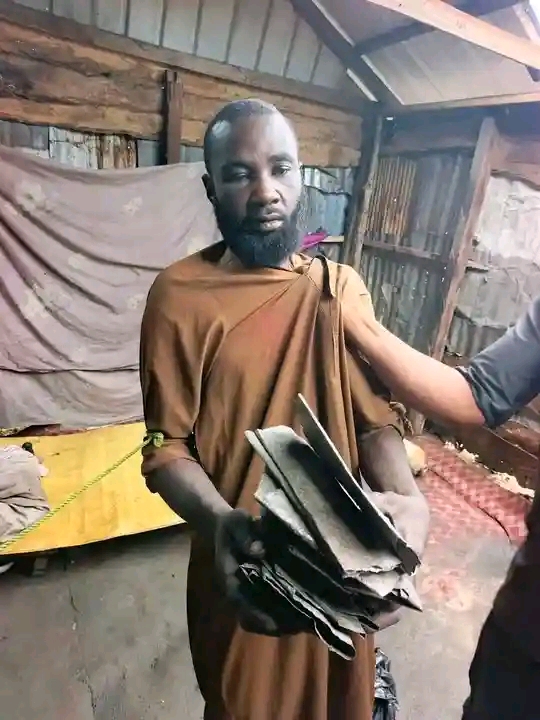
The case of Abdul Mohammed should unsettle every Nigerian who has grown too comfortable dismissing criminal bravado as empty talk.
Two weeks ago, Mohammed was caught in broad daylight deroofing a building in Buguma, Rivers State. When community security operatives attempted to hand him over to the Nigeria Police Force at the Buguma Division, he did not go quietly; he fought back, and in the struggle, stabbed the son of the landlady. Bold enough. Careless enough. But what happened next crossed a more dangerous line.
On Friday, June 19th, the same Abdul Mohammed returned to the same building and resumed deroofing it, as though no arrest had occurred, as though no law applied to him.
When security operatives brought him in again, this time to the Buguma police station, he offered not remorse but a declaration: he claimed to be a Boko Haram operative, and threatened that his people would soon invade the community. Now the question that demands an answer: was that a threat or a taunt?
There is a temptation to file this under the category of criminal theatre, a desperate man throwing the most frightening words he could find at the people detaining him, hoping fear would buy him freedom. It would not be the first time an accused person invoked the name of terror to intimidate witnesses or arresting officers into backing down. That reading is possible.
But its possibility is not the same as safe. Nigeria is not in a position to afford the expenses of dismissing such statements. Boko Haram and its gangs have demonstrated, repeatedly, that what begins as a rare occurrence of bold criminal behaviour can be the leading edge of coordinated insecurity. The Niger Delta has historically been a theatre for militant activity.
Buguma sits within that unsafe geography. A man who stabs someone while being arrested, returns unbothered to the scene of his crime, and then invokes a terrorist network deserves more than a standard crime sheet.
The Buguma police must be commended for receiving Mohammed without resort to torture; that is the rule of law working as it should. But the process cannot stop at a holding cell. This case demands an intelligence-level investigation.
Who is Abdul Mohammed? What brought him to this community? Who, if anyone, is behind him? Are there others? These are not suspicious questions; they are the minimum standard of investigation in a country where security threats are frequently overlooked until they spread.
Rivers State authorities and the relevant security agencies must treat this as more than a property crime. The threat, whether empty or operational, must be investigated thoroughly and transparently. Communities in Asari-Toru LGA and beyond deserve to know that a man who publicly declares a terrorist connection does not simply disappear into a list of pending cases.
Silence and slow bureaucracy are not neutrality. In matters of national security, they are neglectful.
