


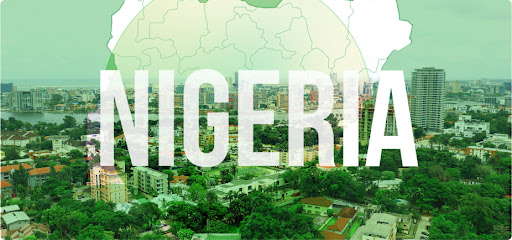
My comment section has become a referendum. Week after week, as I write about reforming Nigeria, about holding Abuja accountable, about a united nation finding its conscience, the replies arrive like a verdict already rendered. “You are wasting your time.”
“The Lugard experiment is finished.” “The South is done with the North.” “The Fulani want to rule us all.” “Biafra is the only answer.” I read them, every one. And I understand the exhaustion behind them. But understanding exhaustion is not the same as endorsing dissolution. Because what my commenters want — and what the geopolitical and economic reality of the 21st century will actually deliver — are two very different things.
Let me tell you what breaking up Nigeria would actually look like. Not the fantasy. The autopsy.
The Nation That Was Never Meant to Be One — Until It Was
On January 1, 1914, a British colonial administrator named Frederick Lugard amalgamated the Northern and Southern Protectorates of Nigeria into a single administrative unit — famously, it is said, at the suggestion of his journalist companion Flora Shaw, who named the territory after the Niger River.
What Lugard created was not a country. It was a management structure. A vessel for revenue extraction. A bureaucratic convenience that housed over 250 ethnic nationalities, three dominant religious traditions, and ancient kingdoms that had never pledged allegiance to one another — and he called it Nigeria. One hundred and twelve years later, that vessel is cracking.
Separatist movements in the South-East, including the Indigenous People of Biafra (IPOB) and the Movement for the Actualization of the Sovereign State of Biafra (MASSOB), have gained at least some measure of popular support. Niger Delta militants in the South-South continue their agitation.
Yoruba groups in the South-West have begun calling for independence. And in the North-East, Boko Haram and its successor ISWAP have mounted their own, far more violent challenge to the Nigerian state. This is not a fringe conversation. It is a drumbeat growing louder every year that Abuja fails its people.
What Nigeria Is Actually Worth — And Why That Number Is the Problem
Before we discuss dissolution, we must establish what is at stake financially. Nigeria is the largest economy in Africa, with a GDP exceeding $500 billion, driven by its vast oil and gas reserves. Oil accounts for 90% of Nigeria’s export earnings and 40% of tax revenues. In 2024, Nigeria’s average daily oil production was approximately 1.43 million barrels per day.
Here is the cruel geography of that wealth: almost every barrel of it lies beneath the mangrove swamps and creeks of the Niger Delta — Rivers State, Bayelsa, Delta, Akwa Ibom, Cross River, Edo. The South-South. The people who have been told for sixty years that their sacrifice is a national contribution. Since the first oil was pumped by Shell in 1956, the Niger Delta has been a focal point for economic development, social conflict, and oil exploration.
Around 40 million litres of oil spill annually into the region, causing widespread contamination of air, land, and water — while local communities continue to suffer from poverty and underdevelopment due to the unequal distribution of oil revenues. Now consider what happens the moment the South says enough.
Scenario One: The Niger Delta Declares Independence
If the Niger Delta people — the Ijaw, the Urhobo, the Itsekiri, the Ogoni, the Kalabari — were to assert sovereign control over their oil, Nigeria as a fiscal entity collapses within 90 days. There is no federal budget without oil revenue. The FAAC — the Federation Account Allocation Committee through which Abuja redistributes oil money to 36 states — goes dark.
The North, which produces virtually no oil and where agricultural productivity has been devastated by the farmer-herder crisis, faces immediate fiscal catastrophe. Ongoing conflicts between farmers and herders have deeply impoverished the North, severely disrupting agricultural activity which provides livelihoods for about 80% of the region’s population.
A sovereign Niger Delta Republic controlling its own resources would overnight become one of the wealthiest nations in sub-Saharan Africa. At current production of 1.43 million barrels per day, at $75 per barrel, that is roughly $107 million per day — or approximately $39 billion per year — flowing entirely to a territory of perhaps 35 million people, rather than being distributed across 220 million. The math is seductive. The reality is considerably more dangerous.
Who benefits? The oil multinationals — Shell, Chevron, TotalEnergies, ExxonMobil — would likely reach accommodation with a Niger Delta sovereign government faster than any diplomat, because they need that oil to flow. China, which has massive oil infrastructure investments in Nigeria, would follow commercial logic and recognize whatever government controls the taps.
Who loses? The North. Immediately, catastrophically, and without any replacement revenue stream. Kano, Katsina, Sokoto, Zamfara — states already facing poverty rates above 60% and insurgency that has internally displaced over 1.3 million people in the North Central and Northwest regions alone as of April 2024 — would face state failure within a year.
Also see: Seven Rivers LGAs Shut Down as Police Enforce Election Ban
Scenario Two: Biafra Rises Again
The Igbo have the oldest, most organized, and most emotionally searing claim to independence. In May 1967, the Eastern Region, inhabited principally by Igbo people, declared itself the Republic of Biafra. What followed was a brutal civil war lasting over two years, ending in January 1970 with Biafra’s surrender. Between one and three million people died — most of them from famine, from the deliberate starvation policy of the federal blockade.
The wounds never healed. They were simply administered. Neo-Biafra separatism today is rooted in unresolved grievances, civil war memories, perceived socio-economic and political marginalization, state repression, and the lopsided structure of Nigeria’s federalism.
IPOB, led by the now-detained Nnamdi Kanu, has maintained the agitation at enormous cost. The trial of Nnamdi Kanu on terrorism and treason charges resumed in February 2025 after the Supreme Court overturned a decision to dismiss the charges against him. The sit-at-home orders enforced across the South-East every Monday have cost the Igbo economy billions of naira — an irony not lost on critics who argue that IPOB is strangling the very people it claims to liberate.
A new Biafra state would encompass Anambra, Imo, Enugu, Abia, and Ebonyi — some of the most entrepreneurially dynamic people on earth, with a massive diaspora sending home hundreds of millions in remittances annually. It has no oil. It has no coastline that it does not share with contested territory.
The Igbo have historically been the traders, the builders, the technical class spread across all of Nigeria — and an independent Biafra would immediately trigger the expulsion or withdrawal of Igbo communities from the North and Lagos, collapsing their pan-Nigerian commercial networks overnight. Could it survive? Eventually, perhaps. But the birth would be catastrophic.
Scenario Three: The Oduduwa Republic — The Smartest Play That Won’t Work Either
The year 2021 was the peak of agitation for an Oduduwa Republic, championed by Sunday Igboho and strongly backed by Professor Banji Akintoye-led Ilana Omo Oodua. As recently as January 2025, Igboho declared there would be no going back on the demand for an independent Yoruba nation.
The Yoruba case is the most economically coherent of all the secessionist arguments. A Yoruba nation would include Lagos — the commercial capital of Africa, a city that generates an estimated $90–$100 billion in economic activity annually, home to the Nigerian Stock Exchange, the headquarters of virtually every major bank and multinational operating in West Africa. Without Lagos, Nigeria is a body without a heart.
But here is the structural paradox: while on the surface Yorubas appear to have a sense of unity, in reality they are so internally divided into fiercely autonomous groups and dialects that, without British-imposed coherence, they would likely dissolve back to pre-colonial fragmentation. It would be inconceivable for Lagos and Ogun State to join a putative Oduduwa Republic.
The Egba Yorubas and the Ijebus still harbour deep-seated ambivalence toward the Oyos.Lagos, with its cosmopolitan Igbo, Hausa, and international population, would almost certainly resist incorporation into an ethnically-defined Yoruba state. And without Lagos, the Oduduwa Republic is a geography without an economy.
The Middle Belt: The Forgotten Catastrophe
Every discussion of Nigerian breakup conveniently erases the Middle Belt — the vast, agonized corridor of Christian and animist peoples stretching across Benue, Plateau, Nassarawa, Kaduna South, and beyond. These are the people ground between Northern Muslim political dominance above and Southern ethnic nationalism below. They are neither Hausa-Fulani, nor Igbo, nor Yoruba. They are the millions nobody speaks for.
In a breakup scenario, the Middle Belt becomes the bloodiest theatre in Africa. Caught between a rump Northern state desperate to hold territory and Southern states unwilling to absorb them, Middle Belt peoples would face ethnic cleansing at a scale that would force a humanitarian intervention dwarfing anything seen in the continent since Rwanda.
Why Smaller States Cannot Get Recognition: The International Law Problem
Here is what my commenters who dream of clean separation consistently underestimate: the international community does not recognize states because their people are suffering. It recognizes states because doing so serves great power interests, is consistent with existing legal frameworks, and does not set dangerous precedents for other restive regions.
The majority of the Organisation of African Unity supported maintaining the status quo in Nigeria during the original Biafra war — a decision replicated at the United Nations. The OAU was hesitant to criticize the domestic policy of member states, and preventing a precedent for successful secession on the continent was central to their reasoning.
That logic has not changed. During the 1967 war, 51 of 54 African states endorsed Nigeria’s unity. Only Tanzania, Gabon, Côte d’Ivoire, Zambia, and Haiti recognised Biafra. Today, the African Union maintains the same principle: colonial-era borders are inviolable. Any Nigerian breakaway state would face the same diplomatic isolation. Without AU recognition, there is no UN seat, no World Bank lending, no IMF program, no SWIFT access, no international bond market. You can declare independence all you like. You cannot eat a declaration.
The South Sudan precedent — the one secessionist story Africa did permit — required two decades of war, a Comprehensive Peace Agreement, a referendum endorsed by the Khartoum government, and US diplomatic sponsorship. Even then, South Sudan became one of the world’s most failed states within three years of independence, with civil war erupting in 2013.
The American Question: Would Washington Suppress a Breakup?
The United States’ historical position on Nigeria is unambiguous. During the Biafra war, the official US policy was “non-involvement” — refusing to recognize Biafra, continuing aid programs in the West and North, and preventing US arms from reaching either side. Officials stated explicitly that US vital interests were not threatened by the Biafra secession, but a decision to override the principle of non-interference would have required very strong justification.
That calculus has changed considerably since 1967. Today, Nigeria is West Africa’s anchor state, the continent’s largest economy, and — increasingly — a theatre of competition between the United States, China, and Russia. A collapsing Nigeria would send refugee flows into neighboring states, create ungoverned spaces for jihadist expansion linking ISWAP in the Northeast to the Sahel networks already swallowing Mali, Burkina Faso, and Niger, and potentially hand China enormous influence over whoever ends up controlling the oil.
The United States provided $1 billion in bilateral development assistance to Nigeria in 2023 alone — the single largest bilateral donor. The IMF’s own fragility strategy for Nigeria identifies ethno-religious fragmentation and high insecurity as the primary drivers of fragility.
Washington will not send troops to suppress a Biafran declaration the way it might have in another era. But it will apply the full weight of its financial architecture — sanctions, asset freezes, IMF conditionality, World Bank suspension — to any breakaway entity that destabilizes a country it considers essential to African stability. The economic suffocation would be swift and total.
The Winners Nobody Talks About
If Nigeria fractures, the true beneficiaries would not be the suffering peoples of any of its component parts. They would be:
China. Beijing already has infrastructure investments across Nigeria exceeding $15 billion. In a post-breakup chaos scenario, China would quickly recognize whichever government controls the oil — and extract concessional terms that no sovereign Nigeria would ever have accepted.
International oil majors. Shell, TotalEnergies, and Chevron have spent decades navigating Nigerian bureaucracy and corruption. A smaller, weaker Niger Delta state desperate for recognition and revenue would sign whatever production-sharing agreement is put in front of it.
Regional arms dealers and private military contractors. A fragmented Nigeria fighting over borders, oil blocks, and rivers would generate weapons contracts for a generation.
Neighboring states. Ghana, Côte d’Ivoire, and Kenya — who would absorb the flight of Nigerian capital, talent, and corporate headquarters. Lagos today keeps Accra alive commercially. A destabilized Lagos would shift that center of gravity permanently.
United We Stand — The Argument That Still Holds
The people writing in my comments are not wrong about the diagnosis. The Tinubu government is governing for a narrow class. The security situation has been abandoned to bandits, herders, and separatists. Food inflation exceeded 40% in Nigeria by mid-2024, pushing millions deeper into poverty, while the government was purchasing a new presidential jet. Over 60% of Nigerians were estimated to live below the national poverty line in 2025, with poor households spending up to 70% of their income on food.
The North without oil revenues is not viable. The Niger Delta without a Nigerian market and security umbrella becomes a hostage to oil majors. Biafra without coast access and without its diaspora networks spanning Nigeria would be strangled. A Yoruba state without Lagos consensus collapses into sub-ethnic warfare within a decade.
And all of them — every proposed fragment — would face the fundamental problem that plagues new states born from conflict: they inherit the corruption, the governance deficits, and the ethnic grievances of their predecessor. You do not escape Nigeria’s problems by drawing a new border around a smaller version of them.
The argument for a united Nigeria is not nostalgia. It is mathematics. It is geopolitics. It is the hard recognition that 220 million people together command a market, a military capacity, a diplomatic weight, and a negotiating position that no fragment can replicate. What Nigeria needs is not dissolution. It is a revolution of governance.
A genuine fiscal federalism that returns oil revenues to the communities that produce them. A security architecture that protects every farmer from every herder. A leadership class that answers to the people rather than to Zurich bank accounts and BVI shell companies. That is a harder argument to make than “break it up.” It requires more faith than rage can sustain.
But the alternative — a fractured West Africa, ungoverned spaces from the Bight of Benin to Lake Chad, a humanitarian catastrophe that makes the Biafra war look like a preview, and the permanent surrender of the continent’s largest black nation to foreign financial predators — is not liberation. It is the final colonial theft. Carried out, this time, by Nigerians themselves.
Kio Amachree
The Kio Solution | Worldview International | Stockholm
