


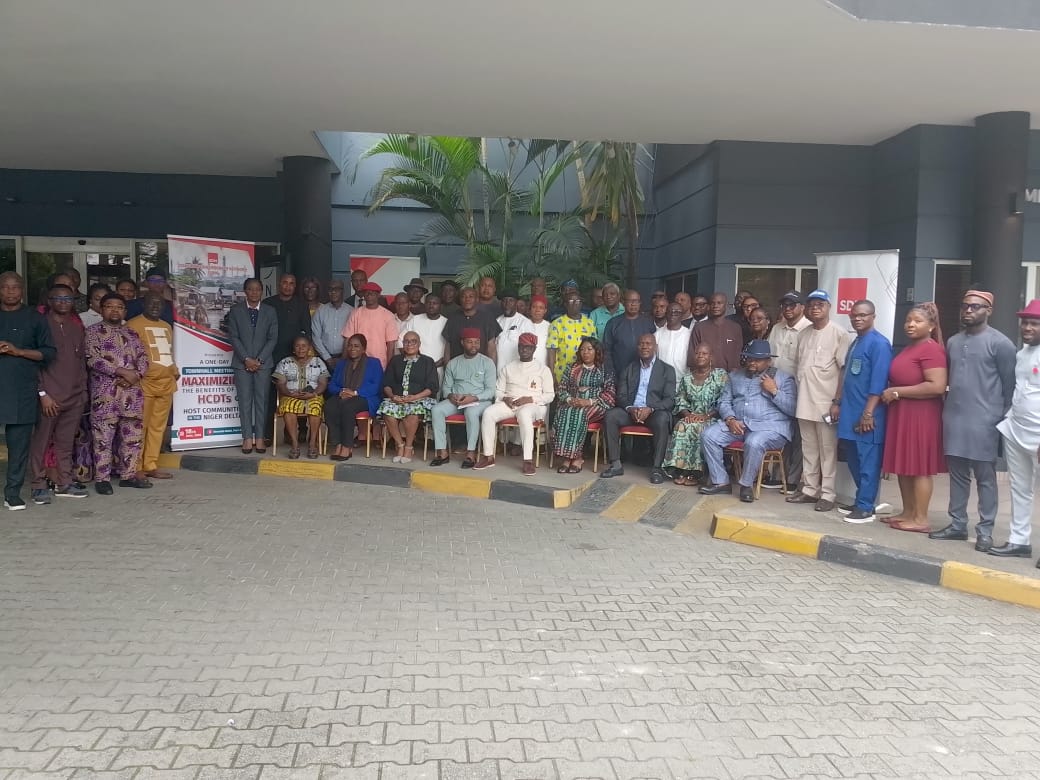
The House of Representatives Committee on Host Communities has urged oil companies and leaders of Host Communities Development Trusts (HCDTs) to accelerate the rollout of the 3% development fund stipulated under the Petroleum Industry Act (PIA) 2021.
Chairman of the committee, Hon. Dumnamene Dekor, who spoke during a One-Day Townhall meeting on “Maximizing the Benefits of HCDT in Host Communities” in the Niger Delta, while commending the Nigerian Upstream Petroleum Regulatory Commission (NUPRC) and the Nigerian Midstream and Downstream Petroleum Regulatory Authority (NMDPRA) for efforts to close gaps in the law, noted that the implementation of the HCDT had reduced the level of agitation from groups within Host Communities.
“Between now and before the PIA, there is less acrimony in the industry,” Dekor said, acknowledging a reduction in flow station occupations, pipeline vandalism, and product losses that once disrupted operations of multinational oil companies in the region.
The law requires oil operators to set aside 3% of their annual operating expenditure for the HCDT to drive tangible development in communities long devastated by oil exploration activities.
However, Dekor noted that while about 140 trusts have been funded either fully or partly, the visible impact on the ground remains minimal.
“Are we having that impact in these communities? The answer is No,” he declared, blaming the slow progress on “internal community disputes, leadership tussles, and court cases over trivial matters.”
The lawmaker issued a stern ultimatum, noting that from July 2026, the committee will intensify oversight visits and deploy all available legislative instruments against non-compliant operators and trust managers.
“If we have to build a system that works, everybody’s hand must be on deck,” Dekor said.
He urged trustees to focus on sustainable projects instead of distributing handouts like rice and beans, and called for greater unity among community stakeholders.
Also speaking at the town hall, Country Director of Stakeholder Democracy Network (SDN), Mrs. Florence IbokAbasi, said the gathering brought together settlers, oil and gas companies, senior officials of NUPRC and NMDPRA, and the House Committee to candidly assess the HCDT process.
“Some HCDTs have recorded remarkable projects and significant gains,” she noted, but stressed the urgent need for robust monitoring and transparency.
Mrs. IbokAbasi warned that with Nigeria’s energy transition plan gathering pace, the window for oil-funded development may soon close.
“In years to come, oil may no longer be in demand as it is today. That means the trusts may not be as operational as they are now,” she cautioned.
She advised trusts to shift emphasis from capital-intensive infrastructure like roads and buildings to human capital development and sustainable livelihood programmes.
A participant at the event, Princess Lovina Itang, commended the organisers for creating a platform that has helped HCDT members understand the need for proper planning and public accountability.
She urged trustees to thoroughly study the Act establishing the trusts and seek expert guidance where necessary to reduce avoidable frictions.
The town hall was attended by members of the House Committee on Host Communities, representatives of the regulatory agencies, and civil society organisations.
