


For decades, Nigeria’s agricultural sector has struggled with a challenge that technology has already helped many countries overcome low mechanisation.
While agriculture remains a critical pillar of the nation’s economy, millions of farmers still rely on manual tools and labour intensive methods that limit productivity, reduce efficiency, and hinder large-scale food production.
Today, however, a new chapter is emerging as the Federal Government accelerates the deployment of technology driven farming solutions through the Renewed Hope National Agricultural Mechanisation Programme (RHNAMP), an ambitious initiative designed to modernise farming operations and position agriculture as a technology-enabled growth sector.
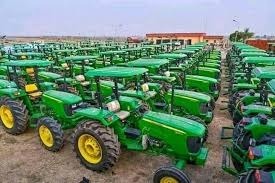
At the centre of the programme is the deployment of 2,000 tractors and more than 9,000 specialised farming implements across the country.
Beyond simply introducing equipment, the initiative seeks to build a smart agricultural ecosystem where technology, financing, logistics, and service delivery work together to improve productivity and strengthen food security.
Government officials describe the programme as one of the largest mechanisation projects ever launched in Africa and a significant step toward integrating modern technologies into Nigeria’s agricultural value chain.
Unlike traditional intervention programmes that focused on distributing machinery to individual beneficiaries, the new model adopts a service based framework powered by registered Mechanisation Service Providers (MSPs).
Through a lease to own structure, these providers will deploy and manage equipment, allowing thousands of farmers to access mechanised services without bearing the high cost of ownership.
The approach mirrors technology as a service models that have transformed sectors such as software, telecommunications, and financial services.
By treating mechanisation as an accessible service rather than a product, the government aims to expand reach, improve utilisation rates, and ensure long-term sustainability.
Under the programme, each tractor is expected to service approximately 600 hectares annually, enabling the initiative to support more than 1.2 million farmers and cover over 1.5 million hectares of farmland every year.
Speaking at the unveiling of the equipment in Abuja, President Bola Tinubu described agricultural technology as a critical component of Nigeria’s economic future.
According to him, achieving food security requires more than increasing farmland; it demands embracing modern tools, innovation, and efficient production systems.
The President stressed that Nigeria can no longer depend on outdated farming methods if it intends to compete globally and meet the nutritional needs of its growing population.
Industry experts agree that mechanisation represents one of the most effective technologies for increasing agricultural productivity.
Modern tractors, precision implements, harvesters, and smart farming equipment significantly reduce labour requirements, improve planting accuracy, shorten production cycles, and increase crop yields.
The Minister of Agriculture and Food Security, Senator Abubakar Kyari, described the programme as the beginning of a national agricultural technology revolution.
According to him, the equipment package includes tractors, harvesters, planters, sprayers, mobile workshops, trailers, and thousands of supporting components designed to create a fully operational mechanisation ecosystem.
He noted that the programme goes beyond equipment deployment by incorporating maintenance systems, financing frameworks, digital monitoring mechanisms, and operational accountability structures.
One of the most significant features of the initiative is its emphasis on sustainability through technology enabled asset management.
Every tractor deployed under the programme comes with two years of maintenance support, while the government plans to deploy 36 mobile service units and establish seven regional mechanisation centres to ensure continuous technical support.
Officials believe that this structured maintenance model addresses one of the major reasons previous mechanisation programmes struggled poor equipment management and lack of servicing infrastructure.
The government is also taking steps to strengthen local technology and manufacturing capacity. Plans are underway to establish a tractor assembly facility capable of producing between 2,000 and 4,000 units annually.
The proposed facility is expected to reduce dependence on imported machinery while encouraging local engineering expertise, technical skill development, and industrial growth.
Beyond hardware deployment, financing remains a critical pillar of the programme’s technology driven strategy.
Through partnerships involving the Bank of Agriculture, Heifer International, and other institutions, structured financing solutions are being introduced to make mechanisation services more accessible and affordable for farmers and agribusiness operators.
The broader ecosystem is further supported by agricultural investment funds and targeted financing initiatives aimed at scaling productivity nationwide.
Vice President Kashim Shettima has repeatedly emphasised that technology alone cannot transform agriculture unless it is integrated with processing infrastructure, financing systems, and private-sector investment.
According to him, modern agricultural development depends on connecting production technologies with value-added processing, logistics, and market access.
Industry analysts believe the government’s shift toward a Tractor as a Service model could significantly accelerate technology adoption among smallholder farmers.
The model allows operators to rent machinery on a pay per use basis, making advanced farming equipment available to farmers who would otherwise be unable to afford it.
Agricultural technology experts have welcomed the initiative, describing it as a practical application of innovation to one of Nigeria’s most important sectors.
They argue that improved access to mechanisation, coupled with proper maintenance, financing, and infrastructure, could increase food production, strengthen supply chains, create employment opportunities, and improve the overall competitiveness of Nigerian agriculture.
As Nigeria continues its push toward economic diversification and digital transformation, many observers see agricultural mechanisation as more than a farming intervention.
They view it as a technology led strategy capable of transforming food production, stimulating industrial development, and positioning agriculture as a modern, innovation-driven sector.
If effectively implemented, the programme could become one of the country’s most significant examples of how technology can solve long standing development challenges while unlocking new opportunities for growth and prosperity.
