


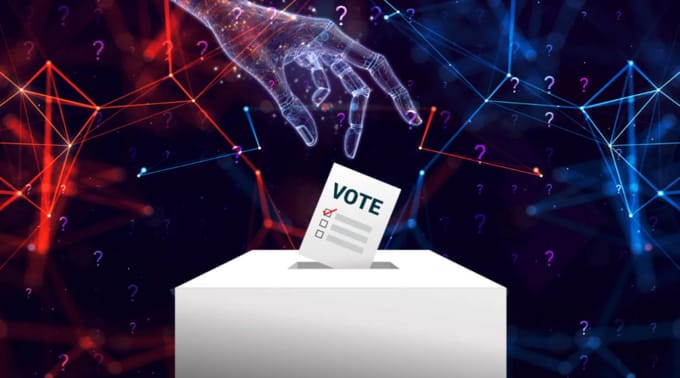
Stakeholders have called upon the appropriate authorities to formulate strategies that will reconcile the risks and advantages of Artificial Intelligence (AI) in anticipation of the 2027 general elections.
They also advocated for enhanced digital literacy, greater public awareness, and more robust protections against misinformation to guarantee free, fair, and credible elections in Nigeria.
The stakeholders expressed their views yesterday during a roundtable discussion on “AI Governance, Democracy and Accountability in Nigeria,” organized by the Public and Private Development Centre (PPDC) in Abuja.
The event, titled “Bridging the Governance Gap Between AI, Elections and Accountability in Nigeria,” concentrated on the effects of emerging technologies on democratic processes.
Following the meeting, Lucy Abagi, the chief executive officer of PPDC, emphasized the importance of localizing AI initiatives to ensure that rural communities lacking internet access or digital literacy are not left behind in technological progress.
She stated, “It is not solely about organizations utilizing AI.
“We must guarantee that grassroots communities also comprehend and gain from these innovations.”
Abagi revealed that the recommendations from the roundtable would be forwarded to the Independent National Electoral Commission to aid in reforms designed to enhance democratic processes.
She dismissed worries that the integration of AI in elections was delayed, asserting that technological reforms develop gradually.
”If INEC were not embracing technology, we would not have BVAS or IReV. These are steps towards enhancing electoral credibility,” she remarked.
Abagi affirmed that Nigeria already possesses policies that govern the ethical application of artificial intelligence to avert misuse and safeguard citizens.
Vivian Akagha, the organizer of the program, cautioned that vulnerable citizens are increasingly susceptible to manipulated content and counterfeit videos that could sway public opinion in the lead-up to the 2027 elections.
She noted that many grassroots residents do not have access to reliable information necessary for making informed electoral decisions.
”I came to the realization that individuals at the grassroots level, who lack adequate information, do not consistently have access to the necessary data to make informed choices regarding their voting decisions,” she stated.
Akagha cautioned that artificial intelligence tools could be easily misused to distort the portrayal of political candidates and disseminate misleading narratives.
Jemila Mohammed Dahiru, a lecturer in the Department of Development and Strategic Communication at the University of Abuja, emphasized the need for ongoing advocacy, public awareness, and accountability in the use of artificial intelligence.
”The discussion highlighted that numerous initiatives are underway, and AI itself has the potential to enhance processes and possibly lead to improved outcomes,” she remarked.
