


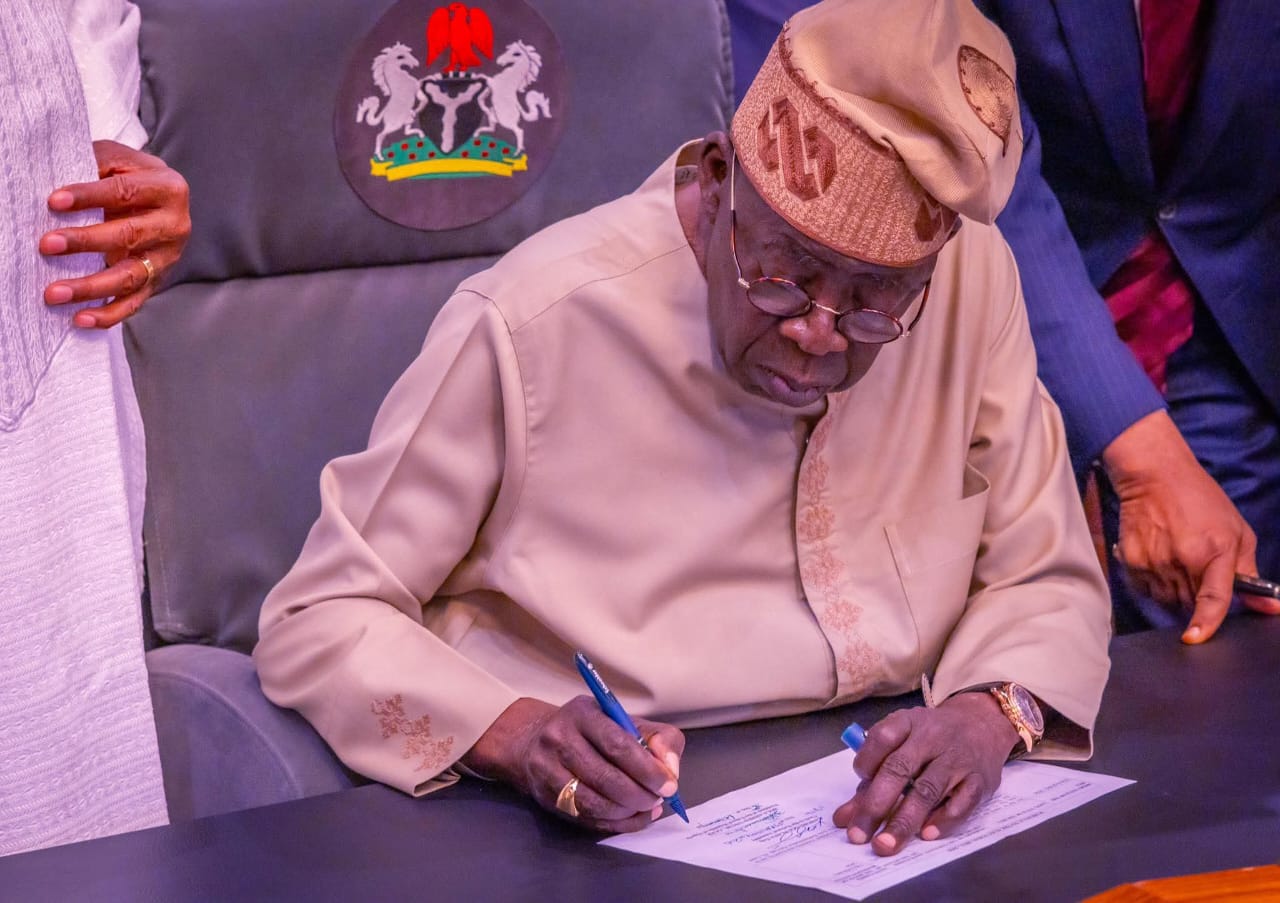
On Friday, Nigeria’s President Bola Tinubu signed the 2026 Appropriation Bill into law. A total national spending of 68.32 trillion was approved for the following fiscal year by him. His Special Adviser on Information and Strategy, Bayo Onanuga, issued a statement saying that Tinubu agreed to extend the implementation period of his budget for the year 2025.
He changed the deadline from March 31, 2026, to June 30, 2027. In the approved 2026 fiscal year, he allocated #4.799 trillion for “statutory transfers” and #15.8 trillion towards debt servicing. Therefore, he fixed the recurrent expenditure at #15.4 trillion, and capital projects have been authorised under the development fund to cost around #32.2 trillion.
Despite the presence of capital spending that makes up almost half of the total budget, Tinubu said the plan shows it still prioritises infrastructure development and economic stability as key priorities. The distribution was intended to balance the debt, as stated by him.
Tinubu affirmed that it will strike a balance between daily government operations and long-term investments focused on increasing productivity and improving living standards. Tinubu signed the Appropriation (Repeal and Enactment) (Amendment) Bill, 2026.
News: http://FG Urges Airlines to Hold Fares Amid Fuel Price Surge
Additionally, capital spending has been extended by this measure until June 30, 2026, under the budget of that year. The purpose of this protracted stay is to ensure that the funds already allocated, particularly for ongoing infrastructure and development projects at different stages of completion across the country, are fully utilised, he noted.
According to him, it is anticipated that it will assist MDAs in completing significant projects, improve execution rates, and enhance public spending. The 2026 Appropriation Act, which is set to be fully implemented on April 1, is anticipated to follow the administration’s Renewed Hope Agenda.
Additionally, Tinubu directed MDAs to ensure the efficient utilisation of public funds through strict and transparent means. The main areas emphasised were accountability, cost-effectiveness, and timely project delivery.
The National Assembly was praised by him for its prompt consideration and passage of the budget, with his commendation praising lawmakers’ cooperation and sense of responsibility. Tinubu emphasised the importance of his administration’s efforts to implement fiscal reforms.
