


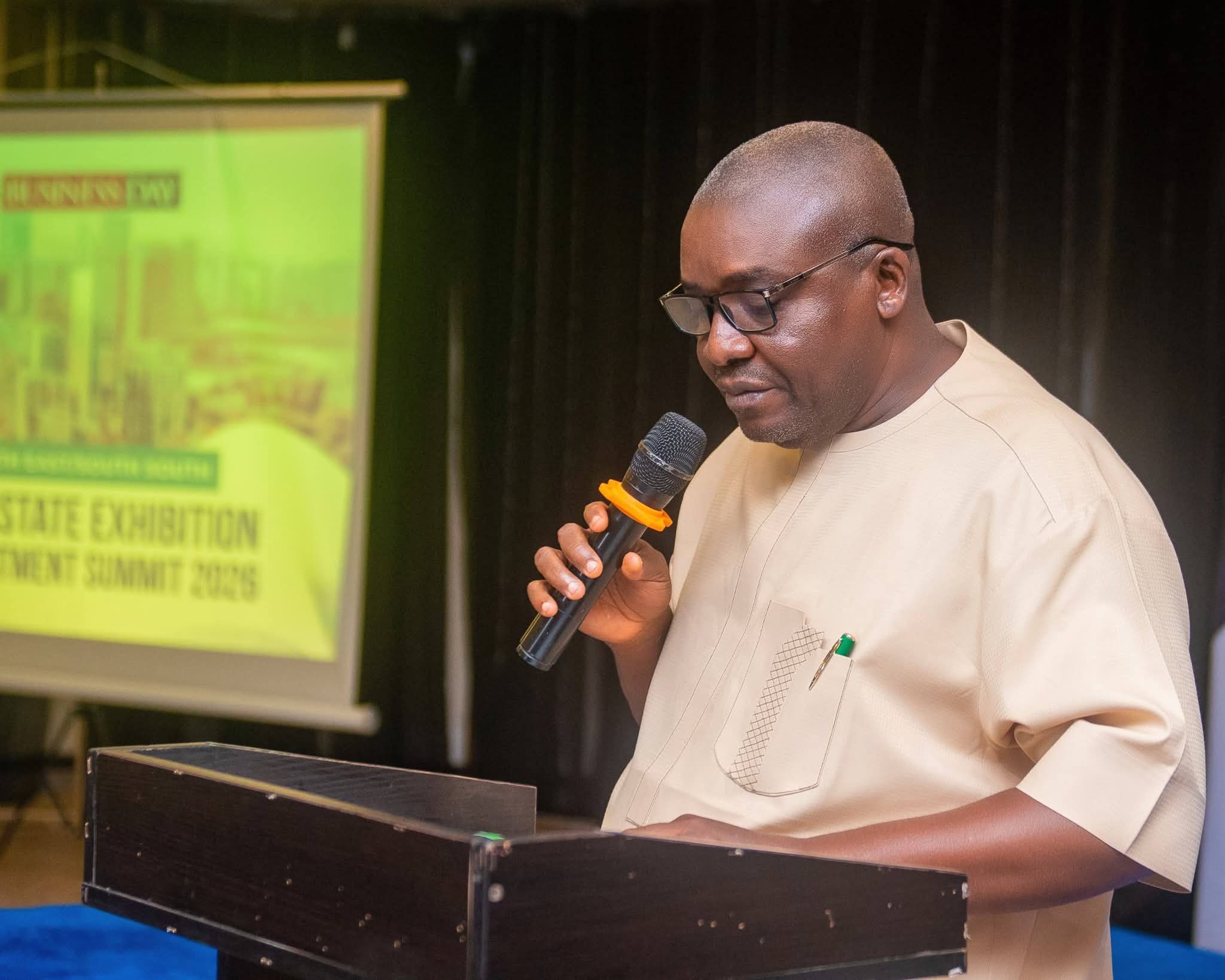
Governor Siminalayi Fubara of Rivers State on Wednesday reaffirmed his administration’s readiness to work closely with innovators and key players in the housing and urban development sector to tackle the state’s housing shortfall.
Represented by the Secretary to the State Government, Dr Dagogo Wokoma, at the BusinessDay South-South Real Estate Exhibition and Investment Summit 2026 in Port Harcourt, the governor described the housing sector as a critical driver of both social progress and economic expansion.
He noted that investments in housing would not only create jobs but also raise the standard of living for residents across the state.
The summit, themed “Addressing Nigeria’s Housing Deficit with Innovative Solutions,” brought together stakeholders to explore practical approaches to bridging the country’s housing gap.
Fubara emphasised that real estate continues to play a central role in economic development, urban renewal, and wealth creation worldwide.
He said the state government recognises the sector’s potential, not just as an investment destination, but as a strategic avenue for reducing housing shortages and improving overall quality of life.
News: 2027: Diri Declares Support for Bola Tinubu Re-Election
He added that his administration had prioritised creating a business-friendly environment for investors through targeted policy reforms, improved infrastructure, and stronger collaboration between the public and private sectors.
The governor also urged participants to take advantage of the summit to share ideas, build partnerships, and develop innovative solutions that would shape the future of housing in Rivers State and beyond.
In a related remark, the Minister of Housing and Urban Development, represented by the Federal Head of Lands, Queen Tekai, said the ministry was taking deliberate steps to make the environment more supportive for housing development initiatives nationwide.
Delivering the keynote address, the Group Managing Director of TAF Africa Global and Managing Director of Greater TAF Nigeria Ltd, Mustapha Njie, called for a more forward-thinking approach to housing development.
He outlined key priorities, including expanding access to housing finance, strengthening public-private partnerships, and reducing bureaucratic hurdles and costs linked to land documentation.
Njie also advocated the development of new urban centres such as Greater TAF City in Nigeria and TAF City in The Gambia, alongside increased investment in locally produced building materials.
He further stressed the importance of planned urban growth, better infrastructure in developing areas, and the adoption of environmentally sustainable and smart city models.
