


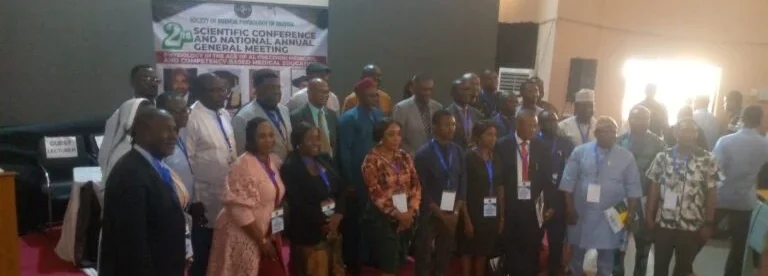
The Society for Medical Physiology of Nigeria (SMPN) has urged physiologists to embrace artificial intelligence (AI), strengthen local research, and improve medical education to address Nigeria’s healthcare challenges.
The society’s President, Prof. Olorunshola Kolawole, made the call on Wednesday at its second Scientific Conference and National Annual General Meeting in Abuja.
The conference, themed “Physiology in the Age of AI, Precision Medicine and Competency-Based Medical Education,” aims to promote research collaboration, academic development and advances in clinical and molecular physiology.
Kolawole said about 20 research abstracts had been submitted and peer-reviewed for presentation, adding that the discussions would help improve research quality in universities and laboratories.
He also announced the society’s first inter-university physiology quiz competition for medical students, designed to deepen their knowledge, encourage interaction among medical schools and strengthen academic relationships.
He urged researchers to publish their findings in the Annals of Medical and Translational Physiology, the society’s open-access, peer-reviewed journal.
Read Also: fg-to-track-free-healthcare-for-3-18m-vulnerable-nigerians
Also speaking, Prof. Samuel Asala, a professor of anatomy and forensic anthropology and Deputy Vice-Chancellor of Paul Odili College of Medicine, Margaret Lawrence University, Abuja, said physiology research was essential to understanding diseases and developing effective healthcare interventions.
Asala called for research that reflects Nigeria’s genetic diversity, nutritional habits, lifestyles and environmental conditions, while urging universities to improve research facilities and create more opportunities for young scientists.
He identified computational physiology, advanced imaging, data science and AI as important tools for scientific discovery and a deeper understanding of human biological processes.
He also stressed the need to strengthen physiology education through practical laboratory experience, improved curricula, effective teaching methods and digital learning resources.
Asala urged senior academics to mentor emerging researchers and called for stronger partnerships among universities, hospitals, research institutions, government agencies and the private sector.
He further emphasised research ethics, scientific integrity and responsible data management.
In his remarks, the Chairman of the Local Organising Committee, Prof. Samuel Odeh, said the conference provided a platform for researchers, lecturers and students to share findings, develop practical skills and establish collaborations.
Odeh noted that emerging technologies could improve research and learning but must be applied without compromising scientific rigour or a proper understanding of human physiology.
The conference also features discussions on reclaiming the medical identity of physiology and fluid homeostasis in fertility.
