


Rivers State Governor, Sir Siminalayi Fubara, has directed the Rivers State Contributory Health Protection Programme (RIVCHPP) to enrol school-age children in its health insurance scheme to ensure access to comprehensive healthcare.
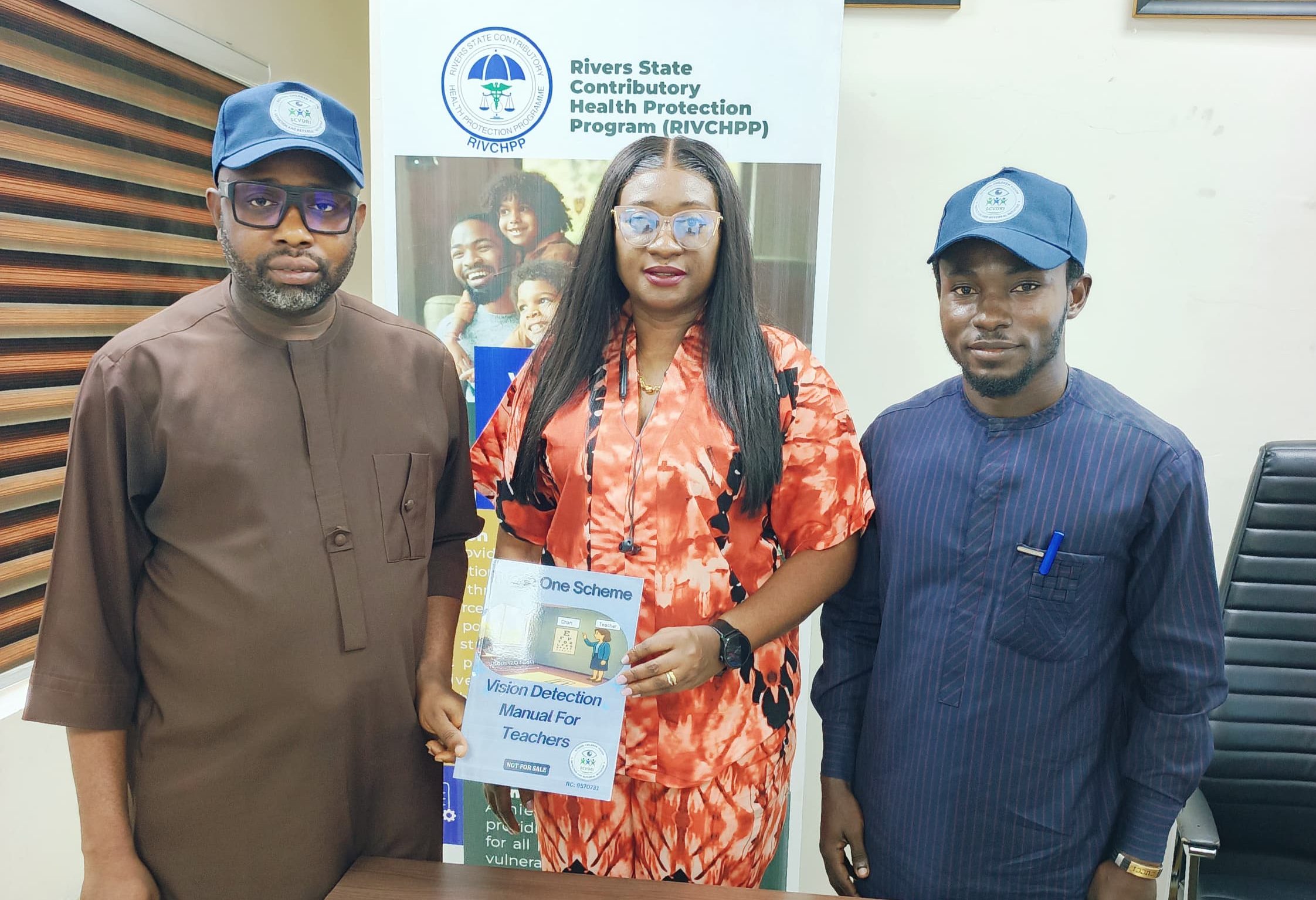
The Executive Secretary and Chief Executive Officer of RIVCHPP, Dr Vetty Agala, disclosed this on Friday, October 9, 2026, when she received a delegation from the School Children Vision Detection and Referral Initiative at her office.
Agala said the governor’s directive followed a recent health report indicating that Rivers State was among the states with a high number of malnourished children.
She commended the initiative for prioritising eye health among schoolchildren, noting that the inability of some parents to pay for screening and treatment of children diagnosed with eye conditions highlighted the financial challenges many families face.
According to her, Fubara established and strengthened RIVCHPP to ensure that residents do not suffer preventable health complications because they cannot afford medical care.
She assured the delegation that the agency was ready to collaborate with the Ministry of Education and other relevant stakeholders to enrol school-age children, beginning with pupils in public primary schools, for comprehensive healthcare services.
Read Also: woman-survives-snakebite-after-treatment-in-rivers
Agala urged the organisation to sustain its efforts and develop a proposal for a strategic partnership with RIVCHPP to ensure that no child in the state is denied necessary medical attention because of their parents’ inability to pay medical bills.
Earlier, the team leader of the School Children Vision Detection and Referral Initiative, Dr Daniel Innocent, said the organisation was established to address eye health challenges among children.
He noted that children affected by eye conditions, as well as their parents, guardians and teachers, were often unaware of the problems, making early detection and treatment difficult.
Innocent explained that although the initiative was recently inaugurated, it had trained teachers to identify possible eye health challenges among pupils. The organisation had also distributed educational materials on detecting eye conditions in children and referral materials for pupils requiring further medical attention.
He said the initiative provided free eye screening for referred children and covered nearly 50 per cent of their treatment costs. However, some parents still struggled to pay the outstanding balance.
The team leader said the organisation sought collaboration and support to address the financial barriers preventing children from receiving appropriate eye care.
He added that the initiative planned to extend its awareness campaigns and sensitisation programmes to schools across the 23 local government areas of Rivers State.
