


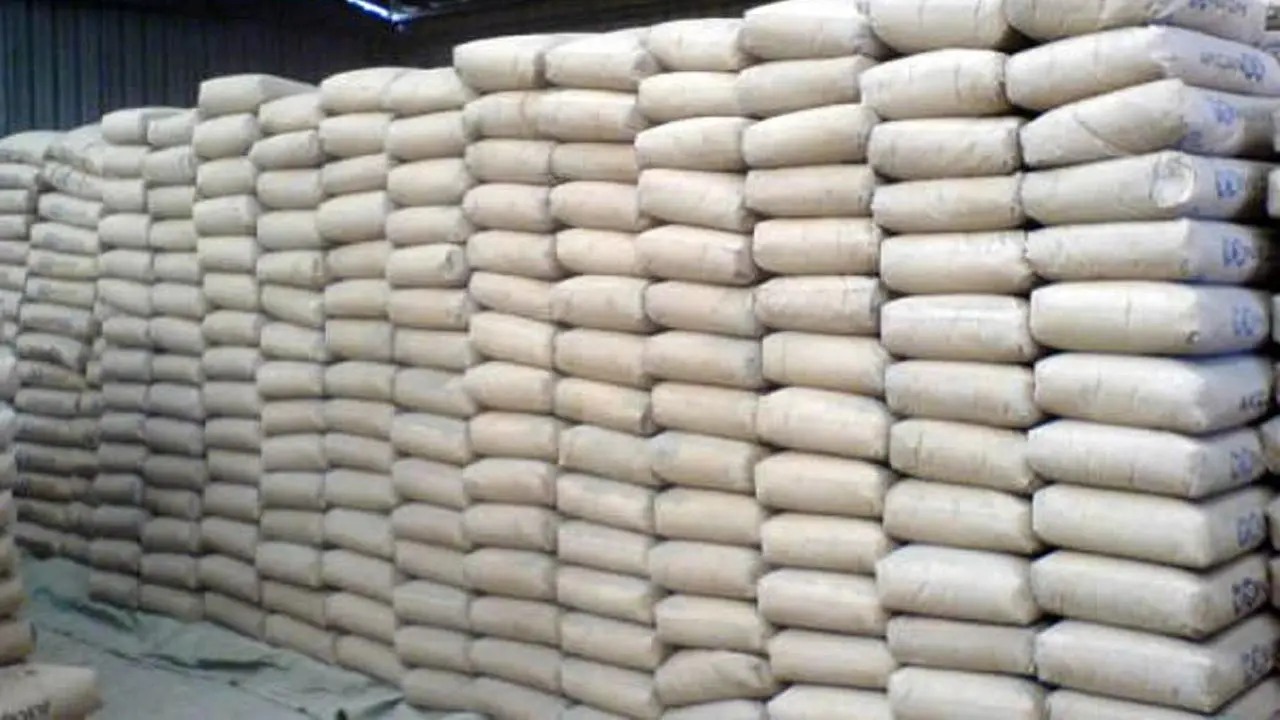
The Federal Competition and Consumer Protection Commission (FCCPC) has launched a fresh investigation into the rising price of cement in Nigeria, following preliminary findings suggesting that the sharp increase may not be fully justified by prevailing market conditions.
The probe followed a three-month cross-border study comparing Nigeria’s cement market with those of Kenya, Tanzania, South Africa, Egypt, Morocco, Algeria and Togo.
In a statement on Tuesday, FCCPC Director of Corporate Affairs, Ondaje Ijagwu, said the commission’s industry-wide investigation had uncovered indications of possible price manipulation.
The commission noted that Nigeria has an estimated installed cement production capacity of 60 million to 65 million metric tonnes annually, compared with domestic consumption of about 25 million to 30 million tonnes.
Despite the excess capacity, the price of a 50kg bag of cement rose from between N9,300 and N9,700 in January to N10,500-N13,000 by mid-year, reaching N13,000-N15,000 in some areas by July.
The FCCPC said its findings raised concerns because cement prices in some African countries were significantly lower despite their smaller production capacities.
It cited Kenya, where a 50kg bag sold for about $5.40, equivalent to N7,344, and Tanzania, where the same quantity cost approximately $4.80, or N6,528.
Read Also: otedola-raises-stakes-with-additional-n20-7bn-first-holdco-shares
Cement manufacturers have attributed the price increases to rising energy and transportation costs, naira depreciation and higher costs of imported machinery and spare parts.
The FCCPC said it was examining these explanations against verified production costs and other market data to determine whether the price increases were justified.
The expanded investigation will examine possible collusion, abuse of market dominance, restrictions on domestic supply and anti-competitive distribution practices.
The commission has issued Notices of Commencement of Investigation and Summons to Produce to major industry operators, requiring them to provide information on pricing, production volumes, capacity utilisation, exports and commercial relationships.
FCCPC Executive Vice Chairman and CEO, Tunji Bello, said the investigation was necessary because cement prices directly affect housing, infrastructure development and the wider cost of doing business.
He stressed that the commission was not seeking to control prices or prevent legitimate profits but to ensure that market outcomes were driven by fair competition.
