


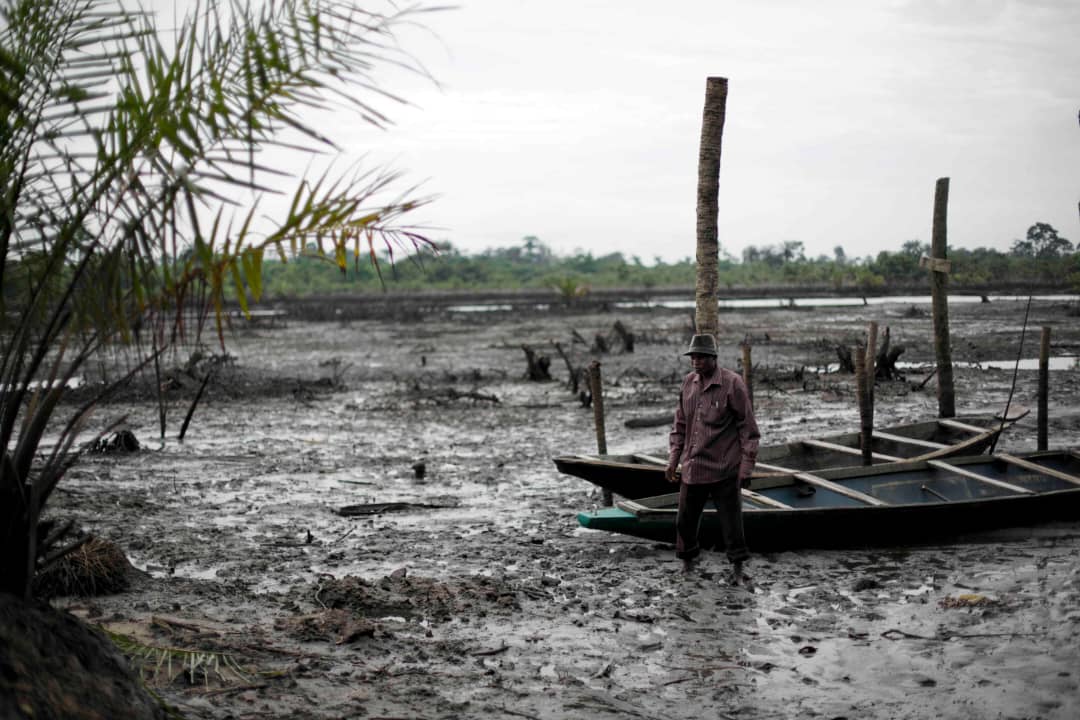
Climate change is becoming more than an environmental concern in the Niger Delta. It is increasingly a threat to livelihoods, economic stability and community security, exposing the region to a crisis that extends far beyond rising temperatures and changing weather patterns.
Researchers recently raised the alarm in Port Harcourt, identifying climate change as a growing threat to human security and livelihoods across the Niger Delta. The warning comes against the backdrop of persistent flooding, coastal erosion, environmental degradation and the loss of natural resources that support thousands of households.
The vulnerability of the region is closely tied to its dependence on the environment. Fishing, farming and other resource-based activities remain important sources of income, particularly for communities along the coast and waterways. When those ecosystems are disrupted, the economic consequences are immediate.
For fishermen, changing water conditions are already creating new challenges. Reports indicate that fish are increasingly being found in deeper waters, forcing fishermen to travel farther from shore and spend more on fuel and equipment. For small-scale operators, the additional cost can make fishing less profitable or even unsustainable.
Flooding presents another dimension of the problem. Beyond destroying homes and infrastructure, recurrent floods can damage farmlands, disrupt businesses and force families to relocate. Coastal erosion similarly threatens settlements and productive land, gradually reducing the space available for communities that have depended on these areas for generations. The security implications are difficult to ignore.
Also see: New Force Arrives as Kegoz Group Unveils 2,000HP Rig
When environmental changes reduce access to food, land, water and income, competition over shrinking resources can intensify. Poverty and displacement can increase vulnerability, while communities already experiencing social and economic pressures may become more exposed to conflict and criminal activity. This makes climate adaptation a security issue as much as an environmental one.
The Niger Delta also faces a complicated environmental legacy. Climate pressures are occurring alongside years of ecological degradation associated with oil production and other human activities. The combination leaves communities dealing with multiple environmental stresses at once, making recovery more difficult and increasing their vulnerability to future shocks.
The response therefore cannot be limited to emergency relief after floods or environmental disasters. It requires long-term investment in climate-resilient infrastructure, coastal protection, mangrove restoration, sustainable fishing and agriculture, early-warning systems and alternative livelihoods.
Government policies must also recognise that environmental and security planning cannot be treated as separate responsibilities. Protecting livelihoods can reduce economic vulnerability; protecting ecosystems can reduce resource competition; and strengthening communities can reduce the conditions that allow insecurity to thrive.
For the Niger Delta, the region cannot maintain economic and social stability while the environmental systems supporting its communities continue to deteriorate. Climate change may begin with the environment, but its consequences are increasingly being felt in the economy, in communities and in security.
